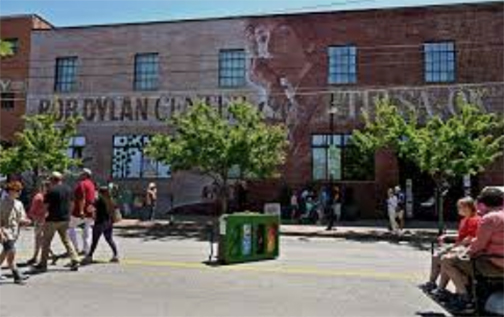
• Bob Dylan’s massive archive is now on view in Tulsa, at the Bob Dylan Center right next door to the Woody Guthrie Museum. Artifacts of these two music giants make a must-see stop on any American culture tour. But Tulsa? Why there, everyone asks. For his stuff to be situated next to his hero’s, Dylan would have agreed to any place. Tulsa is not particularly relevant to his biography, but, as his new book, The Philosophy of Modern Song, illustrates with great gusto, his sources and inspirations can be far-ranging, and belong to one place in particular—here, the place where democracy lives. They belong where, in a Whitmanesque sense, people of all stations in life can sit side by side—at least theoretically. An homage to a highly idiosyncratic American songbook, Dylan revels in behind-the-scenes stories of the famous as he honors the work of less well known artists.

    Bob Dylan Center
    Yes, he goes deep into how Frank Sinatra’s “Strangers in the Night” had its lyrics adjusted. Referring to The Who’s “My Generation,” he proclaims, “Every generation gets to pick and choose what they want from the generations before with the same arrogance and ego-driven self-importance that the previous generations had when they picked the bones of the ones before them.” Yes, he calls Willie Nelson’s “On the Road Again” “an update of the iconic beat generation masterpiece by Jack Kerouac.” Maybe taking a cue from Kerouac’s Mexico City Blues which in other places he calls an important influence on his writing, each entry reads like a satori, a nugget of supreme wisdom. Short and to the point, each might follow a Kerouacean writerly strategy to simply fill up the page, like a jazz riff, stopping “where the page stops.” But Dylan doesn’t let his ideas spill one to the next.

    (more…)

  • Speilburg

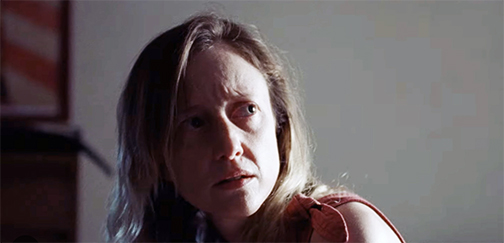
    Taking liberally from his own biography, Steven Spielberg creates a portrait of the artist as a young man in his latest film, The Fabelmans. It is no accident that the word fable echoes within this title, nor that the child to adolescent to teen and adult depicted is on a journey to discover his unique voice—through a moving picture camera lens. But the real star of this fictive tale is his mother called Mitzi, tremendously appealing with Michelle Williams in the role. An elfin creature with talents beyond her burnt eggs and salami, Mitzi is a soak-up-all-the-oxygen-in-the-room sort, and the epicenter of Sam’s consciousness. Flirting, even with Sam, Mitzi sings and plays the piano for her family and remains an unfailing support to her son’s filmmaking ambitions. Michelle finesses Mitzi even at her most wacky. Yes, his father (Paul Dano, excellent) plays an important part too–as does his best friend Ben (Seth Rogen, wonderful) who, by the way, makes off with his mother; that story underpins much of Sam’s emotional energy without undermining his gifts as a visual artist.

    Some other characters along the way need mention: Judd Hirsch as Uncle Boris, Jeanne Berlin as Hadassah Fabelman, and David Lynch as John Ford. The film engages in numerous ways, especially as it references many of Spielberg’s greatest hits: E. T., Jaws, among others. Serious matters: his parents’ divorce, the anti-Semitism he experienced in school, the beatings he endures facing the school’s jocks, and Jesus as a romantic rival—All are part of the journey as Sam makes movies featuring train crashes, blood spurting war battles, and teen beach parties.

    (more…)

  • The sonaAAA

    It’s a far cry from The Music Man’s River City, Iowa to the swell NYC apartments and boardrooms of Florian Zeller’s The Son. The film is the latest in a trilogy that began with The Father, based on a stage play, with The Mother to follow. In The Father, you may recall, Anthony Hopkins won the Best Actor Oscar for his performance as a lovably demented dad to Olivia Coleman. You never quite know when he’s seeing/ hearing/ telling the truth. It’s a tour de force of the man’s inner mind, and it was riveting. 

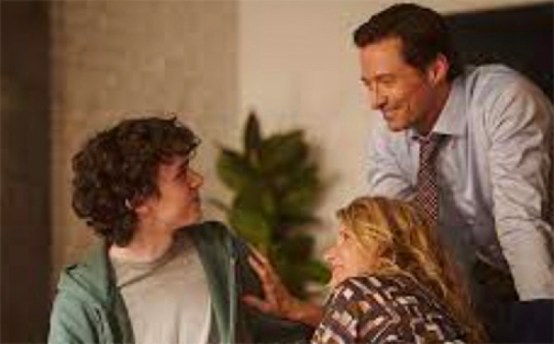
    In The Son, Hopkins appears again in a pivotal scene, stone cold as a father to Hugh Jackman, a father who is facing some parenting challenges. Jackman sang and danced his way into Marion the librarian (Sutton Foster’s) heart in the recent Music Man revival on Broadway. And in The Son, as Peter, he does a funky hip slide that looks like it will bond him to his teen son Nicholas (Zen McGrath) who is having mental issues related to his dad’s divorce from his mom, Kate (Laura Dern in a moving role). Until Beth (a superb and sexy Vanessa Kirby), his father’s new wife, gets into the act, and all sours.

    (more…)

  • Top Dog

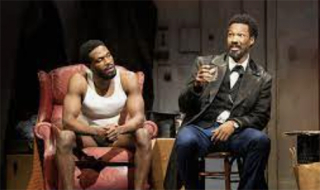
    The stakes are huge for two brothers named Lincoln and Booth who live in a one-room fleabag joint with no running water. Carrying history itself, these brothers—well, living conditions are the least of their problems. Sibling rivalry aside, Topdog/ Underdog, Suzan-Lori Parks’ Pulitzer Prize winning play now in a superb revival at the Golden Theater, feels essential, as a game of one-upmanship, as “civil” war re-enactment, or a reckoning of what it means when members of the same family vie for dominance.

    Opening with Booth (Yahya Abdul-Mateen II) honing his three card monte skills, this play is hilarious. Soon, Linc (Corey Hawkins) interrupts, a black man in white face. His hat and waistcoat give him away—his job is portraying President Abraham Lincoln, shot constantly in an arcade show. That’s his day job. The doubling and tripling in this conceit are enough to give you dread as Linc practices his skills at dying. Skilled at shoplifting, Booth wears a big coat the better to bring home purloined goods, neatly padding him every which way. Clothes do make the man, and don’t forget the matching ties, the belt. Snip the label. The actors are particularly wonderful – however different—showing a comic physicality, without ever becoming slapstick. Director Kenny Leon milks these moments, dressing and undressing his actors, unpeeling memories of an untoward childhood. Abandoned by their parents as teens, at least Booth had older brother Linc.

    (more…)

  • The whale

    At this year’s Hamptons International Film Festival, blame it on the vagaries of programming, but on one day two films featured such egregious abuse of the body, as if to highlight human excesses of all kinds. I speak of copious consumption of junk food, fine champagne to wash down, and then up projectile vomit, and consequent brown spewing toilets. A coincidence?

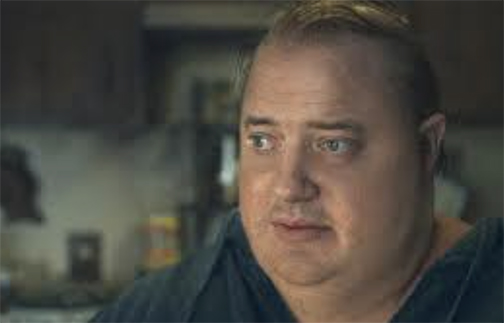
    In Darren Aronofsky’s The Whale, Brendan Fraser plays Charlie, a dying obese man. That’s too bad because he also appreciates his estranged daughter (Sadie Sink), and poetry, the true meaning of self in Whitman’s Song of Myself and the rhythmic cadences of Melville’s Moby Dick, about an obsessed sea captain on a death wish. In case you ever wondered how people can eat themselves to oblivion, you may find the answer here, but a whole lot more. As the classic literature suggests a spiritual component to the sins of the flesh, Charlie consumes pizza, meatball heroes with extra cheese, you name it. As a visual experience, it is painful to see him move around his drab, depressing apartment—until he achieves the transcendence he seeks.

    (more…)

  • Hampton Film Festable
    You cannot take your eyes off Bill Nighy in his superb performance in Living, Oliver Hermanus’ film, the Hamptons International Film Festival opening night feature. A remake of Akira Kurasawa’s Ikiru with a script by Kazuo Ishigura, Living follows a man played by Nighy, a higher up in a bureaucracy that specializes—as is the nature of bureaucracies—in getting nothing done. At a desk piled high with folders of delayed projects, Nighy is overwhelmed by the pyramid of inaction until a younger man joins the firm, the wonderful Alex Sharp, and Nighy learns he has but a short time to live. A young, perky woman (Aimee Lou Wood) shows him how to “live,” providing an education far from the scandal his family thinks. From South Africa, Oliver Hermanus moved to London to make this feature, and moreover, moved to our table at Nick & Toni’s restaurant for the annual filmmakers’ brunch. The hardest part of making the film, he said, was casting on Zoom, exulting now in casting a series he’s been hired to direct in person. 

    Director Peter Hedges joined the brunch table too. His The Same Storm utilizes laptops and cell phones to get into the lives of 24 characters during the Covid lockdown.

    (more…)

  • Nan GoldenAt the NYFF press conference following a screening of All the Beauty and the Bloodshed, photographer Nan Goldin seemed as surprised as anyone that Laura Poitras included footage of her family story, weaving together decades of her artistic risk-taking. From the time that she left her childhood home in the suburbs for a life documenting a demimonde of friends, like herself, on a cultural fringe, she has harbored the memory of her sister, a rebel who taught Nan how to rebel. That rebellion led to activism. 

    Poitras came on board to help complete a film project that began with some footage of Goldin and P.A.I.N. demonstrating. The group which she helped to found continues to challenge the opioid industry Nan Goldin barely survived, and now she wants to give voice to the thousands who died as a result of addiction: in particular, P.A.I.N targets the Sackler family who put their name on arts institutions in New York, Paris, London, etc., from the vast amounts of money they made through Purdue Pharma promoting drugs like oxycontin, and other pain killers they pushed as non-addictive.

    (more…)

  • Film Festable
    The 60th New York Film Festival opens with a lot of noise, White Noise, that is. Noah Baumbach’s movie, adapted from Don DeLillo’s classic American 1985 novel, features the kind of ambient sound that barely registers, punctuated by the boom of train/freighter collisions in combustible flames exuding plumes of smoke. It’s a canvas of the senses, in grays and vivid crayon color—all the distractible elements necessary for survival in the face of definite death. In Samuel Beckett’s hands, this dilemma is sparely etched. But guided by DeLillo’s images of American detritus, Noah Baumbach succeeds in answering the question of how can anyone make a movie out of the satiric cacophony/ harmony of White Noise? Or, perhaps even more relatable, how would you respond to a “toxic airborne event?”

    He succeeds well, utilizing station wagons and the A&P supermarket to full luster. Not since Allen Ginsberg’s “A Supermarket in California” have the aisles popped with shoppers and products strategically placed in happy familiarity. Mountains of everything a consumer would want to hoard.

    His first adaptation, Baumbach claims to have been thinking about this project ever since as a teen his father put the novel in his hands. It helps that his father, novelist Jonathan Baumbach, was a professor at Brooklyn College and a writer wracked with his own existential dread, all familiar territory for the young Baumbach to mine. On a college campus setting, Jack Gladney (the excellent Adam Driver) is a celebrity academic, a specialist in Hitler studies. His colleague, Murray Suskind, (wonderful Don Cheadle) teaches Elvis. A beautifully choreographed lecture shows how enthusiasm for each of these idolized “superstars” flattens any moral, ethical consideration. Jack’s wife Babette (Greta Gerwig with big hair reminiscent of Melanie Griffith’s in Working Girl–no doubt costume designer Ann Roth’s touch), tries to cure her affliction: fear of death, much to the alarm of their three eldest children who chatter from beginning to end. Baumbach directed them to do that, as if they were an ongoing radio–back-sound being the point—punctuated by Danny Elfman’s music and a surprise joyful ending from LCD Soundsystem: to “new body rhumba.”

    (more…)

  • Movie Blog
    “I’ve gone epic,” exuded the director David O. Russell at the lavish premiere of this movie Amsterdam at Alice Tully Hall this week. Epic and a surprise, Drake, one of the producers, introduced the screening. Epic might also refer to the scope of the film, set in World War I, the so-called Great War, The War to End All Wars. Or epic could refer to his characters, fictional representations of historic or quasi-historic figures performed by an epic cast: Christian Bale, Margot Robbie, John David Washington, the two Mikes, Myers and Shannon, Alessandro Nivola, Matthias Schoenaerts, Rami Malek, Anya Taylor-Joy, Timothy Olyphant, Taylor Swift—yes, that Taylor Swift, and Robert De Niro, many of whom joined Russell in a post screening Q&A with Ben Stiller. Of course, Ben Stiller being Ben Stiller, his first question was: wasn’t Flirting with Disaster—in which he had starred– your favorite film? 

    Everyone got the joke, warmed up by having seen the new film, Amsterdam. History-based, it is also funny. Turns out, David O. Russell loves history, and over the past six years enlisted Bale and Robbie to help him write a script unearthing little known events involving war, espionage, exploitative leaders of finance and industry, democracy, and all matters on the idea of history repeating itself. Rami Malek said that making this film with David O. Russell made him think of that saying in a less negative way, not so much doomed, as the values of love, friendship, and optimism prevail, also repeating themselves.

    (more…)

  • Hamptons Film Festable
    Entering its 4th decade, the upcoming Hamptons International Film Festival features an impressive slate of offerings: Empire of Light, The Son, My Policeman, The Banshees of Inisherin, to name just a few that have wowed audiences at Toronto and other festivals. One documentary that premiered in Venice and played in Telluride is coming too: Nancy Buirski’s Desperate Souls, Dark City, and the Legend of Midnight Cowboy. 

    Inspired by Glenn Frankel’s book, Shooting Midnight Cowboy: Art, Sex, Loneliness, Liberation, and the Making of a Dark Classic, Buirski had the idea to make a film focused on Midnight Cowboy’s “moment,” asking, what has made this 1969 film about two unlikely outcasts, adrift in NYC, so memorable and so life-changing to many viewers?

    (more…)

  •  

    Funny Girl
    At the August Wilson Theater last night, Gleeks and theater geeks gathered for the re-opening of Funny Girl, that classic 1964 Broadway musical so identified with its original star, it was a challenge to find the right actress to make it new. The new production’s first night for the cast change, featuring Lea Michele as Fanny Brice and Tovah Feldshuh as her mother, was such a major event, fans flew in from across America, some paying more than your usual markup, just to see the star of Glee work her ample chops around the performance originated by Barbra Streisand. It may take a star of the small screen to create such excitement, but with long, standing ovations rewarding a cast that now rocks, delivering as well as having the time of their lives, Funny Girl feels just right.

    You have to believe that Fanny, a “mieskeit,” from Brooklyn, an ugly duckling, can capture the attention of Nicky Arnstein, a famous player and heartthrob. Can such a handsome guy fall for a “funny girl?” You bet. The chemistry between Michele and Ramin Karimloo made the audience swoon and leap to its feet. The mother, as in one number, “Who Taught Her Everything She Knows?” should appear to know a thing or two. That person is Tovah Feldshuh, a Jewish mother who supports her awkward daughter, having been around the block herself, and remarkably for a Jewish mother, doesn’t mess with her marriage. The adorable Feldshuh shimmies and taps, and with a mere shrug and eye roll, has the audience in stitches.

    (more…)

  • Salmon RushtyIn one of the great Curb Your Enthusiasm vignettes, Larry David wanted to make a musical called “Fatwa,” the word itself giggle-worthy. But the fatwa on Salman Rushdie was no joke. Last week a lone, determined man got past light security at Chautauqua, a famous writers conference and knifed the author of Midnight’s Children and an Islam-offending novel called The Satanic Verses. As the story goes, without having ever read the book, the Ayatollah declared a bounty on Rushdie who had imagined mortal qualities in the prophet Mohammed. A translator was murdered in the ensuing outrage. 

    Meanwhile, Rushdie had been in hiding in safe houses in England and the States for decades. In the 1980’s, someone sent the book to the American writer Paul Bowles who resided in Tangier, and worried about his expatriate status there if the authorities found out he possessed such a book. One year a hushed event brought the writer to the New York Public Library’s main branch for a PEN forum, an affirmation of freedom of expression; many celebrated Rushdie and the daring it took to pull this off. Needless to say, security was tight. And over time, Salman Rushdie let his guard down.

    (more…)

  • Cindi Lauper

    That was Cyndi Lauper’s message when she gave a rare charity performance at Northwell Health’s 4th annual Summer Hamptons Evening (SHE) which raised nearly one million dollars for the Katz Institute for Women’s Health. Playing only five songs, clad in a leopard print summer suit, the rocker/ activist proclaimed her disgust at watching “women’s civil rights stripped away. Safe access is for our health,” she affirmed launching into “She Bop,” “Time After Time,” “Girls Just Want to Have Fun,” “True Colors,” and a song that spoke to the moment, “Sally’s Pidgeons.” Bringing action to words, Lauper’s own charity, True Colors United, works to bring an end to homelessness among LGBTQ youth. This fall, she will launch a new foundation to bring OB-GYN care to women in need across the country. And still: a hit on Broadway with Kinky Boots, she is now composing for a new Working Girl musical, collaborating with playwright Theresa Rebeck. Her dedication is limitless, as is her heart.

    The evening at Vicki Moran Furman’s stunning Watermill estate and emceed by Rosanna Scotto, featuring Drs. Tara Narula and Stacey Rosen speaking on the importance of heart health for women, was held in a poolside tent decorated in pink, a quintessential production by Lawrence Scott Events.

    (more…)

  • Ragtime
    The heart of the dazzling revival of Ragtime at Bay Street Theater is Mother, a character of enormous compassion. As played by Lora Lee Gayer, she’s a lovely presence who saves an abandoned black baby and his mother Sarah (Kyrie Courter), and navigates her well-to-do New Rochelle family through the vagaries and scandals of early 20th century American life. Mother is part of an ensemble with talented actors performing the roles of Harry Houdini, Emma Goldman (Victoria Huston-Elem), Evelyn Nesbit (Cathryn Wake) and Booker T. Washington (Davon Williams), to name just a few of the famous personages populating E. L. Doctorow’s historic novel Ragtime, the musical’s epic source. Limning the current cultural territory of “Black Lives Matter,” the plight of the working class, and of newly arrived immigrants, Bay Street’s production seems especially fresh from beginning to teary-eyed end. Mother singing, “We Can Never Go Back to Before,” becomes an anthem for change– in her marriage, and to the hopes and dreams of Americans—such as the play’s Coalhouse (Derrick Davis) seeking equality, justice, and democratic values. 

    At Ragtime’s ebullient opening night, the audience leapt to their feet as the ensemble took their bows. Of course, it seemed to all that Ragtime’s intertwining stories were timeless, with love and compassion the only curing force. With music by Stephen Flaherty, lyrics by Lynn Ahrens, book by Terrence McNally, and under Will Pomerantz’ expert direction, Ragtime underscores—no pun intended: the power of a great night of theater holds its own curing magic.

    (more…)

  • Beast
    No one will ever fall asleep at a screening of Beast, a new movie directed by Baltasar Kormakur and starring Idris Elba who goes mano a eh, mano with a rogue lion. Very Hemingway. Man against beast. He’s protecting his daughters in the wilds of Africa, a place that is at once beautiful with animals running free, and fraught with the dangers of poachers interfering with the natural law of the jungle. The Lion King this is not. 

    You really can’t blame the lions—mangy, miserable creatures– for being beasts after being hunted and raped, so to speak, by evil, greedy humans—certainly the film’s hands down villains. You might call this movie an adventure thriller with many of the trappings of a gasp-worthy horror story: a giant paw piercing the glass of a disabled jeep, a family cowering inside. A soundtrack that punctuates the suspenseful momentum. The family’s backstory creates a rich buffer for the formulaic genre. No beasts were hurt in the making of this movie. The fiercest among them were CGI.

    (more…)

  • Longhouse2022
    Wood stitched with wire does not sound like an ideal way to structure an outdoor shed, but that’s what Steven Ladd and his brother William Ladd used to create one of the masterful works showcased at this year’s Longhouse Benefit. As Steven guided visitors through this piece, open on both ends, he explained how he learned to sew using his grandmother’s sewing machine, and in fact, the upstate New York resident wore slacks and a shirt that he had made himself. It defied the imagination to think how that textile practice might be translated to their sculpture titled “Right Here, Right Now.” Similarly, Taiwanese artist Cheng Tsung Feng invited celebrants into an airy bamboo pavilion, “Fish Trap VI.” The spirit of Longhouse founder Jack Lenor Larsen could be felt in these works on this annual occasion with Robert Wilson, Nathan Lane, Alice Aycock, and many others celebrating his legacy at the best art party of the summer.

    Newer art venues in Montauk flourish: The Ranch, the site of the famed Deep Hollow Ranch, where for years a summer concert would bring hoards to the East End, to be seated on haystacks and hear, for example, Paul Simon one year, The Eagles the next, and James Brown. Repurposed barns featured Frank Stella’s sculpture at the early part of summer. His larger pieces were spread out on the immense, now grassy field. Currently, in The West Barn, hangs, Jo Messer’s “Whale Tail,” a presentation of nine new paintings of women emphasizing limbs and gesture in incongruous position saturated in monochromatic palettes. The exhibition title comes from “a resurgent trend of hiking a g-string thong above the waistline as overt provocation.” Yes, provoke it does.

    (more…)

  •  

    BodineFabricant2Not so long ago from a kitchen set made on the stage of the John Drew Theater, New York Times food writer Florence Fabricant asked chef Anthony Bourdain what he likes to cook most at leisure with family and friends. “Flipping burgers in my backyard,” he replied, a good answer in a room full of Hamptonites accustomed to the informal dining associated with East End life. This episode of Stirring the Pot, Fabricant’s yearly series at Guild Hall came during a period when the famous culinary adventurer had logged a gazillion frequent flyer miles for his famous CNN Parts Unknown program. Having sampled a wide array of the world’s most exotic cuisine, he responded simply, a great punchline to a great interview, and with a sense of fullness, an audience got up satisfied as if following a great meal.

    Similarly, interviews with other celebrity foodies were a fixture of the Guild Hall summer season: Marcus Samuelson, Jacques Pepin, Mario Batali, Carla Hall, Sam Sifton, and Eric Ripert, –Bourdain’s buddy who will return offering a demo in preparing ratatouille– were a highpoint of Sunday mornings in August, but this year as Guild Hall undergoes its renovation, he will be cooking eggplant and veggies at Hayground School.

    (more…)

  • Maralyn MayeQuip for quip, tune for tune, Marilyn Maye does not miss a beat. People will remember this one-night only performance at Bay Street Theater for a long time—this chanteuse, a queen of cabaret, elegant in her mid-90’s in a blond bouffant, and black sequined ensemble with bling at her wrist and throat, sang Cole Porter followed by Johnny Mercer with a bit of Sondheim –songs we all know and love: “I Get No Kick (from Champagne) . . .” flows into “I Concentrate on You” . . . goes to “I’ve Got You Under My Skin” and “Don’t Nobody Bring Me Bad News” before she launches into a story of staying in bed during the pandemic period when her date with Bay Street was, like everything else, cancelled. She watched old movies and ate gummy bears, she claimed, baiting the crowd. Not those, she gave a sly look, wait, maybe I should try those. Of course, everything she says comes with a jolt: she is 94 after all.

    (more…)

  • Samuel Waxman
    “How many people here have been touched by cancer?” asked CBS’s Chris Wragge. Hands shot up. In its 18th year, Hamptons Happening celebrated the simple joys of being alive with the recognition of how, as Dr. Samuel Waxman put it, “Cancer is a disease of aging.” Still, it was a happy moment to know this truism in a beautifully appointed Bridgehampton tent with glamorously dressed Hamptonites some of whom were wearing high heels as they tread across the grass, the property of the Fishel family donated for the annual Samuel Waxman’s Cancer Research Foundation Benefit. 

    One of this year’s honorees for “Distinguished Business Leader,” Bess Freedman, CEO of Brown Harris Stevens, took the message one step farther reminding everyone of Tikkun Olam, a Hebrew expression that translates to everyone’s obligation to repair the world, to make it better than it was when we arrived. This message resonates for more than health.

    (more…)

  • Anna K
    Russian novelist Leo Tolstoy knew something about women’s discontent in marriage. One of his greatest creations, the character Anna Karenina in his classic novel of that name, fuels the animus felt in the family in Nilo Cruz’s 2003 Pulitzer Prize winning play, Anna in the Tropics, now in production at Bay Street Theater. Set in 1920’s Tampa, Florida, the drama involves a Cuban-American family working in their cigar production factory. When a new “lector” arrives, a handsome young man who reads literature to the workers as they pull and wind the tobacco into smokable cylinders, his reading of Anna Karenina, all 1000 pages, makes a big impression—on both the women and the men. A huge turn-on becomes tragic.

    As the play’s characters come under the spell of romance, Anna’s love for Vronsky in the Russian work, they examine their own marriages. Under Marcos Santana’s direction, the ensemble plays this conceit with few laughs, taking seriously the power of art to transfix. In the play, Christian Barillas is CheChe, who cannot get over his wife’s having left him with a “lector.” The reader becomes a catalyst for magic, as Moscow in the snow appears in the tropical windows while he reads. The character of Paloma, husband to Chiquita, one of the sisters working in the family business, does grow and change as a result of this literature. I caught up with the actor Guillermo Ivan who plays this husband, whose jealousy transforms him into a husband who listens, caring for his wife’s needs. On opening night, Ivan said he is now reading Anna Karenina—all of it. 

  • ><essons in Syrvival
    A young poet, Nikki Giovanni interviewed an elder statesman of letters, James Baldwin, on television in 1971. Enacted, voiced onstage at the Vineyard Theater, Lessons in Survival: 1971, joins a series of plays produced at this downtown venue that makes use of actual words uttered in real life situations to create a theatrical experience: Tina Slatter’s Is This a Room and Lucas Hnath’s Dana H. Deirdre O’Connell won the Best Actress in a Play Tony Award for her performance, after the work transitioned to Broadway. Bringing true words to theater turns out to infuse otherwise merely remarkable events with even greater power. 

    Calling Baldwin (Carl Clemons-Hopkins) Jimmy, suggesting an informality that seems unimaginable today for such an austere figure, Giovanni (Crystal Dickinson) first wants to know why he expatriated to Paris for much of his writing life. To anyone’s ears, then and now, the loaded question would trigger a discussion of the largest subject in American history, the subject of slavery, and though 1971 was well after the emancipation of African Americans, the untoward legacy is foremost still in today’s reckoning for both blacks and whites.

    (more…)

  • Battleground
    The abortion debate is personal. If you were around in 1973, as I was, a new hire in the English Department at Brooklyn College, you were privy to the harrowing stories of colleagues who had had unwanted pregnancies. This happened, not because they were reckless, but because of the prevailing notions that women could and would enjoy sex as much as men—a risky choice. Erica Jong’s catchphrase, “the zipless fuck,” was about to be coined. Our Bodies, Our Selves emboldened women to be adventurers. This was new, as women’s lives were expanding beyond their father’s/husband’s purview. Roe v. Wade enlarged those possibilities, eliminating the danger and stigma for sexually active women, “auctoritee,” as Chaucer’s Wife of Bath would have it—women would have self-rule. Agency. And maybe self-love. Implicit in the current reversal of Roe: women’s lives don’t matter.

    Watching Battleground, Cynthia Lowen’s powerful, Zietgeist-hitting documentary featured at this year’s Tribeca Film Festival, I was struck by how intelligent the leadership of anti-abortion groups are, articulate and persuasive in their ideas about killing babies, Gen Z zealots in preventing this murder—and how young and clueless regarding the hard-fought struggles of pre-Roe women.

    (more…)

  • Leanard cohen
    Music docs at Tribeca have a common thread, record producer Hal Willner. In Angelheaded Hipster, about Mark Bolan and T. Rex, and Hallelujah, a Leonard Cohen biopic through the lens of his now classic song, Willner provides vital information on recordings. His presence in these films prior to his untimely death in the earliest wave of Covid shows how much his career spanned these eras of contemporary music. 

    I used to visit him in his toy packed studio on the West side. Howdy Doody dolls, Pee Wee Herman figures grinned into the room from packed shelves where he’d be mixing a tape of poet Gregory Corso reading, or reminiscing about his good pal Lou Reed. The title Angelheaded Hipster comes straight out of beat lore. Bolan may have been a beat contemporary, but his glam persona matches more directly with David Bowie, Klaus Nomi, and Freddy Mercury. 

    Hallelujah had a special opening at the Beacon Theater, followed by a concert. Judy Collins met Cohen in 1966 and immediately fell in love with “Suzanne,” recording it that year. On stage, her crystalline voice resonated, capturing Cohen’s special talent and a sense of loss, just as the many covers of Hallelujah in the film brought home its deeply spiritual quality, even as some made the lyrics more secular. As beat muse Neal Cassady used to say, “Sex is holy.”

    (more…)

  • Elvis
    “Man cannot live by Batman alone,” said Baz Luhrmann about making his film of Elvis, and yet the film feels like a wild ride at times. Its great achievement is the casting of Austin Butler who, handsome and talented singing many of the songs we know and love, manages to humanize this historic figure. Young Elvis, grows up in the black community, learning music amidst the gospel and rhythms surrounding him, marginalized by poverty. Luhrmann traces the vital American lineage up through monstrous fame choreographed by a mysterious figure known as Colonel Parker, a citizen of no particular country, who manages Elvis’ career. Played with flair by Tom Hanks, this man has the heart of a carnival barker and fashions Elvis in the art of the con. Often feeling like a sideshow freak, Elvis is imprisoned by the colonel’s greed which leads to his drugged demise and addiction to swooning fans. He’s a Shakespearean outsized tragic hero who reflects upon the eras, the ‘50’s, ‘60’s, ‘70’s—as Luhrmann observed, “He defined all of them.”

    (more…)

  • Mario
    Among the many pleasures of the documentary-rich Tribeca Film Festival, Reinventing Mirazur is particularly yummy, the best word for a film about food. Or rather, the transformation of a multi-star Michelin restaurant in Menton, France during Covid. At center is a brilliant chef, the Argentinian Mauro Colagreco, named best in the world, who expected to be studying cooking in Paris for a few months—as one does— that stretched into twenty years, ending up in the most gorgeous setting, on the French Riviera—actually the perfect place for a restaurant that went from just great and innovative food to a more planet-conscious culinary experience. Mauro is a teddy bear of a man in the film, beyond friendly and loving to family and to his restaurant staff. Not that life was easy. During Covid, he could not fly back to Argentina when his beloved mother died. He went through great growing pains as a restaurateur. 

    Cut to this film premiere at Tribeca, and an after party at Carbone where he would be the guest of honor. Intrigued and thoroughly seduced by the film, I was pleased to be invited to meet this world-class chef, fueled by the fantasy that he would be dishing out tiny slivers of lamb layered with leaves, as he does in Reinventing Mirazur. When I arrived at Carbone, no one could say he would be there. I had a glass of chardonnay in a corner, and ample samples of Carbone’s signature meatballs and veal parmigiana as the small venue filled with scenesters. The food was delicious.

    (more…)