• Cindi Lauper

    That was Cyndi Lauper’s message when she gave a rare charity performance at Northwell Health’s 4th annual Summer Hamptons Evening (SHE) which raised nearly one million dollars for the Katz Institute for Women’s Health. Playing only five songs, clad in a leopard print summer suit, the rocker/ activist proclaimed her disgust at watching “women’s civil rights stripped away. Safe access is for our health,” she affirmed launching into “She Bop,” “Time After Time,” “Girls Just Want to Have Fun,” “True Colors,” and a song that spoke to the moment, “Sally’s Pidgeons.” Bringing action to words, Lauper’s own charity, True Colors United, works to bring an end to homelessness among LGBTQ youth. This fall, she will launch a new foundation to bring OB-GYN care to women in need across the country. And still: a hit on Broadway with Kinky Boots, she is now composing for a new Working Girl musical, collaborating with playwright Theresa Rebeck. Her dedication is limitless, as is her heart.

    The evening at Vicki Moran Furman’s stunning Watermill estate and emceed by Rosanna Scotto, featuring Drs. Tara Narula and Stacey Rosen speaking on the importance of heart health for women, was held in a poolside tent decorated in pink, a quintessential production by Lawrence Scott Events.

    (more…)

  • Ragtime
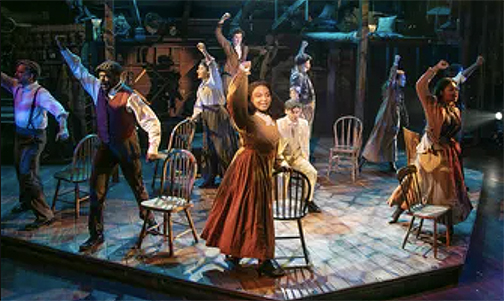
    The heart of the dazzling revival of Ragtime at Bay Street Theater is Mother, a character of enormous compassion. As played by Lora Lee Gayer, she’s a lovely presence who saves an abandoned black baby and his mother Sarah (Kyrie Courter), and navigates her well-to-do New Rochelle family through the vagaries and scandals of early 20th century American life. Mother is part of an ensemble with talented actors performing the roles of Harry Houdini, Emma Goldman (Victoria Huston-Elem), Evelyn Nesbit (Cathryn Wake) and Booker T. Washington (Davon Williams), to name just a few of the famous personages populating E. L. Doctorow’s historic novel Ragtime, the musical’s epic source. Limning the current cultural territory of “Black Lives Matter,” the plight of the working class, and of newly arrived immigrants, Bay Street’s production seems especially fresh from beginning to teary-eyed end. Mother singing, “We Can Never Go Back to Before,” becomes an anthem for change– in her marriage, and to the hopes and dreams of Americans—such as the play’s Coalhouse (Derrick Davis) seeking equality, justice, and democratic values. 

    At Ragtime’s ebullient opening night, the audience leapt to their feet as the ensemble took their bows. Of course, it seemed to all that Ragtime’s intertwining stories were timeless, with love and compassion the only curing force. With music by Stephen Flaherty, lyrics by Lynn Ahrens, book by Terrence McNally, and under Will Pomerantz’ expert direction, Ragtime underscores—no pun intended: the power of a great night of theater holds its own curing magic.

    (more…)

  • Beast
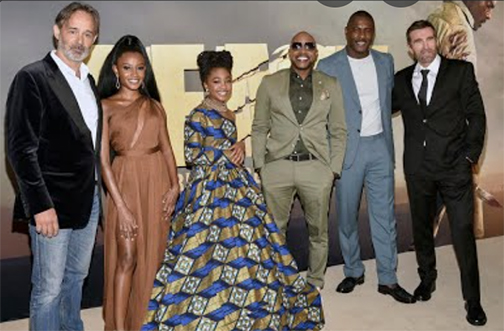
    No one will ever fall asleep at a screening of Beast, a new movie directed by Baltasar Kormakur and starring Idris Elba who goes mano a eh, mano with a rogue lion. Very Hemingway. Man against beast. He’s protecting his daughters in the wilds of Africa, a place that is at once beautiful with animals running free, and fraught with the dangers of poachers interfering with the natural law of the jungle. The Lion King this is not. 

    You really can’t blame the lions—mangy, miserable creatures– for being beasts after being hunted and raped, so to speak, by evil, greedy humans—certainly the film’s hands down villains. You might call this movie an adventure thriller with many of the trappings of a gasp-worthy horror story: a giant paw piercing the glass of a disabled jeep, a family cowering inside. A soundtrack that punctuates the suspenseful momentum. The family’s backstory creates a rich buffer for the formulaic genre. No beasts were hurt in the making of this movie. The fiercest among them were CGI.

    (more…)

  • Longhouse2022
    Wood stitched with wire does not sound like an ideal way to structure an outdoor shed, but that’s what Steven Ladd and his brother William Ladd used to create one of the masterful works showcased at this year’s Longhouse Benefit. As Steven guided visitors through this piece, open on both ends, he explained how he learned to sew using his grandmother’s sewing machine, and in fact, the upstate New York resident wore slacks and a shirt that he had made himself. It defied the imagination to think how that textile practice might be translated to their sculpture titled “Right Here, Right Now.” Similarly, Taiwanese artist Cheng Tsung Feng invited celebrants into an airy bamboo pavilion, “Fish Trap VI.” The spirit of Longhouse founder Jack Lenor Larsen could be felt in these works on this annual occasion with Robert Wilson, Nathan Lane, Alice Aycock, and many others celebrating his legacy at the best art party of the summer.

    Newer art venues in Montauk flourish: The Ranch, the site of the famed Deep Hollow Ranch, where for years a summer concert would bring hoards to the East End, to be seated on haystacks and hear, for example, Paul Simon one year, The Eagles the next, and James Brown. Repurposed barns featured Frank Stella’s sculpture at the early part of summer. His larger pieces were spread out on the immense, now grassy field. Currently, in The West Barn, hangs, Jo Messer’s “Whale Tail,” a presentation of nine new paintings of women emphasizing limbs and gesture in incongruous position saturated in monochromatic palettes. The exhibition title comes from “a resurgent trend of hiking a g-string thong above the waistline as overt provocation.” Yes, provoke it does.

    (more…)

  •  

    BodineFabricant2Not so long ago from a kitchen set made on the stage of the John Drew Theater, New York Times food writer Florence Fabricant asked chef Anthony Bourdain what he likes to cook most at leisure with family and friends. “Flipping burgers in my backyard,” he replied, a good answer in a room full of Hamptonites accustomed to the informal dining associated with East End life. This episode of Stirring the Pot, Fabricant’s yearly series at Guild Hall came during a period when the famous culinary adventurer had logged a gazillion frequent flyer miles for his famous CNN Parts Unknown program. Having sampled a wide array of the world’s most exotic cuisine, he responded simply, a great punchline to a great interview, and with a sense of fullness, an audience got up satisfied as if following a great meal.

    Similarly, interviews with other celebrity foodies were a fixture of the Guild Hall summer season: Marcus Samuelson, Jacques Pepin, Mario Batali, Carla Hall, Sam Sifton, and Eric Ripert, –Bourdain’s buddy who will return offering a demo in preparing ratatouille– were a highpoint of Sunday mornings in August, but this year as Guild Hall undergoes its renovation, he will be cooking eggplant and veggies at Hayground School.

    (more…)

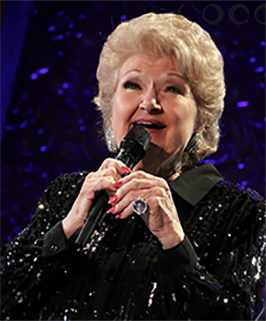
  • Maralyn MayeQuip for quip, tune for tune, Marilyn Maye does not miss a beat. People will remember this one-night only performance at Bay Street Theater for a long time—this chanteuse, a queen of cabaret, elegant in her mid-90’s in a blond bouffant, and black sequined ensemble with bling at her wrist and throat, sang Cole Porter followed by Johnny Mercer with a bit of Sondheim –songs we all know and love: “I Get No Kick (from Champagne) . . .” flows into “I Concentrate on You” . . . goes to “I’ve Got You Under My Skin” and “Don’t Nobody Bring Me Bad News” before she launches into a story of staying in bed during the pandemic period when her date with Bay Street was, like everything else, cancelled. She watched old movies and ate gummy bears, she claimed, baiting the crowd. Not those, she gave a sly look, wait, maybe I should try those. Of course, everything she says comes with a jolt: she is 94 after all.

    (more…)

  • Samuel Waxman
    “How many people here have been touched by cancer?” asked CBS’s Chris Wragge. Hands shot up. In its 18th year, Hamptons Happening celebrated the simple joys of being alive with the recognition of how, as Dr. Samuel Waxman put it, “Cancer is a disease of aging.” Still, it was a happy moment to know this truism in a beautifully appointed Bridgehampton tent with glamorously dressed Hamptonites some of whom were wearing high heels as they tread across the grass, the property of the Fishel family donated for the annual Samuel Waxman’s Cancer Research Foundation Benefit. 

    One of this year’s honorees for “Distinguished Business Leader,” Bess Freedman, CEO of Brown Harris Stevens, took the message one step farther reminding everyone of Tikkun Olam, a Hebrew expression that translates to everyone’s obligation to repair the world, to make it better than it was when we arrived. This message resonates for more than health.

    (more…)

  • Anna K
    Russian novelist Leo Tolstoy knew something about women’s discontent in marriage. One of his greatest creations, the character Anna Karenina in his classic novel of that name, fuels the animus felt in the family in Nilo Cruz’s 2003 Pulitzer Prize winning play, Anna in the Tropics, now in production at Bay Street Theater. Set in 1920’s Tampa, Florida, the drama involves a Cuban-American family working in their cigar production factory. When a new “lector” arrives, a handsome young man who reads literature to the workers as they pull and wind the tobacco into smokable cylinders, his reading of Anna Karenina, all 1000 pages, makes a big impression—on both the women and the men. A huge turn-on becomes tragic.

    As the play’s characters come under the spell of romance, Anna’s love for Vronsky in the Russian work, they examine their own marriages. Under Marcos Santana’s direction, the ensemble plays this conceit with few laughs, taking seriously the power of art to transfix. In the play, Christian Barillas is CheChe, who cannot get over his wife’s having left him with a “lector.” The reader becomes a catalyst for magic, as Moscow in the snow appears in the tropical windows while he reads. The character of Paloma, husband to Chiquita, one of the sisters working in the family business, does grow and change as a result of this literature. I caught up with the actor Guillermo Ivan who plays this husband, whose jealousy transforms him into a husband who listens, caring for his wife’s needs. On opening night, Ivan said he is now reading Anna Karenina—all of it. 

  • ><essons in Syrvival
    A young poet, Nikki Giovanni interviewed an elder statesman of letters, James Baldwin, on television in 1971. Enacted, voiced onstage at the Vineyard Theater, Lessons in Survival: 1971, joins a series of plays produced at this downtown venue that makes use of actual words uttered in real life situations to create a theatrical experience: Tina Slatter’s Is This a Room and Lucas Hnath’s Dana H. Deirdre O’Connell won the Best Actress in a Play Tony Award for her performance, after the work transitioned to Broadway. Bringing true words to theater turns out to infuse otherwise merely remarkable events with even greater power. 

    Calling Baldwin (Carl Clemons-Hopkins) Jimmy, suggesting an informality that seems unimaginable today for such an austere figure, Giovanni (Crystal Dickinson) first wants to know why he expatriated to Paris for much of his writing life. To anyone’s ears, then and now, the loaded question would trigger a discussion of the largest subject in American history, the subject of slavery, and though 1971 was well after the emancipation of African Americans, the untoward legacy is foremost still in today’s reckoning for both blacks and whites.

    (more…)

  • Battleground
    The abortion debate is personal. If you were around in 1973, as I was, a new hire in the English Department at Brooklyn College, you were privy to the harrowing stories of colleagues who had had unwanted pregnancies. This happened, not because they were reckless, but because of the prevailing notions that women could and would enjoy sex as much as men—a risky choice. Erica Jong’s catchphrase, “the zipless fuck,” was about to be coined. Our Bodies, Our Selves emboldened women to be adventurers. This was new, as women’s lives were expanding beyond their father’s/husband’s purview. Roe v. Wade enlarged those possibilities, eliminating the danger and stigma for sexually active women, “auctoritee,” as Chaucer’s Wife of Bath would have it—women would have self-rule. Agency. And maybe self-love. Implicit in the current reversal of Roe: women’s lives don’t matter.

    Watching Battleground, Cynthia Lowen’s powerful, Zietgeist-hitting documentary featured at this year’s Tribeca Film Festival, I was struck by how intelligent the leadership of anti-abortion groups are, articulate and persuasive in their ideas about killing babies, Gen Z zealots in preventing this murder—and how young and clueless regarding the hard-fought struggles of pre-Roe women.

    (more…)

  • Leanard cohen
    Music docs at Tribeca have a common thread, record producer Hal Willner. In Angelheaded Hipster, about Mark Bolan and T. Rex, and Hallelujah, a Leonard Cohen biopic through the lens of his now classic song, Willner provides vital information on recordings. His presence in these films prior to his untimely death in the earliest wave of Covid shows how much his career spanned these eras of contemporary music. 

    I used to visit him in his toy packed studio on the West side. Howdy Doody dolls, Pee Wee Herman figures grinned into the room from packed shelves where he’d be mixing a tape of poet Gregory Corso reading, or reminiscing about his good pal Lou Reed. The title Angelheaded Hipster comes straight out of beat lore. Bolan may have been a beat contemporary, but his glam persona matches more directly with David Bowie, Klaus Nomi, and Freddy Mercury. 

    Hallelujah had a special opening at the Beacon Theater, followed by a concert. Judy Collins met Cohen in 1966 and immediately fell in love with “Suzanne,” recording it that year. On stage, her crystalline voice resonated, capturing Cohen’s special talent and a sense of loss, just as the many covers of Hallelujah in the film brought home its deeply spiritual quality, even as some made the lyrics more secular. As beat muse Neal Cassady used to say, “Sex is holy.”

    (more…)

  • Elvis
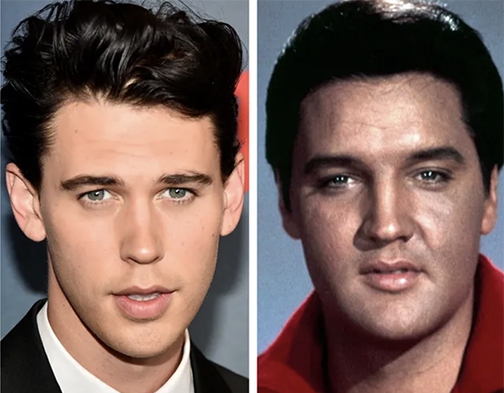
    “Man cannot live by Batman alone,” said Baz Luhrmann about making his film of Elvis, and yet the film feels like a wild ride at times. Its great achievement is the casting of Austin Butler who, handsome and talented singing many of the songs we know and love, manages to humanize this historic figure. Young Elvis, grows up in the black community, learning music amidst the gospel and rhythms surrounding him, marginalized by poverty. Luhrmann traces the vital American lineage up through monstrous fame choreographed by a mysterious figure known as Colonel Parker, a citizen of no particular country, who manages Elvis’ career. Played with flair by Tom Hanks, this man has the heart of a carnival barker and fashions Elvis in the art of the con. Often feeling like a sideshow freak, Elvis is imprisoned by the colonel’s greed which leads to his drugged demise and addiction to swooning fans. He’s a Shakespearean outsized tragic hero who reflects upon the eras, the ‘50’s, ‘60’s, ‘70’s—as Luhrmann observed, “He defined all of them.”

    (more…)

  • Mario
    Among the many pleasures of the documentary-rich Tribeca Film Festival, Reinventing Mirazur is particularly yummy, the best word for a film about food. Or rather, the transformation of a multi-star Michelin restaurant in Menton, France during Covid. At center is a brilliant chef, the Argentinian Mauro Colagreco, named best in the world, who expected to be studying cooking in Paris for a few months—as one does— that stretched into twenty years, ending up in the most gorgeous setting, on the French Riviera—actually the perfect place for a restaurant that went from just great and innovative food to a more planet-conscious culinary experience. Mauro is a teddy bear of a man in the film, beyond friendly and loving to family and to his restaurant staff. Not that life was easy. During Covid, he could not fly back to Argentina when his beloved mother died. He went through great growing pains as a restaurateur. 

    Cut to this film premiere at Tribeca, and an after party at Carbone where he would be the guest of honor. Intrigued and thoroughly seduced by the film, I was pleased to be invited to meet this world-class chef, fueled by the fantasy that he would be dishing out tiny slivers of lamb layered with leaves, as he does in Reinventing Mirazur. When I arrived at Carbone, no one could say he would be there. I had a glass of chardonnay in a corner, and ample samples of Carbone’s signature meatballs and veal parmigiana as the small venue filled with scenesters. The food was delicious.

    (more…)

  • Illusion
    The French can be vicious, bringing backstabbing to a fine art. Just look at les Liaisons Dangereuses. This year’s winner of seven Cesars, including Best Film, went to Xavier Giannoli’s adaptation of Honore Balzac’s Lost Illusions, a splendidly captivating romp through 19th century Paris via the extravagant “illusions” of a young, determined, and talented poet, as his ideals are bought and sold by alluringly fancy vipers of the first order. 

    Fresh from the rural fields, the ambitious newbie makes his way to the big city’s swank salons, taking journalism as a day job. Needless to say, the work consumes him. He falls for a beautiful kept woman/would be actress, a lover of exceptional skill, who is ill (a little “la Boheme”). Lucien appears to have it all—acclaim, love, all except title, –until he does not. The Devil exacts his price. At Lucien’s inevitable fall, editors, rivals, –everyone exclaims, “Well, who do you think you are?” His shifting identity is just one of his conceits. In the French court of commerce and public opinion, betrayal –and its sister, humiliation–rule.

    Weaving such tales of the ups and downs of Fortune’s Wheel with finesse and finery—with cunning contrasts in temptation and scandal, the French are masters. This is great work for an ensemble of actors starting with Gerard Depardieu, Cecil de France, Jeanne Balibar, Xavier Dolan, Salome Dewaels, and more. As Lucien, Benjamin Voisin plays the poet as pouty, seductive, and naïve.

    A classic story, classically made! Yes, the French are great at tales of vicious misfortune, and that’s why we love them. 

  • Peter Marino
    Kicking off a series of intimate talks with artists, Brazilian painter/ collagist Vik Muniz captivated an art-loving crowd at the Peter Marino Foundation in Southampton. In conversation with Peter Marino, his daughter Isabelle Marino, and Bob Colacello. Muniz had an abundance of stories: Having grown up in a Sao Paolo favela, he learned to read when his grandmother taught him the shape of words at age 4. Baffled at his son’s vocation, his father first stepped into a gallery to see his son’s work and asked a patron, why did you buy this painting. Known for his unusual choice of art materials, such as chocolate syrup and peanut butter, he laughed asking everyone if they actually knew what goes into paint. Also famous for making art of junk, he is the main subject of Lucy Walker’s documentary, Wasteland, a story told at a giant dump site. Trying to pay him a compliment, someone said, “When I see garbage, I think of you.”

    Perhaps the most outrageous story of all is how he funded his trip to America. Wearing a tuxedo, as he had just won an award, he came to the aid of a man who was being beaten to death, and was shot in the leg. The shooter paid his hospital costs, and more, to avoid involving the police. With many of his paintings adorning the space, a most special art venue, Muniz could reflect on having worked first in advertising. Comparisons with Andy Warhol were inevitable: his ideas about art production, making no distinction between commercial and fine art—such as the portraits Warhol was paid to do. As we all learned, Warhol used to draw his bullies. And flattered, they ended up protecting him.

  • Ball
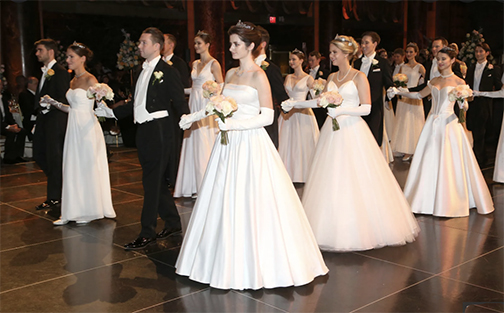
    As spectacular as many of the gowns worn by celebrities at the recent Met Costume Ball were, they had nothing over the extravagantly clad waltzing couples at the 66th Viennese Opera Ball held at Cipriani 42 Street this week. An annual white tie gala, –floor length gowns for women, white tie and tails for men–the Viennese Opera Ball brings the culture of Austria to America, of Vienna to New York, featuring dinner, dance, and debutantes in the grandeur of this former bank. Connecting two continents, the glamorous night was created by Austrian expatriates, as a tribute to their former hometown Vienna and their host city New York.  After a long Covid break, this was one night to be out and about. 

    Chair, Jean Shafiroff, never to be outdone, wore an ice blue layered tulle off the shoulder gown by Malan Breton, and President Silvia Frieser wore a stunning brocade by the same French designer who also donated a dress for the auction. Artwork by Fer da Silva was also auctioned. Wearing a tuxedo jacket that looked like Jackson Pollock dripped white paint on it, the artist created a heart installation used by many guests as a backdrop for photos. Leave it to an artist to extend the concept of white tie. The evening benefits Sloan Kettering Cancer Center through Denise Rich’s Gabrielle’s Angel Foundation for Cancer Research, and raised funds for the people of Ukraine.

  • Downtown Abbey
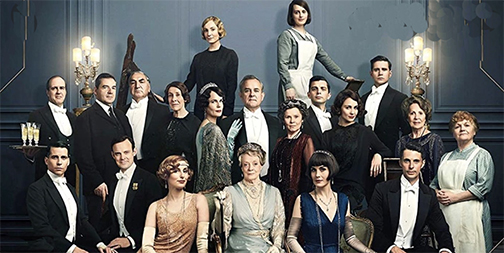
    Downton Abbey: A New Era hit the spot! The swell of music, a wedding, I was swept into fandom from the start, at times teary, at other times swooning, and laughing out
loud. Writer Julian Fellowes, brilliant at creating romance, never forgets the real estate. Downton is a place, a grand house where The Granthams, now family to me and millions of followers, have arrived at modernity, a delicious lapse between the two wars, and just before the Depression. Happy endings abound as the family braces itself for a surprise or two. Granny, the Dowager Countess—the always remarkable Maggie Smith—has inherited a villa in Toulon, in the South of France, from a former lover, allowing some of the Granthams to head to the beach to check out the joint, yet another palatial home. That leaves Downton to be managed by Lady Mary, the stern, lovely Michelle Dockery, as a film crew arrives at the dawn of talkies. Yes, it’s a little Singin’ in the Rain, turning a story we love into a larger story we love.

    Only a grand premiere will do, an opera house for the grandest soap opera of the last decade: Lincoln Center’s Metropolitan Opera was fitted with a movie screen for the occasion followed by a grand dinner at Tavern on the Green, allowing Fellowes to hold court in the garden. The head of two events, he was greeted by the casts of not only the Downton movie, but HBO’s The Gilded Age, a thematically related series of New York wealth and class–featuring the fine mansions along Madison. Dockery, Laura Carmichael, Elizabeth McGovern, Hugh Dancy with his wife Claire Danes, Christine Baranski, Debra Monk, Louisa Jacobson (her mom is Meryl Streep), all stopped by his table.

    (more…)

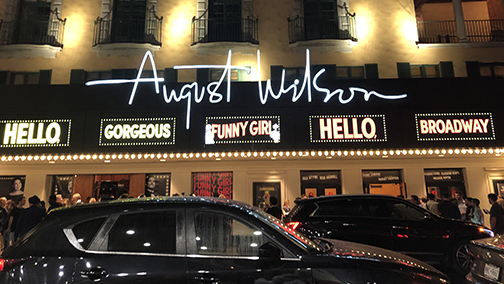
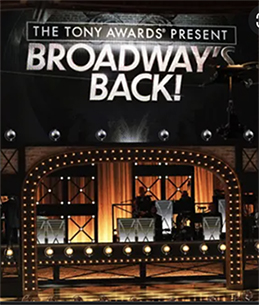
  • TonyxxxxCelebrating the Tony nominations this year held special excitement: it’s the 75th anniversary, the first in-person comeback after Covid, a year of re-emergence for shows shuttered in March 2020. Vaxxed, masked, Covid-tested, journalists met with the nominees in a return to Broadway-as-usual. A dozen or so sat at designated places in a room at the Sofitel Hotel in midtown, just a stone’s throw from the classic stages where many of the nominated would perform for the evening. Handlers offered stars as they worked the various outlets, as in, we have Hugh Jackman, do you want him? Duh. Who doesn’t want Hugh Jackman? Ok, you have two questions.

    And so it went, as stars came in and out often yanked, and still, the event was like a master class in theater production, and a recognition of just how hard, and how special live theater is. Lessons are learned in passing. Allowed almost no time with Hugh Jackman, you may get the superficial, how he feels about being nominated. Great. But then, with Music Man choreographer Warren Carlyle, you find out “Hugh’s success is not an accident. He worked hard all through the pandemic, rehearsed for the Music Man revival for three years.” A quintessential Broadway vehicle, The Music Man is not perceived as a dance show. What changed? Two things, said Carlyle, Hugh Jackman and Sutton Foster. “All the choreography is new, every step out of my head, nothing from past shows. I really went for it.”

    (more…)

  • Billy Christal2
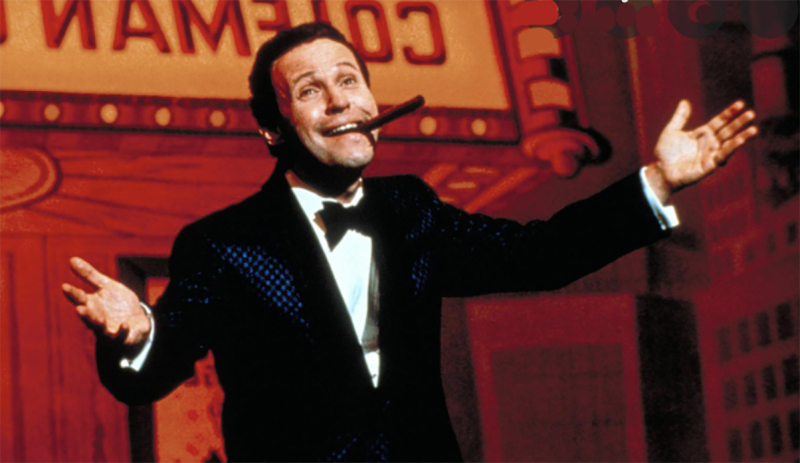
    I’ll have what Billy Crystal’s having–stamina. In his show, Mr. Saturday Night, the comedian/ actor/ Oscar host sings and dances with flair, if not youthful energy. Shuffle, low-key moonwalk, at least the man—now in his ‘70’s– has moves, which makes the show’s premise very funny. With a career on the skids, his character, Buddy Young, Jr., performs at old age homes, cajoling his audience, that is all of us at the packed Nederlander Theater, with ageing jokes. Because he is adept at his act, having had a hit show at the dawn of television, his jokes land. And with his family backstory, he asks his wife Elaine (a wonderful Randy Graff), his straight man/ manager brother (fine David Paymer), his daughter (excellent Shoshana Bean) and agent (terrific Chasten Harmon): did you see what I did? Explaining his timing, his verbal and visual diversions, he teaches a master class in comedy, a side plus to this highly entertaining show.

    Alert: this is not a stand-up act, which you might expect from comics coming to Broadway—think Jackie Mason. Mr. Saturday Night has a narrative, maybe it’s corny: how Buddy met Elaine in the Catskills, his fraught relationships with just about everyone. But curmudgeons are loveable anyway, and when at the 1994 Oscars, he shows up on the In Memorium reel, well, you can imagine how that mistaken death kicks off some pretty funny bits. And, there’s a backup act too: a trio of stock types (Jordan Gelber, Brian Gonzales, Mylinda Hull)—the recurring showbiz antics will be a nostalgic send-up for anyone who was watching in tv’s nascent years. It all makes for a fun night with laughs all the way.

  • MacbethA highly experimental Scottish play bloodies the Longacre Theater on Broadway. As the audience takes seats, cooks brew in pots (cauldrons) on a set that resembles a downtown city loft. Smoke blowers create a dreamy, sinister atmosphere. One actor, Michael Patrick Thornton, takes center stage, greeting the crowd, asking them to whisper the name of the play, Macbeth, to ourselves as if to expel the superstition attached to Shakespeare’s popular tragedy. This year brought us Joel Coen’s movie, Macbeth in abstract, in black & white, and this one contrasts in its specificity, red spots everywhere. Partly that’s owing to this Lady Macbeth, a dynamite Ruth Negga with sharply defined finger waves, a tiny frame, a bullet of a personality challenging her husband’s manhood. Would anyone doubt the potency of Daniel Craig as Macbeth? He’s a happy camper at the outset and as his life becomes more and more tarnished in blood: is it just a problem of laundry or just a change of expensive pajamas?

    Out out brief spot. That’s a lot of blood, spurting from a man hoisted upside down, a pig releasing juices for an odd stew. Suttirat Larlarb’s costuming makes a splash. Craig is most stained, in white t-shirt, fur coat, brocade jacket, silk loungewear with armored vest. Negga dressed in a gold gossamer tiered gown, looking like Cleopatra, never has blood on her hands, but she’s busy scrubbing the floors. Till those woods encroach, –that’s always the opportunity for Macbeth’s greatest and most innovative dramatic spectacle.

    (more…)

  • SynphonyPhoto:  Aylin Tekiner

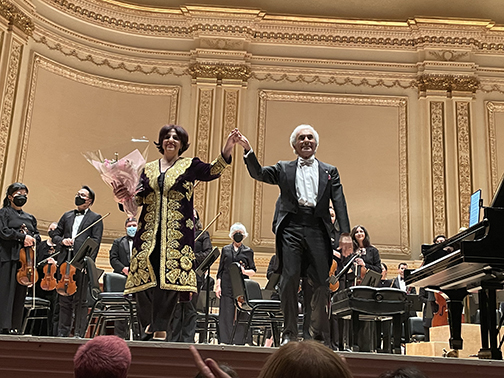
    The Holocaust continues to unravel secrets. During this period of remembrance, a symphony by a survivor from Salonica, Greece pays homage to his community, its creative artists, and a little-known pocket of wartime history. You know the joke: how do you get to Carnegie Hall? Way more than practice! The music took a very long and arduous route by way of Auschwitz, culminating last week in an evening featuring Renan Koen on piano and a symphony conducted by Maestro Gurer Aykal from Turkey. Entitled “Hymns from Auschwitz,” the program, sponsored by Holocaust Memorial and Tolerance Center of Nassau County, was named for a newly composed piece by Elcil Gurel Goctu (b. 1979) for hazans, pianos, and orchestra, followed by the historic work, a symphonic postwar poem, whose composer Michel Assael (1918-2006) never heard his masterpiece performed.

    As a researcher, renowned pianist Renan Koen was awed by the composers of Theresienstadt: how under the murderous conditions of the camp were they able to make art? Her work led to composer Viktor Ullmann who encouraged his fellow prisoners to write music before he was deported to Auschwitz, and murdered two days later. Michel Assael survived Auschwitz by playing in the orchestra there alongside Dr. Albert Menache who later wrote a memoir BIRKENAU (Auschwitz II): How 72,000 Greek Jews Perished. It may have been that Menache and Assael were performing when Ullmann was led to the gas chambers, as reported in the memoir. The music we were hearing at Carnegie Hall was Assael’s symphonic poem (1947-1948) inspired by Dr. Menache’s memoir.

    (more…)

  • How I learned to drive
    Ewwww! That’s not my critique of Paula Vogel’s tight memory play, How I Learned to Drive– rather the play, now having a Broadway debut after 25 years– is brilliant. It’s the people: the family. At center, Uncle Peck and Li’l Bit (the sublime actors David Morse and Mary-Louise Parker) who originated these roles Off Broadway. You will wonder, what took them so long to get to Broadway? And you will marvel at how prescient the play is of the present moment. And then, you will realize just how normal and natural that “ewwww” factor really was all along.

    Affable and courteous, Uncle Peck held Li’l Bit in his hand as she was born, he said, and from there he’s loved her every day, from that time, and when she was eleven, and he asked to unbutton her shirt as she sat on his lap. “Only if you want,” he said. And continues to say even when he courts her with gifts and encourages her martinis. And teaches her to drive. Which becomes a structural device marking scenes but also providing a nuanced and loaded language: avoid reverse gear and idling.

    (more…)

  • Little Prince
    Aerial feats, dance, a touch of Gaul—Antoine Saint-Exupery’s The Little Prince at the Broadway Theater brings a beloved children’s classic to the stage with visual flair. Beginning as the book does with a crash landing in the desert, the show moves quickly from scene to scene as a boy in a yellow jumpsuit and yellow spiky hair from a nearby asteroid recounts his adventures to the downed aviator. Sort of a Candide meets Cirque de Soleil. 

    One such encounter is with a beautiful rose (Laurisse Sulty), another with a wily fox (Dylan Barone), all of whom impart some wisdom to the boy (Lionel Zalachas). Chris Mouron, writer and co-director with the show’s choreographer Anne Tournie, does a fine job narrating these events. In green hair and tweetle-dum suit, she speaks with a heavy French accent, the story translated to English on both sides of the stage. My companion, 7-year-old Max Herman was grateful to be able to read her words, but was far more dazzled by a dancer with a toilet plunger, loving the spectacle—and proclaiming this part his favorite.

    (more…)

  • Surviver2
    HBO launches its movie, The Survivor, with a lavish premiere just in time for Holocaust Remembrance Day. Barry Levinson’s latest stars Ben Foster as boxer Harry Haft, Auschwitz survivor and refugee. 

    As Auschwitz stories go, Harry Haft’s exceeds the norm. Grasping his world in the camps and beyond in Brooklyn, Ben Foster, in the performance of the year, gets Haft –as boxer and as nightmare-ridden refugee– in Barry Levinson’s adaptation of son Alan Haft’s book, The Survivor. Told in two-time frames, The Survivor pares down Haft’s experience: the Holocaust period in black & white when he is made to entertain the Nazis using his skill as a boxer. Nazi officer Dietrich Schneider puts him in the ring fighting fellow prisoners to their death. If you thought Billy Magnussen was “bad” in the recent James Bond movie, here he brings his super-bad game, “owning Haft,” as it were. In color, survivor Haft fights in the rings of Coney Island, fighting even Rocky Marciano, with one goal shaping his American existence. That is, to find Leah (Dar Zuzovsky), his love from before the war.

    Picture Raging Bull meets The Pawnbroker. Imagine the violence, the searing impression of the blood oozing out of the fighters—with Haft so gaunt, so spent, you cannot even think of his having body fluids in his vividly depicted post-war visions, triggered even on his honeymoon when he marries Miriam, Vicky Krieps in a tender role. They go on as survivors do, having three kids, managing the past as best they can—singing “God Bless America” in Yiddish.

    (more…)

  • Clove davis“The thing about turning 90,” quipped music impresario Clive Davis, “is I realized, last year I was 89.” The occasion was a birthday dinner at The River Café that was also a celebration of the Clive Davis Institute at New York University, an educational venue that also features studios where young artists can record their work. The pre-dinner opening of an exhibition of Davis’ archive showed off his gold and platinum records and a wall of artists Davis represented at Columbia, later Arista, J Records, and SONY: Bob Dylan, Aretha Franklin, Whitney Houston, Patti Smith, Bruce Springsteen, Simon & Garfunkel, Barry Manilow, and so many more in Davis’ stellar career spanning six decades. Famously, Davis signed Janis Joplin after hearing her perform at Monterey back in the day. In one vitrine with personal correspondence a visitor can see invitations to concerts, such as one, to a supper at Davis’ home for Joplin following a performance at Madison Square Garden. Clive Davis has an ear. Has—he is still going strong.


    (more…)