• A Film Unfinished
    Just when you think historians have unearthed as many images as can be mined, illustrating what happened to the Jews of Europe during World War II, a new can of film emerges, and becomes a catalyst for a re-reading of a vintage Nazi film marked “Ghetto.” Containing scenes from inside the Warsaw Ghetto shot in May 1942, An Unfinished Film opens at Film Forum this week. A fascinating compilation of  “Ghetto” footage with diaries, letters and testimony of those who were there, Warsaw Ghetto survivors, this documentary does not so much shock with stock pictures of walking skeletons, piles of bones, bodies heaped in the streets and on carts, but with the lingering gaze of individuals as they are victims twice, having been rounded up for ghetto squalor, a prelude to their murder, but now forced to pose for Nazi propaganda. The Germans authorized this film back in the day, a proud testament to their design for genocide, and now they are the principle funders for this first-time release.

    Here are some indelible moments: A group of naked women walk gingerly into a pool of water. Not yet emaciated, the women become useful, depicting “a ritual bath,” common in the life of observant Jews. A survivor, now in her '80's, remembers a film being made in the midst of ghetto misery, asking: “What if I see someone I know?” Outtakes of officers, and of cameramen at work, staging shots to show “the good life” enjoyed by Jews in the Warsaw Ghetto.

    As Israeli filmmaker Yael Hersonski pointed out at a special screening attended by Elie and Marion Wiesel, Tovah Feldshuh, Yoko Ono, Gabe Pressman, and others last Wednesday night at MoMA, this footage was used in other films, but here, seen in context, the viewer is overwhelmed by the pain, humiliation, embarrassment, and abject circumstance of these women who had been corralled off the ghetto streets and forced as “actors” in this piece of Nazi promotion. Would any agree to be photographed in this private, modest act? To see this footage in real time, is to witness the Holocaust unfiltered through dramatic re-enactments. The World War II era is known to us through skillfully shaped scripts and deft cutting techniques by talented and well meaning artists. The look of some of our most famous Holocaust films, like Steven Spielberg's mostly black & white Oscar winning Schindler's List comes from a study of this early Nazi documentation.

    Despite the fact that it contains no scenes of sex or violence near the graphic display of your typical Hollywood action vehicle, the rating for A Film Unfinished is “R.” Perhaps nudity is a factor, although I would argue for the less prurient “naked” for this material. The market limiting “R” is reflective of the film's power: the truth is so much more visceral, bewildering and disturbing than any fictional account. As much about the crafting of history, A Film Unfinished is another important document in understanding that, as its title suggests, the Holocaust is a subject that remains unfinished.

    Regina Weinreich

    Graphic Design: Salpeter
    Ventura

  • Jacki Weaver 2 What hits you immediately upon meeting Jacki Weaver, the extraordinary Sydney-based actress who plays Smurf (Janine) Cody in the movie Animal Kingdom is that she is nothing like the sociopath, the manipulative mom with darting eyes and flirtatious menace she plays in Animal Kingdom. This Australian Tarantino-like crime drama won top awards at Sundance, and opens this week. I had the opportunity to sit down with Weaver at the Regency Hotel in New York on June 22. Sizing you up with her blue saucer eyes, this blond Sally Strothers lookalike asks you a question or two, until the lines blur, and you wonder, who is interviewing who.

    Why haven't we seen more of you in this country?

    I don't know. I've been acting for 48 years. I've never been out of work, never done another job, I get some great roles, playing a lot of Americans. That's why I'm so interested in hearing the way you speak. I've done three Neil Simon plays. My husband and I did two American classics: Death of a Salesman and Prisoner of Second Avenue. I've been in a long running musical, They're Playing out Song, wearing a black wig, looking a lot like you. Last year I toured for seven months in Steel Magnolias. Now that you mention it, if I'd been living here, they're probably roles I never would have been given. I've been here a lot, coming every year for 20 years. I see a lot of theater: my best was 30 shows in 3 weeks. That's 7 nights and 3 matinees per week. I've been in a few tv series, a couple written especially for me, but I am mostly a theater actress. This year I'm doing 4 plays back to back. None is American. I will do Uncle Vanya with Cate Blanchette. You could say I'm married to the theater.

    Is this all in Australia?

    Yes. Nowadays all the young actors go straight to Hollywood and get into pilots, but this is something that my generation didn't do. Maybe it was lack of ambition or courage. We loved everything that came out of America. Big filmgoers, we're obsessed with American culture. I grew up watching Mickey Mouse Club. My son grew up watching Sesame Street. We are like sponges. We like our own culture but there's a lot about America that we understand. It's very surprising at this stage in my life to be in something that is getting such a big release in America. Now that I'm 63, it just makes me laugh. I knew that I was happy with what we'd done. And then we won at Sundance. We only went there because we were one of the 12 finalists. And then when we won, we'd all left Sundance because we never expected to win. Suddenly I'm talking to American journalists the way I talk to Australian journalists.

    I understand you were one of the first actors to sign on to this film.

    David Michon said he wrote it for me, flattering, but unexpected too. You would never expect this role to be offered to an actress like me. You expect someone more hard bitten. I usually get Sally Field roles. But the nature of this woman is so complex. You don't realize she is an amoral sociopath until way into the film. That was David's idea. My idea was to jump in boots and all and play her like a Disney witch. Sociopaths are very good at charming people and hiding their true colors. It's important that at the beginning we see her as a typical ordinary loving mom.

    Someone who kisses her sons on the lips?

    That's a little touch, a gesture that speaks volumes. That was David's idea. It didn't occur to me that she would do that. But it says so much about her power over these boys that she condones, encourages their criminal behavior. And the boys have all had different fathers. Her behavior is inappropriate, crossing a line toward incest.

    Is this genre of film peculiar to Australia? I saw The Square, another dark badass movie with many of the same actors and a similar sensibility. For example, a character is offed, and you say, gee, I kind of liked him.

    Yes, Joel Edgerton made The Square. He's is Hollywood at the moment. He's lovely, with quite a future. Yes, there's a similar banality of evil in these movies, an anti-glamorizing of the bad people. There's a pragmatism in the violence. I think we are mesmerized by the crime genre because most of us are law abiding. We find it riveting that there are people who go beyond the bounds. I think most of us are capable of bad things but most of us know when to draw the line.

    How did you prepare for your role?

    I read a lot of true crime, a lot of this movie mirrors events that took place in Melbourne in the 1980's, a feud going on between the corrupt police and a couple of criminal families. This is fiction, though, because David wanted to tell the story himself without worrying about the history: there were 2 young cops killed as a reprisal and there was a family of thugs. The mother has around 6 kids, a bad woman who ran brothels, and had people killed. Two of her sons died in jail. They committed several murders, one with a chain saw like in Fargo. She's only got one eye because another criminal shot it out. In Australia we've got much stronger libel laws than they do here. She's still around, and a bit scary. We don't talk about it even though everyone knows who this character is based on. We do have a reality show a little like The Sopranos but we use real names. It is incumbent on the actors to do a kind of impersonation. That would not have bothered me. But David did not want to make a biopic. He wanted to borrow from those events and make his own story, so we invented the character. The real life mother is furious. She was interviewed, saying: Everybody's making money off my fucking life except me.

    Your acting! There's something about this character. She is sweet one minute and then you are not even aware she is changing. And then all of a sudden it's the look in her eyes.

    That's what we wanted. It was a good collaboration. David had a clear idea of what he wanted but at the same time he is not a puppeteer like a lot of young directors. They will tell you exactly how they want things and you might as well be a storyboard for animation. The best acting comes from collaboration and David was ready to listen to all of us. At the same time he had a clear vision.

    Did you go to acting school?

    I started when I was 3. I came out of the womb pretending to be someone else. I love the work of Judi Dench. Meryl Streep. Anything by Woody Allen and Pedro Almodovar. I am fascinated by others: I always find other people far more interesting than I am.

    Is that why you started our interview asking me questions?

    You are like a lot of my black wig characters. I wear a lot of wigs.

    Were you wearing one in the movie?

    No, they hot rollered my hair beyond belief.

    Did it take a lot of time in makeup and wigs?

    Not as much as the tattoos on the boys.

    At the end of Animal Kingdom, the grandson-played by an extraordinary newcomer, James Frecheville– surprises you. What do you think happens to the grandson?

    It shows good writing that the end is not spelled out. But my theory is, he's now top lion. It's too late for him. He's already committed a murder so he has to be involved with crime. The family will continue with the grandson running the roost. And the grandmother has to obey him for her own survival. David is already talking about a sequel, even
    a prequel. I said I'm in, but only if I can choose her husbands.

    Regina Weinreich

    Graphic Design: Salpeter
    Ventura


  • DanielEllsberg The Hamptons International Film Festival had scheduled the screening of the Oscar nominated documentary, The Most Dangerous Man in America: Daniel Ellsberg and the Pentagon Papers, the second in its SummerDocs Series in East Hampton for Saturday August 7, well before Wikileaks made Daniel Ellsberg a hot item-again, 40 years after he leaked The Pentagon Papers. 

    Now, swamped with media requests, Ellsworth will fly east from his home in Oakland, California to attend the Guild Hall screening and join actor Alec Baldwin and Carl Bernstein, the journalist with whom Bob Woodward broke Watergate, for a conversation that is sure to engage his anti-war passions, even though, as he asserted in a recent phone interview, “I am not a pacifist. Self defense is justified.” 

    Q: Do you think the comparison between The Pentagon Papers and Wikileaks is apt?

    The comparison is inevitable. The scale of this leak is comparable. There hasn't been any authorized disclosure on this scale. Both leaks are about similar, hopelessly stalemated wars: Vietnam and Afghanistan are analogous.

    Q: Forty years ago, Henry Kissinger called you “the most dangerous man in America.” Who is playing these roles in today's Wikileaks scandal?

    Bradley Manning is not yet arraigned. His motives are similar to mine: shortening a war and saving lives, same as mine 40 years ago. He said the information needed to be known, and was wrongfully withheld. He said he was willing to take personal risk, and expected to go to jail. I don't know of anyone else to express that readiness to risk. Why not take personal risk? In 1971, in the Pentagon, many people thought the war in Vietnam was wrong. I was supposed to serve 115 years in prison, until it was revealed that the same burglars arrested in Watergate had broken into my psychiatrist's office to steal information. Manning's case is different in that Manning faces charges in a military court, and he may have to go to jail or worse. Republican Congressman Mike Rogers called for execution of anyone who leaks such sensitive information. 

    Q: Are you disappointed with Obama?

    I didn't expect a lot and he is at the low end of my expectations. I just thought he was better than McCain. His foreign policy is actually similar to that of George W. Bush.

    Obama violated or should I say reversed many of his views, but not on Afghanistan. He sent 27,000 more troops in March. In December of 2009, he said he expected to withdraw troops in 2011. I do not expect that to be his last infusion of troops; if he believes that, he was mistaken.

    By the end of 2011 troops with remain. I said I did not expect him to keep to his pledge. I don't think he expects that himself. We will keep bases there for an indefinite period. If Americans turn over U.S. bases to Iraqis by 2011, I will never make foreign policy predictions again.

    Q: Do you think our country has learned anything over the years from the Pentagon Papers?

    Yes, the Pentagon has learned ways of prolonging a war: Curtail reporting, prevent Americans from seeing coffins, blood, injured, dead Americans or Iraqis. That's why what Wikileaks exposed was so important to keep out of sight. Americans saw more violence in the Rodney King video than in images from Iraq or Afghanistan. Writers tried to get the videos and were being refused. Who refused them? This should be investigated. We need to raise questions about the war. 

    The public needs to know. $33.5 billion more has just been allocated for this war in our time of economic hardship. For what? To recruit for the Taliban. We cannot afford these crimes. After 30 years of war it is time to reevaluate our involvement with Afghanistan and if Wikileaks causes a drop in support of the war, that's all to the good.

    Q: Have you seen the Afghan woman on the cover of Time Magazine who was brutally punished for attempting to flee her abusive in-laws? Is this image of a woman with her nose cut off being used to manipulate our sympathies toward our continued military presence in Afghanistan?

    I haven't seen the cover yet, but if you oppose Taliban justice, you need to end the American occupation. Our presence strengthens the Afghanistani's support for the Taliban, a much more fanatic group, because the people will put up with their repressive rule in opposition to the American occupation. Had we left, they would be weaker. The fact is, the Taliban is larger today. The presence of our troops there recruits only for the Taliban. Our involvement goes back thirty years with our funding wars in Afghanistan. Do feminists imagine that the status of women has improved in thirty years? The improvement of women's lives has not been a U.S. government priority, or an effect.

    Q: So, how do you feel about your visit to the Hamptons, and your conversation with Alec Baldwin and Carl Bernstein?

    Oh, is Bernstein going to be there too? I knew about Baldwin. That's terrific.

    As a beach lover and body surfer, I am looking forward to my first visit to the Hamptons for the screening on August 7th, and, the next day, celebrating my 40th wedding anniversary.

    Regina Weinreich

    Graphic Design: Salpeter Ventura

  • Melanie-laurent  A high point of this summer's feel good movie opening this week is surely a superb Tchaikovsky concerto performed unrehearsed in Paris by a hilarious rag tag bunch of Russian musicians posing as the famed Bolshoi Orchestra. If you believe in such miracles, or can laugh at the conceit, The Concert, written and directed by Radu Mihaileanu, is for you. 

    The mastermind of this prank, Andrei Filipov (Alexei Guskov) is now a janitor, but in his prime as orchestra conductor, he was fired for defending his Jewish performers. This historic detail from Brezhnev's regime provides a resonant backstory, bringing the orchestra together with a young Parisian violinist Anne-Marie Jacquet (a radiant Melanie Laurent) who yearns only for the watchful eyes of her parents, thinking they died in an accident.

    The acclaimed French actress and director Melanie Laurent is best known in the U.S. for her performance in the movie Inglorious Basterds. Last week, I chatted briefly with her on the phone about her roles as violinist and as Jewish survivor of various oppressions, Quentin Tarantino, and her future films.

    You play the violin so beautifully in this film. As far as I know, you are not a violinist. How did this role come to you?

    ML: The director chose me. I met him three times to speak about the script. He chose someone else who could not play the violin. The role was a big challenge involving much training. She dropped out. My performance is fake except for the right hand. The left hand is a special effect. It's a lot of work to learn fake movements.

    Your role as Anne-Marie Jacquet in The Concert is very similar to Shosanna Dreyfus in Inglorious Basterds. Are you being type cast as the Jewish orphan?

    ML: I did The Concert before Inglorious Basterds. By coincidence the two characters are close: very strong women focused on one thing, fragile, artistic. Shosanna is focused on movies, Anne-Marie on classical music. That they are Jewish is important for me, and playing the violin evoked my inner Slavic emotion.

    How was the shooting, working with such a strange, eccentric group?

    ML: They shot the Russian parts and then arrived in Paris to film the concert in the Theatre du Chatelet. No one spoke English or French. It was “hi,”  “hi,” exactly as it is in the movie.

    Will we see you in more movies soon?

    ML: After Inglorious Basterds I did Round Up. My next movie is with Ewan McGregor, Beginners to be released in 2011.

    You have received several awards for your acting, including the 2007 Cesar Rising Star Award. While you were not nominated last year, Inglorious Basterds was up for several Oscars. Were you excited?

    ML: Quentin invited me to the Oscars. I was in a play so I couldn't go. I went on the Japan tour. We had a great time. I was disappointed he did not win for his script. 

    Was there any truth to the rumor that you were romantically involved with Quentin during the making of Inglorious Basterds?

    ML: Is that what people said? With Quentin? That's funny.

    Regina Weinreich

    Graphic Design: Salpeter Ventura

  • Ciaro Time 
    Long known as the friend (Vicky Cristina Barcelona), the mom (Pieces of April), the quirky aunt (the HBO series Six Feet Under), it's about time Patricia Clarkson starred in a movie. And star she does in Cairo Time, a fable about Juliette, a magazine writer who goes to Cairo to meet up with her husband, a U.N. official, for a vacation. Delayed in Gaza, he sends his friend Tareq (Alexander Siddiq) to shepherd her through this exotic and bustling location, complete with pyramids, camels, a boatride on the Nile, and splendid sunsets. For emotional transportation, the hookah is the least of it. The movie of Eat, Pray, Love may be on the horizon, but Cairo Time gets there first.

    At a special screening on Monday night followed by dinner at rhe refurbished Plaza Athenee, the Canadian writer/director Ruba Nadda, resplendent in red dress and lips, with long raven hair, spoke about this story, emblematic of a woman's awakening. “I was focused on the man,” she said surprisingly. “I wanted to show a man from the Middle East like my Syrian father, traditional and yet a feminist.” 

    Siddiq, a British actor who plays the man in question, modestly says he is not offered a great deal of roles and was captivated by Ruba's Cairo Time script. Originally from Sudan, Siddiq will soon appear in Julian Schnabel's Miral, a long awaited movie based on the Palestinian writer Rula Jebreal's novel. “I play a very different kind of man, a Palestinian who is the glue for the women in the story.”

    Of the many well-wishers in attendance including Al Roker, Hoda Kotb, travel correspondent Peter Greenberg, another woman in red stood out: Patricia Clarkson's 75 year old mother. An elected Councilwoman from New Orleans, Jackie Clarkson was at ground zero during Hurricane Katrina, staying on to help with the city's recovery. You could see in an instant where Clarkson gets her vivacity.

    Regina Weinreich

    Graphic Design: Salpeter Ventura
  • Katie_holmes Katie Holmes blew into town to attend Monday night’s New York premiere of “The Extra Man.” She briefly walked the red carpet, avoiding the screening and after party, before moving on to Toronto for an early call to the set of the tv mini-series “The Kennedys.” She plays Jackie Onassis, a role not unlike the one she plays in real life as Mrs. Tom Cruise.

    Expected not to attend, Katie was brave to support writer/director Shari Springer Berman and her co-stars Kevin Kline and Paul Dano considering that many reviewers after the movie’s opening at Sundance found her performance “weak.”

    As Mary, Holmes plays a vegan office mate and heart throb for Paul Dano’s Louis Ives, a nerdy devotee of F. Scott Fitzgerald’s “The Great Gatsby” with a taste for cross dressing; in one scene he sports a black lace teddy you may wish to have seen on Holmes, were she not slated for the “straight man” role in a movie that abounds in eccentrics.

    It’s hard to say whether the part was written lamely, or if Holmes is just lackluster in it. The days of “Pieces of April” are farther and farther away.

    Kevin Kline as Henry Harrison heads this quirky concoction of character actors, the extra man or social escort to haute monde matrons. Lynn Cohen and the magnificent Marian Seldes cheered him on from the audience. Tracey Ullman, scouting for a seat, could have rounded out this eccentric cast.

    Before the screening began, writer/director Shari Springer Berman (her partner Robert Pulcini was absent),  dedicated the opening at the Village East Cinema to the memory of recently deceased Harvey Pekar. “American Splendor,” also directed by Berman and Pulcini, was based on his work.

    Novelist Jonathan Ames–creator of HBO’s Bored to Death as well as the author of the novel on which The Extra Man is based–was next at the microphone. He performed three yelps, which sounded like a Shofar being blown on the High Holidays. Yes. he yelped. Loudly.  It was fairly odd. Ames also noted that this location on 2nd Avenue was a one-time Yiddish Theater

    Vapiano, a new pizza and pasta emporium on University Place was packed for the after party. Guests queued up for individually created servings of carbonara, or pesto, allowing diners — like Mrs. Kevin Kline aka Phoebe Cates, Sean Lennon, Samantha Mathis, Drew Nieporent, Zoe Kazan, designer Cynthia Rowley, Eli Tahari, Patrick Demarchelier, actress Yaya DeCosta, Eammon Bowles, Rachel Dratch, Judah Friedlander, Dan Hedaya– to exert some eccentricity of their own.

  • Pennebaker2
      
    Legendary documentary filmmaker D. A. Pennebaker was feted at a paella feast for his 85th birthday on Saturday by wife and partner Chris Hegedus and the expansive Pennebaker clan including one ex-wife, eight children, a flock of grandkids with one on the way. Longtime associates Nick Doob, Jane Balfour and others were on hand in a sprawling house near the beach in East Hampton, the party hosted by his daughter, Zoe, a painter. What sort of gift do you give on this grand occasion? A basket of garden vegetables, and a copy of the newly published correspondence between Jack Kerouac and Allen Ginsberg (Viking). (Penny, as he is called, was once tapped to do the long awaited film of On the Road, now half a century later to be shot in early fall in Montreal with Walter Salles at the helm.) And Roger Friedman, co-producer on his documentary Only the Strong Survive, brought Penny a surprise guest: Aretha Franklin. The cake was a homemade hazelnut confection, a hint of what's to come in the new PennebakerHegedus documentary opening in September at Film Forum: Kings of Pastry.

     ———————————————————————————————————————————————-

    Joy BeharSmall Also in East Hampton: a panel at Guild Hall last week featured funny ladies Joy Behar, Angela LaGreca, the always charming Meredith Viera, and a lavish buffet catered by Citarella. The conversation revolved around wisdom learned while doing The View-i.e. Barbara Walters always asking of topics: does it play in Wyoming, to the subject of ageing: Joy Behar at 67 says it's a pain in the ass, but offers, “A smile is a natural facelift.”
                     ———————————————————————————————————————————————

    And, as announced, Jackson Browne performed at the newly minted annual Hamptons Oceana fundraiser in Watermill, hosted by Lois Robbins and Sue Cohn Rockefeller. Sam Waterston and Caroline Hirsch were among the rapt audience for his ocean-themed classics: “After the Deluge,” “Rock Me on the Water,” and other hits “Runnin' on Empty,” “Wonderland,” “The Pretender,” and “Taken it Easy.“ Oceana Chairman of the Board Keith Addis plans to take an expedition down to the Gulf.
                 ———————————————————————————————————————————————

    The evolution of Montauk from a fishing town to a Hampton proper has been gradual and steady. The Montauk Yacht Club had a major renovation in the past few years. The Memory Motel has made a comeback. The Surf Lodge took a beat up bar on the water and transformed it into a luxury getaway with trendy nightspot. This summer's stellar makeover is the Panoramic View Resort & Residences on the Old Highway. Hear the ocean, smell the sea brine, you'd swear you were in the villa of your wildest dreams.

  • Dream Machine
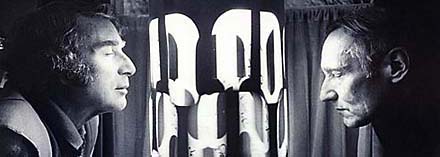
    After the Guggenheim's 2009 show, The Third Mind, named for a concept of collaboration by famed novelist William S. Burroughs and lesser known painter, writer, restaurateur, raconteur Brion Gysin, inevitably a curiosity would grow around this exceptional artist of many trades. The New Museum does great service to Gysin's work in a new show called Dreamachine, so dubbed for a device he co-created to stimulate hallucinatory states of consciousness. Makeup magnate Helena Rubinstein was said to have had one. And Keith Haring brought Gysin to New York for a show at the Tower Gallery in the 1980's in exchange for one. And now, you too can sit on a cushion and feel the flicker of light over your closed lids. But who was Brion Gysin and why haven't we seen more of him?

    As Nabokov wrote of his Lolita protagonist Humbert Humbert, Gysin was a salad of racial genes: a mix of British, Swiss, and Canadian. He lived mainly in Paris, and in Tangier, loci of much literary and artistic experimentation. Many have considered him merely a catalyst of art in others: for example, it was Gysin who invented the cut-ups, a collage technique utilized to random perfection by Burroughs in a series of novels. While the New Museum exhibits this part of his career, this show of 300 works also features calligraphic paintings, drawings, films, notebooks–sufficient evidence for a rethinking of Gysin as an artist on his own.

    In the excellent catalogue that accompanies this exhibit, friends and colleagues offer fascinating glimpses into his art. Poet John Giorno provides insights into Gysin as a sound poet, painter George Condo writes of Gysin's photorealist imagery, describing him as “a man of internal music for which no score could be transcribed.” Throbbing Gristles' Genesis Breyer P. Orridge explains the uses of cut-ups for his own work and the inspired Gysin notion, “Poets don't own words,” opening the door for alternate modes of creativity. James Grauerholz, executor of both Burroughs' and Gysin's literary estate, writes movingly of the personal ties between Burroughs and Gysin particularly after 1974 until each one died, Gysin in 1986 and Burroughs in 1997. Contextualizing William Burroughs as a painter, he claims, begins with Brion Gysin.

    In a taped interview, Burroughs laments that the mold is gone for people of a certain caliber-including Becket, Genet, Bowles, and Gysin. The tribute from so close a friend and collaborator goes far in illustrating the remembrance of those who knew him best. You won't, however, get Gysin's drama queen persona at the New Museum. Curator Laura Hoptman spoke about such limitations at a press opening.  None of Gysin's Jma el Fna market place paintings -works that were on view in Burroughs's Bunker as well as leaning against the floor in Paul Bowles's Tangier flat-are represented. Morocco career is evident in other calligraphic works. More than other expatriates living there in the pivotal mid-century, he “went native” in adopting habits and perceptions.

    In a case of synergy, uptown at MoMA, at the new Matisse exhibition at MoMA, “Radical Invention 1913-1917,” such famous paintings as “Zorah in Yellow” show the imprint of Tangier, the place Bowles called “a dream scape.” Christopher Nolan's new movie starring Leonardo diCaprio, Inception, a film that plays with states of consciousness, uses the Tangier medina as the perfect maze for working out the Burroughs/Gysin conception of ideas as viruses.

    Brion Gysin extolled a humbling worldview: we are Here to Go; nevertheless at the New Museum, it is simply amazing to see the rich legacy he left behind.

  •  


    Pacino5
    Merchant of Venice is always a bitter pill for us Jews, even when the production is as good as the one at the Delacorte Theater featuring a cast led by Lily Rabe as the beautiful-as-she-is-wise Portia and Al Pacino. Well, if the payis and tsissis fit the droopy, beaked visage of Shylock, I say, wear them. An anti-Semite's dream, using the definition that a thing is anti-Semitic if it is more Jew hating than is mete, Merchant of Venice is that thing, but what should we do? Censor Shakespeare?

    Indeed, I know not censorship. Much has been written about the pound of flesh, the 3000 ducats, perhaps most poignantly by Philip Roth in his 1993 novel Operation Shylock. The critics have been over the moon about the fine ensemble, ruminating on the relative merits of Pacino here vs. his Shylock in Michael Radford's 2004 movie.

    So, what rankles us today in our bucolic Central Park? To start, the character of Antonio, ably played by Byron Jennings, is too well liked by his gentile consorts. How do we, the p.c. minded public and Jews alike, take his insult upon insult, his comfortable insistence that he would continue to insult Shylock, even if the Jew were to lend him the desperately needed ducats, with or without interest?

    And what of justice: Shylock is more than derailed by the loss of his daughter Jessica (Heather Lind) to her Christian beau Lorenzo (Bill Heck). Must we witness his baptism too? Staged is the opening of a pool by which Shylock, head dunked, is stripped of yarmulke and identity. Here is Shakespeare's pre-figuration of a post-Holocaust problem: when is a Jew not a Jew? The last we see of Shylock, he is lumbering off into an unlit hole. The “does not a Jew bleed” scene, great as it is-with Pacino speaking it in a resigned softness– does not sufficiently cover the racism. Shakespeare cannot seem to wrap his ample humanity around this character.

    But here is where this staging, under the fine direction of Daniel Sullivan, opens a door: as all exit, Jessica alone in the brilliance of an unscripted image, hangs out by that pool: what is she thinking of her part in her father's demise? Leaving the theater, I overheard one viewer jest that a sequel is waiting to be written in which Lorenzo converts to Judaism.

    The subject of Marriage is under scrutiny in “Merchant,” and in another of Shakespeare's problem plays, The Winter's Tale, with which it shares the summer stage and most of the cast. In the darkly mercantile “Merchant,” marriage is a transaction of good guessing, with loyalties played out in the fate of two gold rings. In The Winter's Tale, well directed by Michael Grief, a seriously wrong-headed monarch Leontes (Ruben Santiago-Hudson) dooms his wife Hermoine (Linda Emond) and friend Polixenes (Jesse L. Martin) accusing the innocent pair of adultery — defying even the Oracle. You know there's trouble when the gods are called in.

    And how do men know the ways of the gods? Those mysteries may be interpreted by Marianne Jean-Baptiste, who stands out as Paulina, a woman of the court. This fine actress is good in “Merchant” too, as Portia's sidekick Nerissa, but in this play she is a bedazzling sorceress in magenta. You cheer for her as she gives those dumb rulers the what for.


  • Ted-danson_01 Long
    distance from LA, the television star I know best from Cheers, and who has just
    completed a season of Damages, Ted Danson wanted to talk about some other kind
    of damages, to our oceans. Enthusiastic as could be, he told me about Oceana,
    an organization interested in changing ocean policies worldwide. An evolution
    of American Oceans Campaign, he co-founded with a partner 20 years ago, Oceana
    is inaugurating an annual benefit on Saturday July 10 in Water Mill overlooking
    Mecox Bay, hosted by Lois Robins and Sue Cohn Rockefeller. Ted Danson urged me
    to attend. 

    Cautioning about such
    concerns as overfishing: We could fish out our oceans commercially. Canadian
    Cod won’t come back. 90% of our big fish, marlin, sword, and tuna are gone. We
    throw away 30% of the world catch, so in addition to overfishing, we are
    wasteful. By bottom trawling, we destroy coral reefs where small fish feed so
    we are destroying the top and bottom of the food chain. And all this is
    fixable. He also spoke about the damage done by drilling, the Gulf of Mexico
    being a prime case in point, reason enough to develop wind power as they are
    doing in other countries. We need to develop new industry and put a moratorium
    on deep well drilling. Look at what the oil spill did. We cannot blindly more
    forward. We are a moron culture, but we can fix it. He is optimistic about
    being smart and attacking the problem with grace.

     Go to OceanaSplashParty.org
    for more information.

     And will he be joining us on
    July 10?

    Trying to, he said,
    explaining an obligation that may keep him at home in Santa Monica. But who
    knows now that it has been announced: Jackson Browne will be performing.

    And last week’s screening of
    Countdown to Zero at Goose Creek also featured a Q&A with the impassioned producer,
    Lawrence Bender, who spoke about a potential global disaster no one is really talking
    about: the nuclear threat. No matter what happens with oceans or other environmental problems, our planet may go down faster. As this film makes powerfully clear through an array of speakers including Valerie Plame, Gorbachev, Musharraf, and Jimmy Carter, while
    we are all aware, we seem to be asleep when it comes to this more cataclysmic threat. Worldwide disarmament is needed. Are
    you listening, Pakistan, Iran, North Korea?


  • Sting The true love story of music legends Robert Schumann and Clara Wieck is the stuff of 19th century sturm und drang: forbidden love, lofty language, melancholy, and early death. Portraying this passionate couple on Wednesday evening, Sting in waistcoat, with his wife, actor, producer, political activist, Trudie Styler, begowned in a splendid black Roland Mouret strapless swept across the stage at the Allen Room of Jazz at Lincoln Center. Silhouetted against the expansive darkening sky over Central Park, the players looked iconic, the night magic, for an awestruck packed house.

    The Culture Project in association with Music Unites hosted this special production of Twin Spirits, in celebration of Robert Schumann's 200th birthday. Narrated by David Strathairn, the program featured violinist Joshua Bell, pianists Jeremy Denk and Natasha Paremski, cellist Nina Kotova. Nathan Gunn and Camille Zamora portrayed Robert and Clara in song. In a collaboration that dates back to 2005, director John Caird crafted this “poetic meditation” on passionate love, combining Robert and Clara's love letters, their marriage diary, with compositions mostly from Robert Schumann with additional music from Chopin and Mozart.

    After the stunning performance, Mayor Bloomberg addressed the audience, including “Precious” Oscar winning scriptwriter Geoffrey Fletcher, actors Joel Grey and Richard Kind, Denise Rich, among many others. The mayor had one complaint, that he had not been offered the role of Robert Schumann. After all, he said, being a dashing young leading man, “that's what I do.” He went on to thank Sting and the Police for their hefty $million donation to the city for the planting of trees. Proceeds from “Twin Spirits” would go to music education. 

    Trudie Styler said her understanding of Clara came from seeing this talented woman as a heroic figure: after all, through the tragic circumstance of Robert's demise, she supported their 8 children. She also kept the delicate loving advances of Brahms at bay. Sting quipped that this expert ensemble had met that afternoon-except Trudie, he laughed. “I've known her longer.”

  • AndyWarho Andy Warhol more than exceeded his famous dictum about fame. Now an excellent exhibition at the Brooklyn Museum focuses on his last decade, meaning, work of this art-world genius in late mid-career. The bewigged Warhol predicted he would not survive the hospital when he went in for a routine operation, and he was right. By a fluke, (neglect, or malpractice) he died in 1987 at age 58. As you make it through the 5th floor galleries past “Last Supper,” a 10 x 32 foot canvas with renderings of Leonardo's masterpiece and motorcycles suggesting religious-cum-erotic themes, or “The Origins of Cotton,” one of several collaborations with Clemente and Basquiat, you are reminded of his versatility beyond the much lauded Pop period, dazzled by the sheer brilliance of his vision. At the time, he seemed the enemy of abstract expressionism, and in his last decade, a practitioner of it, in his way.

    The exhibition catalogue features a fine essay by the show's organizer, Joseph D. Ketner, explaining how peeing on a canvas treated with metallic paint turned into a method of abstraction utilized in the series “Oxidation Painting.” A wise inclusion is Julian Schnabel's 1989 take on the Shadow paintings so monumentally displayed at Dia: Beacon with only a few on display in Brooklyn: “These paintings hover as the shadow of life's edge. . . . whereas the subject of many of Andy's paintings is a record of events in life, these are a record of the act of painting.” Also included in the catalogue, in an essay by Bruno Bischofberger, “Collaborations: Reflections on My Experiences with Basquiat, Clemente, and Warhol,” is a Basquiat portrait of Andy Warhol as a banana, brown spots included.

    On Wednesday night a few who knew him gathered at the New York Public Library for a panel moderated by Factory historian Steven Watson: John Wilcock, Gerard Malanga, Taylor Mead, Gretchen Berg, and surprise guest Bibbe Hansen. Joseph “Little Joey” Freeman spoke up from the audience. The occasion was the re-publication of The Autobiography and Sex Life of Andy Warhol by John Wilcock. Known for the documentary, Guest of Cindy Sherman, the editor of the reissue, Christopher Trela said he was inspired to publish it after picking up an original copy of this interview collection with photos by Shunk-Kender. The book's title comes from Paul Morrissey, and becomes a sly comment on its contents: interviews with Factory regulars and other Warhol associates: Charles Henri Ford, Naomi Levine, Marisol, Henry Geldzahler, Sam Green, Ultra Violet, Lou Reed and Nico, among them, by Village Voice founding editor and Interview Magazine founding co-publisher John Wilcock

    Much was said of Warhol as a catalyst for the art in others, his intense work ethic, but no one knew for sure what Warhol was like in bed. The sexiest image: Warhol in come stained jockeys greeting Little Joey, asking, does he need anything when he showed up at his townhouse. In true Warhol spirit, Trela created a marketing device offering a banana shaped bookmark to lure book buyers who would also have the panel members sign. When the books sold out, fans queued up, uttering the line of the night: “Please sign my banana.”

  • RobertMitchum Homage to great cinema was a theme at two events at the Museum of Modern Arts this week. On Monday, in an evening hosted by the Hamptons International Film Festival, photographer Bruce Weber showcased excerpts from “Nice Girls Don’t Stay for Breakfast,” his documentary-in-progress about Robert Mitchum. Through Weber’s lens, the Hollywood tough guy of Westerns and noirs, the creep in the
    original Cape Fear with deep cleft chin and eyes at half mast emerges as a shy, modest, non-celebrity jamming sweetly off-key with Dr. John, Marianne Faithfull, and Richie Lee Jones.

    A Q&A with Alec Baldwin following the screening showed yet another side of Baldwin who should have his own late night Letterman style talk show. Trading anecdotes, Baldwin spoke about Weber’s provocative work in Calvin Klein ads, photographing hunky models bulging in jockeys, recounting how Marcy Klein, in an intimate moment would see her father’s name on her date’s underwear.

    The big question of the night, how did Weber get such candid footage from interview phobic Mitchum who eluded the invitations of Barbara Walters, Dick Cavett, and Larry King. Weber, in signature head scarf, is disarming and sly, telling how he sent beautiful women with gifts to Mitchum’s door.

    Great Directors On Tuesday, Paladin president Mark Urman emphasized the importance of premiering another documentary, Great Directors, at MoMA, one of the first institutions to recognize film as art as well as industry. Director Angela Ismailos wanted to talk to legendary directors to discover what makes them great. The result is an engaging moveable feast with Bernardo Bertolucci, Agnes Varda, David Lynch, Stephen Frears, Ken Loach, Liliana Cavani, Todd Haynes, John Sayles, Catherine Breillat, Richard Linklater interwoven with evocative clips from such classics as The Night Porter, Les Liaisons Dangereuses, ThenConformist, The Gleaners, Eraserhead and Mulholland Drive, to name just a few. Admittedly this is a subjective list inviting the film lover to make up one’s own– and more, to revisit these beloved gems.

    MoMA was packed with directors Bob Balaban, Oren Moverman, Mira Nair, Daryl Wein, documentarians Barbara Kopple, Ellen Kuras, actors Oliver Platt, Susan Sarandon, Marisa Berenson, Ben Shenkman, Stella Schnabel, performers Laurie Anderson, Moby, and artists Chuck Close, David Salle who stayed on for dinner in the museum’s lobby and sculpture garden. The image of Marlon Brando reaching for the butter in Last Tango in Paris lingered.

  • Tilda Introducing her new movie, I am Love, to an audience of fashion and food people last February, Tilda Swinton in a razored asymmetrical blond hair do-we are used to seeing a redhead-said she would be on hand to help if we got impossibly hungry which is what happened with audiences at film festivals in Toronto and Sundance after seeing this stylish movie shot in Italy. She plays Emma Recchi, a wife and mother in a Milan mansion, an emotional ice palace. But soon we are seduced in nature, hidden caves and water racing over rocks, with glimpses of her naked-and having sex with her younger lover Antonio, a cook, who in one elegantly shot scene shears off the baggage of her neatly coiffed look. Forget food! Bring on Italian men. No wonder a critic called this film “a guilty pleasure.” 

    Awakening hungers of all sorts, I am Love premiered last Wednesday with an after party at Barbounia Restaurant hosted by Acqua di Parma and Tuttobello. Another audience of fashion and food people including Cynthia Rowley, Drew Nieporent, filmmakers Jim Jarmusch and Sara Driver, actors Martha Plimpton and Amy Landecker joined director Luca Guadagnino, composer John Adams, and cast members: Tilda Swinton, Marisa Berenson, Pippo Delbono for a lavish Italian buffet. 

    Director Luca Guadagnino explained his commitment to food in an interview in February:

    I wanted to be a chef. I chose film. Food can be a great dialogue between people. Food can nurture and also give a great cultural experience. New tastes and textures can change you. Antonio transforms Emma. He takes the integrity of the ingredients and turns it into a work of art. As a director I am like an orchestra conductor, a chef, I meld elements to make an image and sound, influenced by art and life.

    Italian, raised in Ethiopia by his Algerian mother, Guadagnino has a keen sense of otherness, a profound intellectual subtext to this movie, that explains his characterizations, filmic conception, and casting.

    We are all others, and scared of “othermess.” I shot a portrait of Tilda and she talked about love, the otherness of love. I wanted to make this into a narrative and started to think about a woman in a big house. 

    Having built the family, I wanted to link to cinema of the past-like Antonioni. One day Tilda called me from Paris. She had been to Christian Dior haute couture, and stopped to see Marisa Berenson. Oh, I am a huge fan. We agreed she would be a perfect Rori. Marisa is the niece of Ilsa Schiapparelli. Bernard Berenson, great historian of the arts. She speaks Italian, English, and French. 

    And then I met this amazing, stunning woman, and had to say, we would like to offer you the role of Tilda's mother-in-law, a mother–and grandmother! We did wigs and makeup to age her. I love the way she is in the movie. 

    Yes, but Rori is an older woman who remains in this house, the same house that Emma must escape. This woman, Emma, is liberated but must lose her son, an unthinkable tragedy for a mother? Emotionally, the circumstance is unbearable-and operatic. Was that an aesthetic choice?

    I believe in Freud. Emma loses her son because of the incapacity of the son to confront the reality of the mother's otherness. He doesn't understand that mother is not an empty box that you fill with the concept of motherhood. She has needs, sex, a body, and an emotional deep psychological life that goes beyond the role she has to play. As Freud would say, what happens to him is not an accident. He couldn't face the reality of his mother. Women are objects of the patriarchal system: Asexualization of women on the one hand and desexualization of women. She wants neither. She is a person, a female person. She has to face a devastating loss that will stay forever within her self and never be healed. To live within the confines of the house would be a contradiction. This character and choices she made force her to leave the house forever and to be private and intimate with the loss, but not conflicted with the love she feels for the other man. 

    Now, months later, Luca introduces me to Tilda, and yes, her hair is different, shorter and still blond. Aware that famously she is in an “open marriage,” often traveling with a younger artist, I would meet her the next day for an interview. Laughing, she says she has only 3 answers: yes, no, and all the time.

    How much of Emma's spirit matches your own? 

    The sense of being quiet in situations where other people are not quiet, the habit of relying on inner life when other people are babbling. I have never found myself in any of her circumstances. For the record, I have never in my life rolled around in a garden with an Italian man. 

    Emma goes from being extremely well put together, to wearing a zip up track suit and rushing out the door. 

    Her changed looks are emblematic of her freedom. My friends think Emma starts off as a caked doll but as the story progresses she gets cleaner and freer. It is about being a regular human being. If I have been in films at all it is to be regular, to have a normal human face. And I like flexibility; idea of transformation is so practical. Every time a woman puts on lipstick to go to dinner with her husband she calls on her ability to transform. Cinema is a window of transformation.

    And yet in our world, it seems, everyone wants to look the same-young.

    I was brought up entirely in love with my 97 year old grandmother-it never occurred to me that life would not keep on getting better. The idea of being in resistance to age is such a waste. 

    Fashion is so much a part of the film, used to decode everyday life, identity. The corporate men wear Fendi, and you Jil Sander. 

    Raf Simons designs for Jil Sander. He understands perfectly the classical references and yet is a modernist, playful and expressive in color. Emma is very interior. I remember saying to Luca years ago, I want this film portrait to show you more about this woman in the way she wraps a ribbon from an unwrapped present around her hair than any long speech about what she does and does not feel. When she's falling in love, she wears scarlet. When she goes to San Remo to embark on this sun filled love, she wears tangerine orange.

    What do you imagine happens to Emma after she leaves?

    Maybe she just evaporates, disappears. It is a fairy story. Her husband says she doesn't exist. How does she go on breathing after what happens at the pool? When terrifying things happen to people, they say this is not happening to me. Imagining it is real; trying to grasp that something is real, is close to performance.

    On first viewing, I thought she would return to Antonio.

    We don't know. We make the suggestion that they are in the cave together.

    You mean like Tristan and Isolde?

    That could have been our soundtrack if John Adams had not offered his music. 

    You have two films releasing this summer, this one and Sally Potter's Orlando, based on Virginia Woolf. Is that a coincidence?

    It is amazing that two very precious films that I developed alongside the filmmakers for years, family projects, films made with paper and string-will come out this summer.

    Tell me about the fragrance you are launching this afternoon at Bendel's.

    A great perfume house on rue des Archives in Paris said, we want you to develop a perfume. I was challenged with what I could put in a bottle that would make me feel at home: ginger, vetiver, and the smell of my grandfather's greenhouse.
  • Stonewall While we grapple with such problems as whether or not the recently out but obviously gay Sean Hayes is believable as a heterosexual in love with Kristen Chenowith in the delightful Broadway revival of Promises Promises, it is good to remember this privileged debate is hard won. Going back to a time when same sex coupling was a crime, marriage unthinkable, a new documentary, Stonewall Uprising, directed by Kate Davis and David Heilbroner, closely following David Carter's book, Stonewall: The Riots that Sparked the Gay Revolution, has now opened at Film Forum and tells the amazing story of this evolution in human rights. 

    Tracing the untoward history of gay liberation in America, from what it was like in the 'sixties, a fairly recent past, when homosexuality was demonized, and thought to be a disease that might be cured with electric shock reconditioning, through a pivotal event on June 28, 1969, when police attempted to shut down the Stonewall Inn, an important gay watering hole on Christopher Street, near The Village Voice. 

    This would have been business as usual as gays were perceived as limp-wrist sissies, except for the ensuing eruption of solidarity-the enough is enough moment-when gay men and women came together-and resisted in days of riots and a newly formed consciousness. This film limns this stage in American democracy, featuring poignant archival footage and speakers many of whom are brought to tears as they remember–and are also surprisingly funny.

    Those who took part and talked to the filmmakers are all grayed now, recounting a time when they were in their twenties, or younger. Yvonne Ritter, for example, turned 18 that night and recalled the special dress she wore, taken from his mother. Many of the participants were on hand on Wednesday for the opening night, including Jerry Hoose, celebrating his birthday at the premiere of the film. The biggest laugh: The rule for arresting a cross-dresser was you had to be wearing 3 gender appropriate items, socks excluded: after underwear, the next piece of clothing was going to ruin the outfit. 

    Seymour Pine, the police officer in charge of the raid sums it up: They were breaking the law, but what kind of law was that?

  • Betty White The last surviving “Golden Girl,” –now that Rue McClanahan died last week,– Betty White is also the IT girl, hot on the football field, on Twitter, as Saturday Night Live host, and on a new television show. At a special screening of Hot in Cleveland, TV Land's first original sitcom, to air on Wednesday night, White, ladylike and elegant in black sequins, was irrepressible, her timing impeccable, shouting out: How do you like it so far?, just as the Crosby Hotel screening room went dark. Eighty-nine must surely be the new 50!

    The show features a fabulous four, a winning Golden Girls formula that worked as well for Sex & the City. The conceit: 3 best friends (Valerie Bertinelli, Jane Leeves, and Wendie Malick) flying to Paris from home in Los Angeles, are grounded in Cleveland and find themselves hot in the heartland. Why go back to the place where they'd have to be pulled to perfection when they are perfect here? In due course, they find a Victorian house with its own pot-smoking, track-suit clad caretaker, played by Betty White. 

    Fresh from hosting the Tony Awards, the show's executive producer Sean Hayes introduced the program to a crowd that included Kristen Chenowith, Mo Rocca, Christian Siriano, Hoda Kotb, and, OMG, Raquel Welch. Funny woman Sandra Bernhard said she has an engagement coming up in July at the City Winery, and Mad Men's Bryan Batt has a new book out, "She Ain't Heavy, She's My Mother" (Random House). Regarding his role as Salvatore Romano on the popular show's new season. he said, "All I can confirm is my character's not dead."

    Fraser veteran Jane Leeves said working on the TV Land sitcom gave her a taste for Cleveland. Er, where was it shot? In LA.

  • Alec Baldwin What happened in that proverbial stable? That is the mystery at the heart of Equus, a 1973 drama by Peter Schaffer now revived to stunning effect at Guild Hall in East Hampton. Memorable for the previous 2008 revival on Broadway starring Daniel Radcliffe, the bespectacled Harry Potter of film, this time the “known” actor is Alec Baldwin as the shrink with an interest in the classics, who envies a small town boy's passion. The John Drew Theater stage is at once a stable, a psychiatric hospital, Greek temple, auguring something primitive, carnal, and spiritual. Based upon a kernel of a true story, Equus is embellished psychologically, eroticized. This is a brave play that can feel dated, but the Guild Hall production gets it right.

    When asked about the decision to stage this play director Tony Walton said, Alec said he always wanted to play this doctor, the shrink in Equus, but to do it right you needed the boy. “Harry Potter” had recently done it on Broadway, said Walton. And then, Tony said, I found him. He had just cast this actor in Candida for the Irish Rep co starring with Melissa Errico: Sam Underwood.

    At issue in the 2008 production was Daniel Radcliffe's image: could audiences appreciate the actor's wizardry and his coming of age, in this case by doing something creepy, hidden-to horses?
    Sam Underwood carries no such baggage. With Baldwin as the heavy weight with a British accent, the two actors must balance each other out-and they do. In truth, Baldwin is ubiquitous in the Hamptons, loveably so, as he lends his name and talent to many arts projects. But his acting is generous too. His roles in 30 Rock and opposite Meryl Streep in “It's Complicated” are notable for his pitch perfect comic timing. In the Nancy Meyers romantic comedy, who can forget his naked leap on the bed, visible on Skype? For the Equus boy to weigh in equally is no small feat. He must be vulnerable and naked before the scene in which he actually takes off his clothes.

    The horses are believably portrayed by six well-hung men in chestnut body suits, horse-shaped masks, and hoofs of woven wire. See it for the suspense, the masterful unraveling of a crime, but more, for the emotional pitch, the pandemonium of steeds gone wild. When theater as spectacle is done this well, it is simply thrilling.

  • Change of Plans
    At the center of Daniele Thompson's delightful comedy of manners, Change of Plans, a hit at the 2009 Rendez-Vous with French Cinema, to open theatrically later this summer, is a dinner attended annually on June 21, on World Music Day, by the same –more or less– collection of characters. On Tuesday, after IFC's special screening, Thompson's longtime friend Diane von Furstenberg and husband Barry Diller hosted a dinner at DVF's studio in the Meatpacking district. “I am so happy she offered. Diane makes these wonderful dinners,” said Thompson interviewed earlier that day. Fortunately, the menu did not include the “bigos,” of the film, an old time Polish recipe credited to Roman Polanski.
         
    “Every people has this kind of stew,” said Thompson. “The kind of dish where you throw everything in: leftovers, meat, cabbage, and so on. Roman Polanski, who is a friend, made it for me.” In Change of Plans, the husband who is Polish, busily prepares this signature dish.  Thompson's son Christopher who acts in this ensemble piece and also co-wrote the script with his mother said that Polanski's wife, the actress Emmanuelle Seigner who plays Sarah, kept complaining on the set: “Roman's tastes so much better.”
         
    And how is he doing? People think it is so easy to be confined in a Swiss ski house, but really, he cannot go out to have a cup of coffee. He is suffering, said Christopher. In the meantime, in New York, Stephen Sondheim, Fran Lebowitz, Zoe Lister-Jones and Daryl Wein, Ann Dexter-Jones, Frederic Tuten, and many others supped on two kinds of pasta, two kinds of salad, and desserts by the sublime Sant Ambroeus.

  • Frank-Leoser Tony nominees Linda Lavin, Chad Kimball, Montego Glover, Valeria Harper, Jan Maxwell, Stephen Kunkel, Stephen McKinley Henderson, and Katie Finneran were among those walking the red carpet at Cipriani 42nd Street Monday night along with others of the theater community: Harry Connick, Jr., Tommy Tune, Liz Smith, Phyllis Newman, Pia Lindstrom, Jimmy Nederlander. The occasion: the annual American Theater Wing gala, celebrating the work of composer Frank Loesser, a prelude to the big Tony night coming up this Sunday.

    Here is a glimpse of this tribute, a big night on its own: Memphis's Montego Glover said no to canapés, slight in a yellow gown, while her co-star Chad Kimball spoke laughingly of the wear and tear on his body in the demanding role as the young white D.J. who falls in love with the Memphis sound, and the black girl who performs the music like no other. Stephen McKinley Henderson, quietly forceful as Denzel Washington's best friend in Fences. Jan Maxwell, hilarious in the bedroom farce Lend Me a Tenor complained of being asked the same questions by reporters. Or rather, had the same answers for reporters?  Looped may have closed, but Valerie Harper is conveniently in town filming a movie, and Linda Lavin, lovely in an off the shoulder purple gown was pleased when I said I took her side in the play Collected Stories. “You're a writer, aren't you?” she said, knowing that her role as the older novelist whose life story is taken as material by her young assistant, resonates.

    Praising Katie Finneran for her killer performance in Promises, Promises, I confessed I fell out of my chair. I love that, she said, I love the unpredictable ugly laugh. Glancing at her watch, “this real pro” disappeared before dinner because they had a performance making up for missing on Tony night. It was only 7:30, and Finneran was not to appear until the second act, leaving the rest of us to ponder, what does she do during Act I, while waiting to go on? Cornering the very tall Tommy Tune, I asked what his favorites were. “Next Fall for Best Original Play,” he said, “because it made me think long after leaving the theater. And American Idiot for Best Musical, but those of us over 40 may need ear plugs.”

  • Howl The actor James Franco channels poet Allen Ginsberg in Howl, the part animation, part courtroom drama, part period piece about the creation of the iconic beat poem and the censorship trial for obscenity that followed its 1956 City Lights publication. Having filled the prestigious slot of opening night film at this year's Sundance Film Festival, Howl was featured this week at NewFest, premiering in New York at the 22 year old lesbian, gay, bisexual, and transgender film festival–appropriately so, as every kind of sex is openly rejoiced in this iconic poem, written at a dire time comedian Richard Pryor dubbed “the great pussy drought.” 

    Howl, unusual for a film, delves deeply into the poem's language evoking taboo images of a subterranean realm of sex, drugs and jazz, and effectively conveys the arguments critics had to make in defense of the poem's redeeming human values, and America's first amendment rights at large. The actual trial transcripts supply the dialogue, comic in today's world. 

    Thus focused, Howl avoids the biography of the poet. And so spends little screen time on Peter Orlovsky, Ginsberg's life partner who died this week of lung cancer, and who was buried on June 3, Allen Ginsberg's birthday. Peter Orlovsky penned the poetry volume, Clean Asshole Poems and Smiling Vegetable Songs, encouraged by Ginsberg to write.

    This sad synergy augurs the end of an era: with Lawrence Ferlinghetti, Michael McClure, Diane DiPrima, and Gary Snyder the remaining elders of the beat movement. Fortunately the literature holds up with new publications forcing a re-evaluation of this literary circle that used to be best known for scandal. Look for the just released, The Typewriter is Holy: The Complete, Uncensored History of the Beat Generation by Bill Morgan (Free Press), and especially the upcoming Jack Kerouac and Allen Ginsberg: The Letters (Viking). The correspondence reveals the sweet and sometimes belligerent Orlovsky on every page-Jack calls him Petey– in his role as muse and significant other.
  • LaBute
    A 20 year old Neil LaBute! play, Filthy Talk for Troubled Times was revived in a staged reading to benefit MCC Theater at the Lucille Lortel Theater on Thursday night. You know you are in this playwright's libidinous world when the word penis is used in the first few lines.–and by Julia Stiles no less, as a waitress, one of two. The other is Alice Eve. They serve two tables of two men: Craig Bierko, Johnny Galecki, Josh Hamilton, and Justin Long. The unnamed men and women do not actually talk to one another as they mouth fantasies and fondle verbal genitalia. Language is what they dish up-in indiscrete riffs: you learn the versatility of “cunt,” the phallic nature of urban architecture,  the pleasures and pain of a man sandwich, the damage done to a boy coming in on his father whose member is inserted in the woman next door, the resilience and fragility of twisted balls, of egos of each gender. Frank Sinatra's “I've Got You Under My Skin” is more than background sound.

    This play was written before LaBute added narrative to his repertoire: Fat Pig and last season's reasons to be pretty, both MCC productions, attracted such fine actors as Jeremy Piven, Keri Russell, Andrew McCarthy, Marin Ireland, Thomas Sadowski, to name a few. As Bernard Telsey, MCC artistic and casting director, said at the after party at Ramscale, actors are always drawn to the edgy, sexy characters in Neil LaBute plays. And this ensemble got their filthy talk down in 48 hours!

  • Ron Giella The word paparazzi always had a tinge of menace–camera toting maggots a-prey on celebrities–and got a worse name after the throng chasing Princess Diana through a Paris tunnel caused her death.  But the Ur-paparazzo, a lone figure lurking behind Central Park foliage, disguised in funny wigs and hats, was Ron Galella. Famously sued by Jackie Kennedy, his jaw broken by Marlon Brando, he is the subject of a new documentary, called "Smash His Camera" expertly directed by Leon Gast, to air on HBO on June 7. 

    A career defining encounter with the obsession of his life provides the title, not his gorgeous wife Betty, to whom he proposed within two minutes of their meeting and whisked off to bed “to seal the deal,” but Jackie, by this time, O, commanding her secret service detail, “Smash his camera.”

    Jackie It's easy to be competent in photography, says Chuck Close eloquently in this biopic, hardest to be distinguished because of all the arts photography lacks the human hand, begging the question, is self-proclaimed superstar Galella, artist or stalker? This topic was much debated at a premiere screening at MoMA on Tuesday. Dick Cavett, Floyd Abrams and son Dan, Bob Balaban, Marie Brenner, David Margolick among photographers Harry Benson, Sonia Moskowitz, Neil Leifer, watched as Galella on film presented his extensive, historic archive, millions of photos of Michael Jackson, Elizabeth Taylor and Richard Burton, Robert Redford, and more, neatly stored in his Montville New Jersey mansion, and explained his guerilla tactics, how he got his “Mona Lisa” shot, “Windblown Jackie,” the former first lady in jeans and t-shirt walking, her tight torso half turned toward his camera, her hair strewn across the iconic semi smile. 

    Gossip doyenne Liz Smith, splendid in yellow silk, suggested in her Q&A that Jackie, despite taking him to court, loved his attention too, and Betty, shouting out from the audience reminded everyone that he was Andy Warhol's favorite for recording the famous in the unexpected act of being who they really are, that Roger Ebert called him a “national treasure.” Is he still an idealist, asked Smith. Oh yes, it all paid off, said the unrepentant Galella. “I want to thank Jackie for suing me,” he went on. “She made me famous.”

    While the famous supped on sea bass at the Monkey Bar afterparty, Galella snapped away soon joined by celebrity photographer Patrick McMullan. At his table sat newly discovered relations, Ottavio Galella and family from Montreal, responsible for a show of his work in the small town in Italy of his ancestry. Ottavio's wife Marisa nailed it, he may have started as a stalker but he became an artist, which may just show a change in the times, as Galella laments a loss of fun, “there are few to photograph now. The new girls, Lindsay Lohan, are bombarded, they expect it and they love it.”

  • Joan Rivers Puh-leeze! Comedy icon Joan Rivers may be best known for dishing on the red carpet, or hawking her wares on QVC, her porcelain face, pressed to perfection, stretched over cheekbones, eyes frozen catlike, but from the first frame of this fine documentary by Annie Sundberg and Ricki Stern, showing glaring close-ups of makeup applied to yes, porous lips, this film is the real deal, a chemical peel, if you will, to a survivor story. 

    For those of us of a certain age who grew up with Rivers, watching her brash and blue performances interwoven with footage from Johnny Carson, with whom she had a famous falling out, and key moments from a television career that goes back to the medium's beginnings, her story inspires. 

    One theme is loss, of her husband Edgar who committed suicide as her career flagged. “He abandoned us,” says Rivers ruefully, exhibiting classic anger at his abrupt demise. Her agent Billy Sammeth, too, seems to have disappeared. Her take, the loss of someone with whom she could share references; now there's no one to say, do you remember the time when . . . ?

    Another theme is parenting. Daughter Melissa weighs in, showing surprising insight into her illustrious and difficult mom. And then there's the New York apartment décor: Marie Antoinette, if she had money, Rivers quips, and you see a whole lot of stuffed brocade.

    Funny ladies Sarah Silverman, Rachel Dratch, actors Bob Balaban, Cady Huffman, Michael Stuhlbarg, theater stars Cheyenne Jackson, Tommy Tune, documentarians Barbara Kopple and Robert Richter, and many others sat rapt at Wednesday night's premiere at the Angelika, hosted by Elie and Rory Tahari, and enjoyed the gorgeous city views from their Soho penthouse. Peggy Siegal put her state-of-the-art polish on this party, with Rivers a woman akin to her own heart; Siegal once posted all her doctors' addresses to share the fyi on plastic surgery with friends. 

    At 76, Joan Rivers is looking toward a new television show co-starring her grandson Cooper, she said at her premiere, zippy, ageless, and resplendent in brass sequins, and wouldn't it be great to make a shidagh for Cooper with Miley Cyrus

    Maybe her life would be seen as tragic, if she weren't so funny: laughs are her prescription for longevity, although she deadpanned (pun intended), she might help the filmmakers more if she dies, you know, the last year of Joan Rivers. For a serious movie, Joan Rivers: A Piece of Work (to open June 11) offers laughs and more; hanging out with Joan is so entertaining.

  • Sex-andthecity
    The Carrie & Co. actors of Sex and the City may have enjoyed a premiere party in Moroccan style splendor at Lincoln Center's Damroch Park, a tagine in the tent theme based on the romance of desert dunes so comically played out in their new movie, the sequel to their 2008 hit and the HBO series on which this franchise was based, but I was in the real Morocco, in Tangier. 

    Known in the West for the mid 20th century presence of expatriate writers Paul and Jane Bowles, as well as William Burroughs, and a collaboration that resulted in the production of the notorious Naked Lunch, a reconfiguration of Tangier as Interzone, this port city would be unrecognizable to these literary types today, with new housing developments lining the path from the airport to the medina. But I am happy to report Tangier retains its allure without the Burroughsian menace.

    In 1983 when I first arrived, I occupied a room next to the famous one Matisse used as a studio in the Hotel Villa de France, now in the midst of years of reconstruction. Getting redone too is Il Muneria, down by the port, its grunge newly painted. The garden's palm has died leaving a high frondless stump as a monument. The owner's son says he greets visitors daily ushering them into this beat shrine. The rooms where Burroughs wrote and Kerouac famously typed go for about $25/night.

    Literary Tangier lingers with the presence of Mohammed Mrabet whose orally told stories Paul Bowles translated and had published by the British Peter Owen. Seated on traditional floor cushions, the author of The Lemon and Love with a Few Hairs went into a trance like state and recited a story about how he was birthed by a tree and somersaulted into the sea, sucking milk from a giant fish. He has returned to painting, and during the time of my visit, an intricate black & white work grew to mural size.

    The purpose of my trip was the annual Performing Tangier conference now completing its 6th year. Under the auteur-ship of Professor Khalid Amine of the University of Tetuan, the event brings together scholars from all over. Topics may be related to avant-garde theater, but attendees' aesthetic concerns were debated in the scenic, historic Kasbah Museum hosted by the conservator, Abdelaziz Elidrissi. The conference offers a rare glimpse for us Westerners into the concerns, intellectual, political, and spiritual of the Arab world. 

    Wanting to experience Tangier from the Kasbah vantage point, I stayed at la Tangerina, a riad style bed and breakfast just next door. Charming, a reconstruction faithful to its original, the house features rooms and suites set off a central courtyard. Breakfast, a feast of Moroccan pancakes, breads, local jams and fruit, is served rooftop with a view to the sea and port. Priced for tourists, this is still a good value, as is a guest house in the Marchand, Bayt Jasmin, offering a room with its own garden, and the soothing sound of the ocean just a block away.

    For sand dunes, you have got to go much farther south, which is where the Abu Dhabi footage would have been shot with the help of Morocco's thriving movie industry. Busy promoting the new movie, on Tuesday at Macy's, at the annual New York Women in Film and Television Designing Women event, Cynthia Nixon presented the Variety Ensemble Award to the hair, costume, and makeup team for Sex & City II.