The Campaign plays the current election season for laughs. Candidates for Congress, Will Ferrell as Cam Brady and Zach Galifianakis as Marty Huggins vie for votes in a how-low-can-you-go campaign. Forget issues; by the time facial hairs on one provide mud slinging evidence of ties to Taliban for the other, you know the real butt of the humor: the ethics of winning at all cost.

recent posts
- Marisa Tomei and Matthew Broderick at Guild Hall: The Plight of an Upper West Side Arts Space Gives A-List Actors The Big Chill
- Raul Esparza and Lily Rabe in The Winter’s Tale: Wet in Central Park
- Authors Night in East Hampton: If it’s Not One Thing It’s Your Mother
- Documentaries: Jocelyn Wildenstein The Lion Queen/ Tovah: How Jewish is It?
- Hamptons Journal: John Waters at Guild Hall: “Gay is not Enough” / “Cagney” at Bay Street/ “Signs” at the Bridgehampton Museum Tractor Barn
-
Before you meet the young boy with a curious accessory, leaves growing from his ankles, in the new movie from Disney, The Odd Life of Timothy Green, you think the message may have something to do with the environment. Although there’s plenty of dirt from the garden, this feature, conceived by Ahmet Zappa and written and directed by Peter Hedges, is more a story about a childless couple, played ably by Jennifer Garner (the would be mom from Juno) and Joel Edgerton (the Australian actor best known for testosterone fueled flicks like Animal Kingdom), who prove they have the right parental stuff.
Coming from the ground, Timothy is not quite real, but once he arrives, he tests the family, and the town, small enough that everyone knows everyone.
-
A great showman, Sam Moore brought his creamy sound to a packed City Winery this week for a generous set featuring standards: “Let the Good Times Roll,” “Knock on Wood,” “What I Want,” and “I Can’t Stand the Rain.” As promised, surprise guests joined in: Sam sang “Happy Birthday” to D. A. Pennebaker, who turned 87 last week. And, Valery Simpson took the stage. In the manner of a well-seasoned couple, their patter went something like this: “Do you know the song?” “I’m gonna sing it anyway.”
And they dazzled with “When Something’s Wrong with My Baby.”
-
You remember what happened to that queen of yore, the one who in a moment of mythic indifference to her subjects’ suffering suggested they eat cake. That queen is so deliciously portrayed by Diane Kruger in Benoit Jacquot’s fine Farewell, My Queen. In a new documentary, Queen of Versailles, an American version of her, a distortion of her regal imperious posturing is found in Florida. When photographer/filmmaker Lauren Greenfield was photographing Donatella Versace for Elle Magazine, she interviewed a woman who spent about a million dollars a year on her wardrobe, much of it Versace, and learned the woman was building a home in Orlando that would be modeled on the famed French palace as well as the Las Vegas Paris Hotel. Intrigued by the idea of the biggest, grandest house in America in her exploration of the influence of affluence, Greenfield set out to photograph, then film this 90,000 sq. ft. erection. -
At 85, legendary documentary filmmaker Albert Maysles still has “IT.” This week to commemorate The Rolling Stones’ fiftieth anniversary, he was on hand at Guild Hall for a screening of his early film of the iconic band, Gimme Shelter (1970). The next night, he spoke at a screening of The Love We Make (2011), a post-9/11 tribute concert film starring Paul McCartney with appearances by the Stones, the Who, Bill Clinton, Stella McCartney, James Taylor, David Bowie, Eric Clapton, Billy Joel, Buddy Guy, Billy Crystal, Ozzy Osborne, Howard Stern, Sheryl Crow, to name a few who performed for the many firefighters and their families. Maysles told the rapt Guild Hall audience the secret of his direct cinema style was just turning the camera on his subjects as they are experiencing something. -
Perusing a photo of his father in a boat on his honeymoon, smile wide and happy, in his documentary Deconstructing Dad, noted film editor and director Stan Warnow says ruefully, I never saw him this way. Filling in the Freudian gap might be reason enough to make this film, but there’s also the fact that dad, Raymond Scott, was famous. Really? Who was he? You might well ask. In this film’s informative and entertaining trajectory, a workaholic emerges behind the made up name, the nose job, and the trophy wife: A genius in the entertainment field, you could say, who as a dad was M. I. A. -
“Hey Meg-a-la,” shouted Rosie O’Donnell, trying to get Meg Ryan’s attention at, yikes, Alice Tully Hall, just after the memorial tribute to writer, director Nora Ephron. Gathering in the lobby for pink champagne, the crowd looked like a who’s who of film, theater, and media: Bette Midler, Charlie Rose, Matthew Broderick, Rob Reiner, Larry David, Annette Bening, Lauren Bacall, Jon Hamm, Mike Nichols, to skim the surface of a very long list, including too Jenny Allen, Halley Feiffer, and Ilene Beckermann, author of the book on which Love, Loss, and What I Wore was based. And then of course her husband Nick Pileggi, and ex-husband Carl Bernstein; marriage to him was the inspiration for her novel, Heartburn. The book was so popular, even Paul Bowles living in Tangier wrote to me about how it made him laugh. -
Director Benoit Jacquot’s take on the last days of Marie Antoinette, Farewell, My Queen, is based on a book by Chantal Thomas, looks at history from the perspective of a servant with a talent for embroidery. I don’t know another filmmaker who studies the behavior of women with quite the care and consideration of this director. Introducing a special screening at MoMA in time for Bastille Day, Jacquot said, “I hope you like French films, because this film is very French.” -
In its current revival at Bay Street Theater, 20 years after it first played to sold out audiences, Joe Pintauro’s Men’s Lives, based upon Peter Matthiessen’s 1986 history of the Baymen on the East End of Long Island seems as weather beaten and vital as ever. Drew Boyce’s set features something of a shipwreck moored on a sandy beach. Around the hull, a fine ensemble: Victor Slezak, Rob Disario, Brian Hutchison, Scott Thomas Hinson, Peter McRobbie, Deborah Hedwall, Myles Stokowski, and Mark Coffin, under the expert direction of Harris Yulin, limns the plight of one family, telling an epic story: man battles nature, learning to survive with its harsh imperatives, and then must face a greater challenge, the onset of the new. Anyone who has lived in these parts witnessing potato fields morph into mini-plantations sees this change with a rueful eye. The real estate is worth more for developing properties than farming. Take that drama to the seas: Men’s Lives is a searing poetic vision of this region’s fishing industry’s demise, and its cost to men’s lives. -
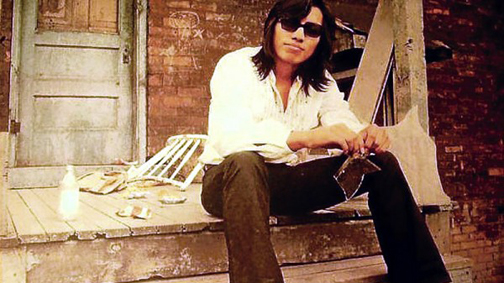
Just days after he married Hilaria Thomas, when he could have been in some exotic place on honeymoon, Alec Baldwin, taking his Hamptons International Film Festival duties very seriously, took the stage at East Hampton’s Guild Hall, to introduce a documentary that’s been garnering buzz at film festivals. A hit at Sundance and Berlin, Searching for Sugar Man is an American Dream story about a ‘70’s singer/songwriter, heavy on social commitment in the manner of Bob Dylan or Phil Ochs who was rumored to have dramatically killed himself at the end of a performance, by gunshot or in a ball of fire. It is not a spoiler to say that Sixto Rodriguez was found alive and well and living in Detroit. -
 In a bygone era, drug addled users could score in Union Square; now the health-minded can cop organic kale and cucumbers in a caravan of farm stands. Deftly bringing both the edgy past and cleaned up present together with humor and heart, Nancy Savoca’s new movie, Union Square, features a stunning performance by Mira Sorvino as Lucy, a ditsy but damaged woman who when first glimpsed is bargain shopping at Filene’s and cursing out her lover on a cellphone.
The Best Supporting Oscar winner for Woody Allen’s Mighty Aphrodite, Mira Sorvino here demonstrates she deserves a second. Lucy, in spirit, is not far from the sweet prostitute she played in Woody Allen’s comedy. You like Lucy, but, as with any pill popper, you don’t know what she’ll do next. Dressed like a tart, over the top and not just in her high heels, she barges into her sister Jenny’s off-Union Square loft apartment exclaiming, Erase the past and let’s start all over. Oh that family issues could so easily fade!
-

For fans of romantic comedy, a play that ends with three weddings is the ultimate fantasy. As You Like It, this summer’s first Shakespeare in the Park offering in its 50th year, is a celebration from the first banjo strums to the dancing at end with Lily Rabe, (Rosalind/ Ganymede) so fine at company’s center. A natural crowd-pleaser, As You Like It as directed by Daniel Sullivan, rises to the traditional Shakespearean hilarity while grounded on John Lee Beatty’s sets in the magnificent park: a log fort, trees fit for tacking on love poems–this enchanting forest appears to go forever. -
Everyone (some real life family and old flames famously excluded) loves Woody Allen.At a press conference at the Regency for his new film To Rome with Love on Tuesday, reporters took that as a given, asking his actors how they get past their own adoration for the auteur. A love fest ensued. Penelope Cruz says she is happy not only to work with him; she gets to hang out. The Oscar winner for his Vicky Cristina Barcelona had, just the night before, heard him play at the Carlisle where, when he’s not shooting movies in Italy, or Spain, or France, he performs with his jazz band on Monday nights. Extending his riffing to filmmaking, he lets his talented cast “go” with the material. As a prostitute in To Rome, Cruz speaks Italian, a language the Spanish star perfected when she worked on Sergio Castellitto’s terrific Don’t Move as a homely peasant woman. Yes, homely! Allen has no problem with foreign tongues, knowing none. In Vicky Cristina, she adlibs “like crazy” with Javier Bardem. Alec Baldwin, seated to her right, quipped, all the adlibbing worked out: they ended up married.
-
Barricades lined the streets in the West Village. President Obama was in town, dining at Sarah Jessica Parker’s for a fundraiser in his honor. Aretha Franklin was there leaving in a flash for the Songwriters Hall of Fame, according to my pal Roger Friedman. But this was also the opening of a night of Neil LaBute’s 3 one-acters The Heart of the Matter, to benefit MCC Theater at the Lucille Lortel Theater just a few blocks away. While I had not thought of it before, there is a slight connection: LaBute, a playwright known to skewer human relations, what used to be called the battle of the sexes, could have penned episodes for the Sex & the City women, but they would have been more arch, and much meaner. -
Because the 2010 exhibition of her work at MoMA was titled “The Artist is Present,” Marina Abramovic knew what to do. At a recent screening of a documentary based on this show appropriately at MoMA, she explained she could do nothing but be present, that is, occupy a chair facing a viewer for 12-hour sessions. Clad in a heavy gown, –one was red, another white, –the artist exuded a somber essence, not taking a break for a coffee or a pee. Viewers queued up for hours, camping outside of the museum, taking turns to sit there on a wooden armless chair opposite her, at times eliciting tears. Filmmakers recorded all this including a young devotee who removed her dress before sitting. Museum security whisked away the rule-breaking girl. The actor James Franco took a seat, and when he left, the next up asked, “Are you an actor? You have that actor thing.” That was perhaps the film’s most humorous moment. -
Everything in its time! The Tonys, the Oscars for Broadway theater, marks the end of an awards season as rigorous and varied as that for film, although one noteworthy difference is the absence of red carpet couture commentary; somebody should have been reporting on presenter Jessica Chastain’s glittery, lacy number. From the bleachers of my bedroom, she looked great as did Nina Arianda in strapless, Tony-winner for her performance in Venus in Fur, excitedly telling Christopher Plummer, “You were my first crush, sir.” -

When people say that at 74 a person is over the hill, Jane Fonda says she is looking at the next hill on the horizon. With an upcoming HBO series, her recent book Prime Time, several new movies including one in French and Bruce Beresford's Peace, Love, and Misunderstanding opening this week, the hill looks more like a lush peak in the Catskills. In fact, her character lives upstate. As Grace, a pot-dealing relic of the hippie era living in Woodstock, she has a few lessons for her daughter, Diana (Catherine Keener), an uptight lawyer whose marriage is breaking up, and her grandkids, Zoe (Elizabeth Olsen) and Jake (Nat Wolff). At breakfast at the Regency on Monday, over a plate of watermelon, the movie icon talked to a select group of women about hair, husbands, health, films, family, friendships—with co-star Keener joining in–and the future. -
“I just celebrated twenty years of my accident,” announced Auti Angel at a luncheon at Robert for the reality show Push Girls. Premiering on the Sundance Channel, the show features four feisty and beautiful wheel chair bound stars, three friends–Tiphany Adams and Angela Rockwood as well as Auti– who are car accident survivors, and Mia Schaikewitz, a champion swimmer who as a teen suffered a ruptured blood vessel in her spine, causing her paralysis. So, just what is making Auti, a dancer who cannot walk, so happy about a life change that many would consider tragic? -
I am pleased that the reports from Cannes about the On the Road, Walter Salles’ film are mainly favorable, although I have taken note that some say there is no inner world for the characters, that the film has no discernable plot, that it is overlong. I have been following this progress for at least a decade. When I interviewed Francis Ford Coppola in 2007 about his film, Youth Without Youth, I inquired as to its status; at that stage, several writers had attempted a screenplay including one by Russell Banks where he, Russell Banks, runs into Jack Kerouac in a bar in Chapel Hill, North Carolina and they spend a drunken week together. Francis looked me in the eye and asked, “Have you read the book? It is impossible to script.” There were titters at the table of critics who were aware that I am a noted Kerouac scholar. -
Of the brownstone at 7 Middagh Street, the basis of a new musical, February House at the Public Theater, the composer/ writer Paul Bowles used to say he did not want to live in a place with another composer. He was referring to Lincoln Kirstein. When he heard the rent would be cheap, he moved in. W.H.Auden managed the whole thing, he recalled, collecting money and making dinners. Then Bowles would stick up his nose in perfect Audenesque, and mimic the famed poet, “Tonight there will be a roast, two veg and a savory, and no discussion of religion or politics.” -
Jewish jokes are so plentiful online: who hasn’t been blessed with multiple emails forwarded from friends, or visited the Youtube videos of real-life old Jews telling jokes? Now a fast-paced revue at the Westside Theater—where the beloved Love, Loss, and What I Wore held sway for many seasons– is unexpectedly fresh. Yes, the familiar tropes: sex before marriage, after, business and money, death, mothers, and kvetching on every foible of life are revived in full force: Do you want a drink? Goes one. No, I don’t want to dull the pain. -

On a 42nd Street block that used to house peep shows, The Duke Theater is a resonant location for a play called Cock. For this four-actor drama, The Duke is entirely reconfigured as an arena where onlookers are up close and personal as if watching a cockfight, taking bets. Four characters spar. You could say, they vie for John’s male member. The sexual politics of Mike Bartlett’s play could be one linear reading: John (Cory Michael Smith) is living with M (Jason Butler Harner) and has sex with W (Amanda Quaid), finding he likes it. This comes as a surprise as he has had so little experience with women. Then, the quandary: each works to lure him from the other, to win and control John. M’s father, F (Cotter Smith) is brought in, rounding out the square. John, as much an Everyman as his name suggests, has to sort out who he is. -
The U2 frontman joined the festivities somewhere in the middle of the Jazz Foundation of America’s annual benefit singing “Angel in Harlem,” assuredly an anthem to the Apollo theater. In rock style, the orchestra audience rushed the stage, Iphones snapping. Bono was simply one of many headliners in “A Great Night in Harlem,” orchestrated by SNL’s Hal Willner. Quincy Jones presented the Dr. Billy Taylor Humanitarian Award to Montreux Jazz Festival’s esteemed Claude Nobs. Macy Gray, Dr. John, Randy Weston, Paquito D’Rivera, David Johansen, the Treme Brass Band, the Kansas City Band with reference to Robert Altman’s great 1996 film, and Essie Mae Brooks, John Dee Holeman, Sweet Georgia Brown, George Wein took the legendary stage. Darrel Hammond and Triumph the Insult Dog lent some comic relief as did the Sopranos veterans Vince Curatola and John Ventimiglia. Wendy Oxenhorn wailed on her harmonica. Macy Gray’s “At Last” was assuredly meant to remember the great Etta James, but no one could have anticipated that music would lose yet another yesterday, Donna Summer, for whom there was a moment of silence.Graphic Design: Salpeter Ventura


-

The new movie Hysteria answers an age old question, what do women want most? Based on a historic moment in the 1880’s when a particular contraption for the alleviation of women’s non specific ailments (unhappiness, indigestion, the desire for equality, the right to vote, freedom) was invented, this romantic comedy features an early feminist Charlotte Dalrymple (Maggie Gyllenhaal), her conventional sister Emily (Felicity Jones), their provincial father (Jonathan Pryce), and a young progressive doctor Mortimer Granville played by Hugh Dancy with an easy touch. In the employ of Dr. Dalrymple, he learns to apply just the right manual pressure to give suffering women “paroxysms,” never to be confused with sexual pleasure. With the help of a nutty inventor (Rupert Everett), an electronic device was made available for home use. Despite the eh, explosive nature of this subject, this delightful movie is titillating, yet chaste. -
Introducing Hillary Clinton to 2300 women –and a sprinkling of men– gathered in a ballroom at the Marriot Marquis for breakfast celebrating the New York Women’s Foundation’s 25th year this morning, Abigail Disney recounted where this filmmaker and activist was in her own life at each stage of Clinton’s political career from First Lady to Secretary of State, defying the perceived wisdom that little would come of her. What was so divisive about all the common sense she was making –how dare she have plans for health care, Disney asked. Do you know what history does to women? You know the fabulous bookcase you see at IKEA. You know how when you buy it, you pick it up in a flat box. History casts women in two dimensions. For her, Clinton was a woman who would take no prisoners, unless of course they were political prisoners on her plane, she quipped referring to recent events and Clinton’s trip to China. The Secretary of State gamely took the stage and in the combination of making larger points about women helping women effect change and the intimate personal stories of struggle that marked the speeches, Clinton talked about the lessons learned from her mother who died last November.
 gossipcentral.com