• Harmany
    The Ethyl Barrymore Theater was abuzz: Michael Feinstein, Brian Stokes Mitchell, and Lorna Luft were among the theater elite at Harmony’s opening night. Sutton Foster said she was ready to be evil, stepping in to bake meat pies as Mrs. Lovett in Sweeney Todd. Judd Hirsch sat with Marilu Henner, the Taxi team to appear on The View later this week. Remarking that she last saw Chip Zien, Harmony’s narrator, on July 15, 1974—exact in her memory as she has one of those special gifts—"It was an audition,” Henner said. All this before the evening’s star, Barry Manilow, arrived.

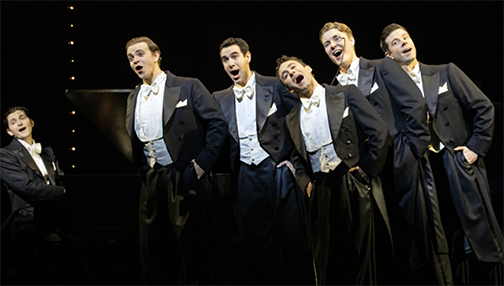
    Memory is a key ingredient of Harmony: The Holocaust’s mantra, Never Forget—echoed, asserted—but in a musical! Yes, Barry Manilow wrote the songs for this show, many years in the making about a hugely successful sestet of singers in Europe as Hitler was on the rise. Are the songs of the Comedy Harmonists ones that the whole world will sing—yes, many will live on, material for vocalists everywhere. First-rate Broadway tunes are not the only reason to see Harmony. Accompanied by his longtime lyricist Bruce Sussman, and director/choreographer Warren Carlyle, Manilow framed a tale well-timed for this moment, a memory play that insists upon an individual’s reckoning with totalitarian regimes and war. Bad things happen when bystanders say nothing.

    Chip Zien’s character –based on the real-life cantor in California called Rabbi who recently died at age 98–escaped the Nazis, the only Harmonist to live to old age. Survivor guilt is the occasion for telling the past, mulling over the possibilities for a different ending. Harmony starts with the group’s auditions, youthful aspirations, and love. Beowulf Borritt’s sets form backdrops for the entertainers’ singing their way through Europe, and for the repression of Jews. But the danger, palpable now, will pass, right? Two of the Harmonists marry, Rabbi to Mary and “Chopin” to Ruth, a Bolshevik activist and a Jew. A joyful double wedding, disrupted by thugs breaking glass, recalls a Fiddler on the Roof scene. At the height of fame, they came to New York and might have performed with Josephine Baker. Onstage, in a fantasy, they do.

    A highlight is a duet sung by the wives, Mary (Sierra Boggess) and Ruth (Julie Benko), “Where You Go,” after their husbands try to persuade them to leave, hoping to ensure their safety. The song, referencing the Old Testament’s Book of Ruth, resonates of the fragility of love, and their dire choices. Foils, the Catholic Mary sticks with Rabbi (his younger self Danny Kornfeld); Ruth lets Chopin (Blake Roman) know that while she may leave—better for him as a non-Jew, she will haunt him always. Played by Benko, she’s an irrepressible memory.

    (more…)

  • Dylan2
    Everyone remembers their first Dylan concert. Mine was historic: When Dylan switched guitars, from acoustic to electric, when crowds stormed the stage in protest. No, this was not the more famous concert in Newport. This was a few days later, in Forest Hills. A friend and I, two immigrant teens took the subway from Brooklyn to Queens to find America. Up until that day, Dylan was to me an anti-war poet/ a scratchy singer in the manner of Phil Ochs. But that day the Dylan fans were waging their own war against HIM, booing, unseating, moving forward as a mob.

    It was clear: Dylan mattered. But the question was, did the rage matter to him? If it did, he took the advice of The Beatles, who advised, ‘Don’t worry about the fans, they will come back.’ And, of course, the rest is, as they say, history.

    Cut to Tulsa, May 2022. The opening of The Bob Dylan Center. Why Tulsa, everyone asked. Because his archive could be housed right next door to his hero’s Woody Guthrie. Parties, music, academic meetings marked the occasion. Visiting, I could see a photograph from the concert of my youth amid the incredible collection of guitars, vinyl, notebooks, artwork—memorabilia of a creative life. And now readers of Bob Dylan: Mixing Up the Medicine, edited by Mark Davidson and Fishel, can revel in their own nostalgia and more in this elegant, meaty tome—a chronology of the archival Tulsa haul, a backstory for a great biography. The publishers at Callaway took the step of creating a lengthy and helpful index.

    To the photos with EVERYONE: Joan Baez, Patti Smith, Bruce Springsteen, Robbie Robertson, Allen Ginsberg, Barack Obama, footage from D. A. Pennebaker, torn ticket stubs, song lists, lyrics, stuff, add smart essays by Greil Marcus, Lucy Sante, Raymond Foye, Richard Hell limning Dylan’s writing process from foundational tapes to recordings and artifacts. Read a facsimile of Dylan’s essay on Jimi Hendrix. Peter Carey’s grim look at Tulsa’s racial divide, how the famed riots serve up classic Dylan material. A section on Dylan and the Beats illuminates the formative literature and influence that would lead to song themes and his novel Tarantula. Michael McClure, Peter Orlovsky, as well as Ginsberg were certainly on his road, but Jack Kerouac’s On the Road was a main attraction when he first arrived in the Village for the free-wheeling character based on Neal Cassady, whose amorality he would later reject.

    (more…)

  • Yoshagi
    The international superstar, Yoshiki, celebrated a 10th anniversary “World Tour with Orchestra 2023 ‘Requiem,’” its final leg at Carnegie Hall this week. Displaying awesome musical chops at piano and drums in the separate genres of classical and rock, Yoshiki, clad in red lame coat, dedicated the tour to the passing of his beloved mother who raised him after his father’s suicide when he was 10. The drums, he explained to his many fans—some clad in full kimono and obi bearing flowers to throw onstage–, allowed him to express the extremes of his despair. Even after he performed for Japan’s emperor, his mother would ask whether or not he had slept the night before, had he eaten breakfast. He missed these nurturing flourishes even when his hands were imprinted in cement at L. A.’s Chinese Theater. Launching a clothing line in Paris and a new champagne with Pommery, he misses her mothering more.

    He also dedicated some songs to two bandmates who committed suicide, and for much of the concert he admonished the audience to cherish every day. “We are here,” he kept saying, also acknowledging the pain and suffering in our world. Conductor Ward Stare led the full orchestra featuring many strings, underscoring a sorrowful tone even when the sounds soared. Singers Beverly and Ai Ichihara added to the emotional experience. After Intermission, Yoshiki, now in silver lame, performed Tchaikovsky’s Swan Lake accompanied by dancers from the American Ballet Theater. Three screens projected family photos and clips from his film debut as director, YOSHIKI: Under the Sky. The next day the film, to be released this month, was screened in full at the Roxy Hotel, followed by a performance at Django.

    (more…)

  • Guilded age
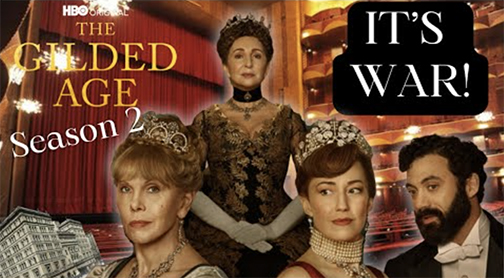
    Nothing says high hauteur like new money. In season 2 of HBO’s grand series, The Gilded Age, “the new” hits its stride. Forget Stanford White’s magnificent design for the newly completed Russell mansion on-turn-of-the-century Fifth Avenue, its façade built in Newport, its queen of decadent display, Bertha Russell (Carrie Coon) has empires to build ascending the social strata. Snobbery, of course, does not work. Readers of Henry James and Edith Wharton fiction know how the hierarchies among the rich work, their laws finite. Christine Baranski as Agnes van Rhijn looks her chiseled nose down on her neighbors, nailing the divide between Old New York and New. But Bertha surprises us; aided by her husband George (Morgan Spector) and his fortune, she shows what does the trick: research, preparation, the drive to roll up satin sleeves, and grit to get the job done. For this season, we learn the “true” origins of the Brooklyn Bridge and the Metropolitan Opera House. There will be blood.

    Fellowes was brilliant with the splendors and spectacle of Downton Abbey, both upstairs and down. Add to that the lives of Blacks, North and South. As we know from season one, Peggy Scott (Denee Benton), an aspiring young black writer works at the van Rhijn house as her career rises at The Globe. Turns out she has a backstory, explored tenderly in Season 2 as is the plight of our heroine, Marion Brook (Louisa Jacobson, a daughter of Meryl Streep), Agnes van Rhijn’s niece, an innocent, who has been jilted. Disgraced? Never. This season takes a more positive view: she’s merely rescued from marriage to the wrong man.

    Satisfying a (guilty) itch for gossip, who’s marrying who, The Gilded Age features a dazzling cast of American stage actors: Audra McDonald and Kelli O’Hara head the long list that also includes Laura Benanti, Kristine Nielsen, Celia Keenan-Bolger, Donna Murphy, a wildly over the top Nathan Lane, to name a few. Robert Sean Leonard is a particularly cool choice for the clergyman Luke Forte, having performed in Martin Scorsese’s film adaptation of The Age of Innocence.

    (more…)

  • Hamptons Film Fest 2013ng
    Introducing her documentary, Mourning in Lod at HIFF, Israel-based filmmaker Hilla Medalia announced that a crew member had been murdered—one among thousands– in the Hamas attacks from Gaza on Jews during the Shabbat/Simchat Torah holiday. Mourning in Lod plays out a story of connection and communication after terror comes to a community at peace. What might have been a silver lining moment illustrating that from acts of barbarism generosity of spirit can come, the takeaway was a microcosm of what was raging front page news: cycles of retribution demanding justice, but in the end, civilians pay for the age-old Middle East enmity.

    The backstory: producer Sheila Nevins had asked Medalia to make a short film when she heard about the family of a Jewish man in Lod, stoned by Palestinians, donating his organs to a Palestinian woman in need of a kidney. Investigating the story, Medalia found out that the man had been murdered in revenge for a Palestinian man who had been randomly shot by zealous Jewish settlers, outside agitators as it were. The three families involved were intertwined, neighbors who had done business together prior to the tragic events.

    East Hampton’s Patti Kenner served a pizza and salad dinner for a post-film gathering that now reflected upon news so much larger than the violent/bittersweet events at Lod—as the reality unfolded. Guests were able to find out more about this story from the filmmaker; in the end though, with news of Israel making its own movie in our minds, feelings were raw. Everyone understood: more deaths would be announced, although the actual brutality had not yet registered: Israel was at war.

    (more…)

  • Driver and Cruz
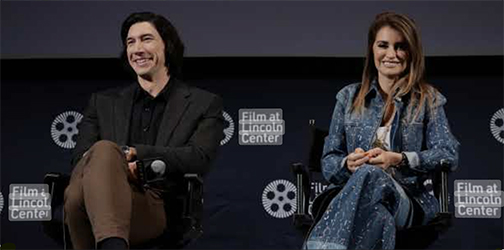
    The roar of engines and strain of race cars careening around a sharp curve make for the panache of the New York Film Festival’s final picture, but the real drama of Ferrari takes place within walls. As Enzo Ferrari, a brooding charismatic silver-haired Adam Driver is haunted by loss—of father, brother, son, friends–, he speaks of creating walls so as not to feel the continuity of pain that is part of his present, Italy 1957, years into his marriage to Laura Ferrari, a dark, grieving Penelope Cruz, who is also his partner in Ferrari, the race car company they built. But when we first see him, after a prologue of black & white footage of his own fierce driving—what he calls “a deadly passion,” he’s in bed with Lina Lardi, a lighter Shailene Woodley, a mistress with few demands. Before sneaking off for home, he tucks in a boy, their son. Home, in Modena, is where Laura with her black piercing eyes, stays secluded within rooms of maddening deep tones and swirly wallpaper, and Enzo’s mother.

    The actors, permitted to be present because the film is not attached to a studio in contention, were interviewed along with director Michael Mann following the packed screening at Alice Tully Hall. Troy Kennedy Martin wrote the script based on Brock Yates’ book, Enzo Ferrari: The Man, the Cars, embellished farther than Mann’s original concept collaborating with Sydney Pollack. Locations are key: In one scene, shot in the actual Ferrari mausoleum, Driver as Enzo cries over the dead.

    Most eloquent about her preparation, Cruz spoke about that wallpaper, a window into Laura’s psyche. Mann introduced her to a doctor in Modena who showed her love letters between Enzo and Laura dating into the 1970’s, just before she died, his partner till the end. A principal investor, having sold her wedding gifts to create their first Ferrari, Laura is a formidable, surprising character, the movie’s pulse. While Enzo’s lovemaking with Lina is tender, he takes Laura on a dining room table, in a wild frenzy of shared grief over their dead son, mutual sacrifice in business, and lust for a lost world. Let’s just say, if you see a gun, it must go off. Cruz dedicated her performance to all invisible women behind powerful men everywhere.

    (more…)

  • Paul Simon Hamoton Film Festoible
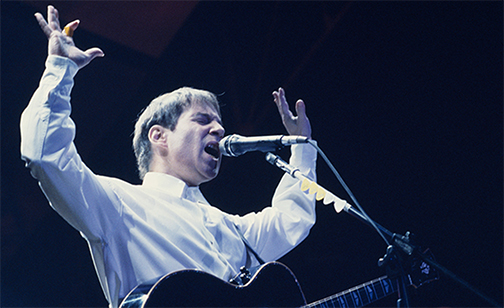
    Interviewed for Purist Magazine, the Oscar winning documentarian Alex Gibney was asked, how significant was it that his epic film on Paul Simon, IN RESTLESS DREAMS: THE MUSIC OF PAUL SIMON, would screen at this year’s HIFF. “Very, he’s coming home.” At a “Conversation With Paul Simon,” Simon spoke about his inspirations in music—doo wop and folk—his breakup with Art Garfunkel, Aretha Franklin’s cover of Bridge , his dislike of the song “Feeling Groovy,” Mike Nichols, Hugh Masekela, and strummed a bit on acoustic guitar. While he now lives outside of Austin, Texas with his wife Edie Brickell, the erstwhile resident of Montauk who had helped save the lighthouse in the late 1990’s inaugurating a series of yearly benefit concerts featuring such legendary stars as James Brown, Don Henley, the Allman Brothers, and Carly Simon, at 80, with a new album, he seems unstoppable, and though he had a plane to catch, did not want to leave the stage.

    Seems like the Hamptons was a homecoming for many: Jimmy Chin and Elizabeth Chai Vasarhelyi brought their film about champion swimmer Diana Nyad for the festival’s opening night. A first feature for the Oscar winning documentarians who specialize in harrowing true life adventure stories, NYAD, starring Annette Bening and Jodie Foster was particularly challenging, keeping its star in water eight hours a day.

    Local film notables came to screenings: Julianne Moore, Bruce Weber, Bob Balaban and others supported by attending, despite strikes. Alec Baldwin with Hilaria and seven kids in tow attended the yearly party. Others such as Griffin Dunne and Celia Weston were present with their latest films, EX-HUSBANDS and A LITTLE PRAYER respectively. The funniest line in any movie comes from the hugely entertaining AMERICAN FICTION, when a character talks about the kind of literature—ghetto– white folks in the Hamptons would love.

    (more…)

  • Bradley Cooper
    Director/ Producer/ Co-writer/ Star Bradley Cooper gladhanded and hugged his wildly happy audience at the newly refurbished Geffen Hall, having been given permission by SAG to attend his passion project premiere of Maestro, centerpiece of the New York Film Festival. That his subject Leonard Bernstein had begun his career in this very place, conducting the Philharmonic, gave the evening extra resonance. Fervidly researching, Cooper was said to have attended many a performance in the past five years, seated in the conductor’s box hanging dangerously over the rail, rapt to the sound and feverish body movements of the job. His devotion extended to every aspect of the film, and it shows.

    After an initial craggy faced vision of Bernstein in his last years—Cooper’s makeup is extraordinary, beyond the discussion of his nose—Bernstein is seen in five ages of his stellar career, ending every concert, gladhanding and hugging. Clearly Cooper meant to morph into his Maestro, taking hours in makeup time, insisting on being fully made up by the time cast and crew arrived at 5AM.

    Glimpses of Bernstein’s musical genius pervade the film and are especially beautiful in a scene when a balletic dance of sailors in Wonderful Town cuts to Bradley Cooper in sailor dress, joining in, making his dips and turns. The Requiem in St. John the Divine is the longest musical interlude, showing Cooper completely following in Bernstein’s conductor chops. As noted later in the Q&A, performers who had worked with Bernstein actually imagined him back in action. That’s how authentic Bradley Cooper seemed to them.

    At the Q&A, Cooper’s insistence upon authenticity was lauded over and over. Bernstein’s daughter Jamie Bernstein, who had written a memoir, Famous Father Girl: A Memoir of Growing Up Bernstein, talked about the genesis, how it started fifteen years ago and gained traction once Cooper took the film on. Josh Singer, co-writer with Cooper, said that not a word from his original script remained. Cooper chose to focus on the love affair of his marriage, giving Carey Mulligan as Felicia Montealegre  top billing. She is truly divine in this Oscar worthy role, devoted to her husband, and devastated by his dalliances with other men, even though, as she says repeatedly, she knew what she was getting into.

    (more…)

  • NY filmfestavul 2023
    A young actress is to star in a biopic as a woman whose claim to fame is sexual deviance. That’s the premise of Todd Haynes’ latest film, May December, opening the esteemed New York Film Festival this week. Gracie (Julianne Moore), a baker and housewife in Savannah, now married to her much younger lover with whom she has college aged twins, is so reviled she receives a box of shit at the start and spends much of the movie managing the pain of being ostracized. The film offers an exceptional view of shifting perspectives on an “icky” subject.

    When Elizabeth (Natalie Portman) arrives to take notes for her role, the two women dance a pas de deux of cautious friendliness, with Gracie demonstrating her cake-making skills, her beauty tips, her hold over her family. Edgy music keeps the viewer alert: who is playing whom? Or, how much does an actor really need to research to play a role? Joe, now 36 wasn’t yet a teen when he and Gracie first had sex. Deep into a guilt driven relationship, he becomes the movie’s center.

    Introducing the film at Alice Tully Hall, director Todd Haynes signaled as much in stressing Charles Melton’s outstanding performance. With a nod toward his composer, Marcelo Zarvos, he spoke about the music leading events, a technique taken from a classic movie he saw on TMC, The Go-Between.

    In the end, though, we don’t much like Gracie either. Haynes says of Moore: “Julianne loves to enter into these places of inscrutability in her depictions of women, and in stories in general, she does not want to put the viewer at ease.”

    (more…)

  • Martin Scorsaci
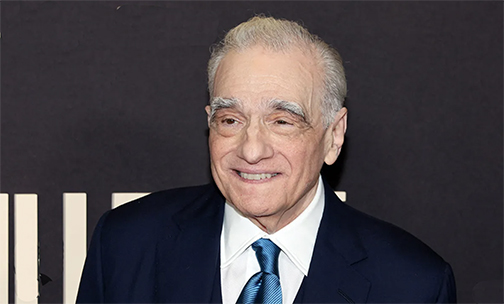
    At 81, Martin Scorsese is not slowing down. Presenting his new epic drama, Killers of the Flower Moon this week at Alice Tully Hall, noting that his stars Leonardo DiCaprio, Robert DeNiro, and the radiant Lily Gladstone send their greetings, Scorsese kept it brief, knowing a three-hour film was in store. But what a riveting movie. Set in early 20th century Oklahoma, Killers, adapted from David Grann’s bestseller, limns a dark moment in American history through the story of the Osage Native Americans. In the geographic and moral “’hood” of the noted Tulsa massacre when a prominent Black community was ravaged by white supremacists, prominent Native Americans, recently rich with oil, became prey for racism and greed. The strategy was uniquely sinister, involving intermarriage and murder, all for inheriting wealth.

    Leo plays a dimwitted nephew of DeNiro in a godfather-like role, manipulating the young man to marry Molly (Gladstone), a smart yet besotted, moneyed member of the tribe. The stunning events play out in spectacles of weddings, explosions, parades and funerals, no expense spared. At center is Molly’s quiet, knowing, Buddha-like presence, a character so grounded and vulnerable she makes you believe in what America might be in a more ideal, open culture.

    (more…)

  • Aa
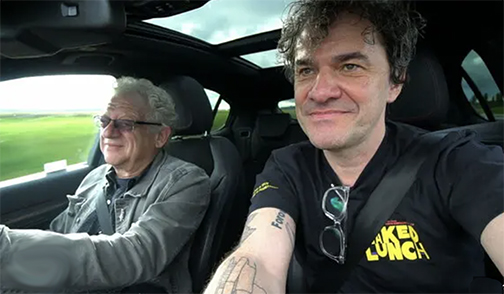
    The glorious conceit of Mark Cousins’ documentary about British producer Jeremy Thomas is filming him from the passenger seat of a posh car on the way from London to Cannes, for the yearly film festival of festivals. A man of routines, Thomas followed the family business of filmmaking, always having a film to promote, but more, to schmooze with directors and distributors from a balcony overlooking the sea. The festival is after all, a work place. This is his 45th year, seeing beautiful countryside as it whizzes by on the highway, and discussing life and filmmaker along the route. Some of his films, The Last Emperor, Only Lover Left Alive, Sexy Beast among them, are screening at the Quad Cinema for a retrospective, as is Cousins’ documentary, The Storms of Jeremy Thomas, a glimpse of the man behind the wheel.

    This week, a special viewing of Cousins’ documentary drew many guests from his distinctive career including Debra Winger, who starred as Kit in Bernardo Bertolucci’s The Sheltering Sky. Interviewed in the documentary, she speaks about Thomas’ humor and taste. A clip from the film shows her emerging in North Africa with John Malkovich and dozens of suitcases as they are travelers, not tourists, taking everything with them as if they will never return, in author Paul Bowles’ defining distinction. Interviewed in person by Sony Picture Classics’ Michael Barker, Thomas spoke about filming in the desert, taking liberties in the vast expanse of sand that makes this film so unique. Another clip shows Winger as Kit returning to a crowded café, just short of the author’s cameo, as he asks, how many times do we return to the same place in one’s life. It’s a question that works well pondering Thomas’ career as production auteur.

    (more…)

  • Bob Costello
    Writer Bob Colacello is the best kind of gossip; he observes people with a big heart and humor. In his latest book, an art volume of vintage New York photos by David Jimenez, accompanied by his text—a forgetting, as Colacello told a packed house at the Peter Marino Foundation in a conversation with Ivorypress publisher Elena Ochoa Foster, who flew in from Madrid for this occasion. He was inspired by the poet Joe Brainard who wrote a memoir listing his remembrances. For his own take, titled New York Memories, Colacello lists all that he had forgotten about New York in the 1970’s and 1980’s, when, as he was “forgetting,” downtown and uptown arts met at happy studios, galleries, discotheques, especially Studio 54, Steve Rubell’s place in midtown, and Eric Goode’s more artsy Area in Tribeca.

    The conceit works well to dispel the impulse toward nostalgia, as Elena Ochoa Foster noted, even as Colacello records a bygone world. Going back to his childhood, he told the crowd that included Francesco Clemente, Vito Schnabel, his mother Jacqueline, Zac Posen, Vincent Fremont, and an artworld elite, in the upstairs space where the Israeli artist Michal Rovner’s brush strokes migrated against austere backdrops, it all started out when he came into “the city” as a boy:

    “I forgot the awe and wonder I felt as a child arriving at the old Penn Station, which had been designed by McKim, Mead, and White in 1910, and was torn down to make way for the new Madison Square Garden in 1963.

    “I forgot Woody Allen always sat at the most visible table at Elaine’s, pretending to be invisible.

    “I forgot Malcom Forbes told me his old money friends like Doris Duke and the Mellons asked to be taken off the [Forbes 400] list, claiming they were worth much less than Forbes thought, and the only friend who insisted he was worth a lot more was Donald Trump.

    “I forgot going to Andy Warhol’s Memorial at St. Patrick’s Cathedral on April Fool’s Day, 1987 with Sao Schlumberger, and thinking the huge crowd was testament to his greatness.

    “I forgot that no matter what happens New York goes on, feet on the ground, head held high, heart and mind open.

    (more…)

  • Brice Mardon
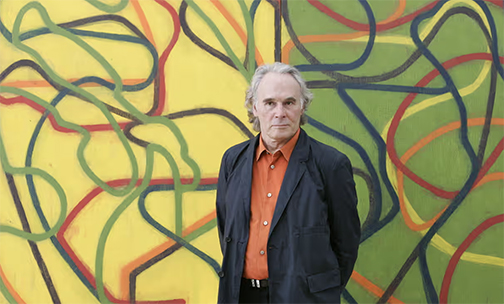
    You know the old adage: I would have paid more attention had I realized how important it was. In 1983 when I taught a summer writing workshop in Tangier with Paul Bowles at the American School of Tangier, the School of Visual Arts, under the leadership of founder Silas Rhodes invited a distinguished faculty that included Brice Marden. With reverence for the history of Tangier as an artists’ mecca, Marden and his family, his wife Helen Marden, their two girls, Mirabelle  and Melia (5 and 3), and an au pair, were given the room Henri Matisse occupied when he resided at the Villa de France Hotel. I lived in the room next door. The view was over the sumptuous gardens which Matisse painted in his modernist style. Marden’s abstract style, lyrical blocks of color and sinewy lines did not seem suited to palm foliage and flora, nor to the colors but he surely absorbed the vibe. At breakfast on the terrace, the girls seemed extraordinarily well behaved. Having already met the man I would marry, my fears about life as a wife and mother were allayed by seeing this family living free to travel and explore. Helen, an artist who had waitressed at Max’s Kansas City, would say, to acclimate to a culture, eat their yogurt and onions, and drink their wine.

    At times, Brice and Helen, and whoever was teaching—that could be photographer Mary Ellen Mark, or graphic designer Milton Glaser, or type designer Ed Benguiat, or journalist Pete Hamill, would meet at the hotel bar. Because Brice was a fan of the beat writers, we had a connection through the poetry—I had written on Jack Kerouac and knew William Burroughs and Allen Ginsberg, all of whom spent time in Tangier. And, we smoked kif together. Later, after our time in Tangier, he did a series (1989-91), an homage to the Chinese poet Han Shan named for his “Cold Mountain” poems. Han Shan, famously a reclusive drunk, was the inspiration for Kerouac’s The Dharma Bums and poems by Gary Snyder. On a random evening Brice and I had dinner at the Claridge, a classy joint on the main boulevard, Louis Pasteur. Visiting Tangier in July, I had Brice on my mind as I passed the former restaurant now a bar and a bit run down. Sadly, Brice Marden died on August 9.

    (more…)

  • Candice Brickel
    HBO’s And Just Like That, now nearing its final episode in series 2 features happy endings for Charlotte, Miranda, and we presume Samantha, and several additional characters. Carrie Bradshaw has moved on from the loss of Mr. Big, happily, and her creator, Candace Bushnell, has moved on too. An author—though not yet a Pulitzer Prize winner—and performer, Bushnell wowed the crowd at Canoe Place Inn in Hampton Bays this week in her one-woman show. Strutting across a stage in baby blue satin with feather trim, she recounts her stellar career as Observer columnist, coming to the big city, modest suitcase in hand, landing on Beekman Place with photographer Gordon Parks, sleeping around. Sex, or rather, “having sex like a man” becomes her material, and like her characters, she is quite explicit. If you are a fan of Sex & the City, you know what I mean.

    Miraculously, in her tour de force hour and a half one-woman show—with the exception of a cameo by two dogs, the words “penis” and “vagina” are uttered once each, as Bushnell poses the question, Is There Still Sex in the City? Phone in hand, answering, “Good news only,” she converses with her Samantha, her Miranda, and her Charlotte, composites of her real-life friends and paragons of wisdom, as she navigates her rise as writer, all the while dumped by lovers including her ballet dancer husband. Through all of these experiences, she has learned many lessons, each numbered and epiphany-like. These she shares with her audience. The men she mentions do not fare well—even her supportive father somehow lets her know her flat chest will get her nowhere in love.

    (more…)

  • AUTHERS NIGHT 2023
    Famously, you cannot get near the famous authors at the yearly event of the season, Authors Night to benefit the East Hampton library. For books by Misty Copeland, Robert Caro, Neil deGrasse Tyson, Paulina Porizkova, the lines are long. No matter, writers in abundance are just happy to schmooze with one another. Susan Isaacs sat beside A. M. Homes, favorites conferring behind stacks of their most recent books. Similarly, Vanity Fair writer Marie Brenner could not say enough about Alice Carriere, seated beside her with a memoir about growing up the daughter of artist Jennifer Bartlett and French actor Mathieu Carriere, even when Katie Couric stopped by to say hello. Alafair Burke, daughter of novelist James Lee Burke, does her famous father proud. Another father, Geraldo Rivera was on hand to support his daughter Sol Rivera who has written a book of poetry. Page-turning author  Jean Hanff Korelitz spoke about book clubs she organizes in private Park Avenue homes. Allison Yarrow, passionate about women’s reproductive rights, held forth beside Amy Zerner and Monte Farber, regulars at this mega-gathering with a new book registering astrological verites for each birthday. Crazy as it may sound to some, they always get it right. Looking up mine, I did learn a “karmic lesson:” “the life and fun of a party,” I should, at overwhelming times, “change activities and cultivate more determination.” Good to know!

    (more…)

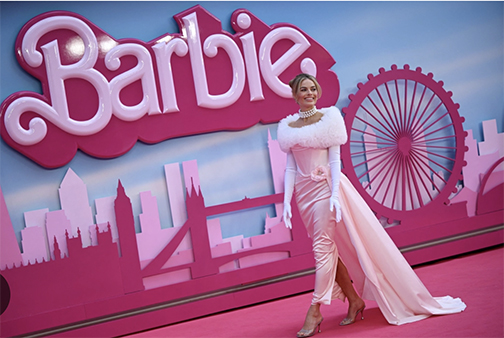
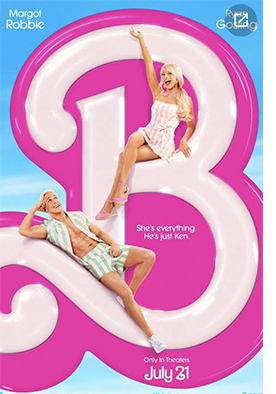
  • Barbi3Among the many Barbie international variations, Barbie in a sari, in lederhosen, in a kilt, none exist in a burka. So how would Barbie play where women, covered except for the eyes, are simply not seen? In Tangier, still an “international zone,” a thriving tourist spot, the streets are crowded with women and men in all attire, speaking the sounds of many languages. Still, it is hard to imagine a visual language as far afield as the palette of Greta Gerwig’s movie Barbie and its screaming pinks.

    Barbie is a world phenomenon making over a $billion. Could nostalgia for the ubiquitous doll draw the audience at Tangier’s Cinema Alcazar’s 5 pm screenings, as it does for millions in the U.S. and elsewhere fascinated with her extensive wardrobe—(I’m a fan of the Bob Mackie Cher dolls), preposterous physique, feminist/anti-feminist controversy? Wink-wink smart, Gerwig’s script penned with her partner Noah Baumbach, is full of a political agenda all too familiar on these shores. The professional Barbies lose all sense of self when Ken declares Kendom, and all things patriarchy. Are Moroccan women similarly inclined?

    (more…)

  • Oppenhiemer
    The Cinema Alcazar, a newly refurbished theater in the Tangier medina, was just a zigzag from my riad, one minute away if I remembered the right rights, lefts, and a staircase. Shuttered for decades, the theater now shows the latest in world fare subtitled in French. When Oppenheimer opened to acclaim in the U. S., so too did it fascinate Moroccans, judging by the crowds queuing up for the 7 pm screenings. The theater manager said most shows were sold out from first screening on. The next day I was there, seated between a German filmmaker and a Moroccan one who said as a kid he used to come to this theater with friends to take in Kung Fu action flicks. Now with no spare seat in sight, I wondered why the American story of Oppenheimer would be such a hit in North Africa.

    The development and dropping of the atom bomb were world events, true. Christopher Nolan’s visuals are worth the price of admission. Solarized, monumental, rising plume, the testing cloud alone had his fictive viewers geared up, in sunglasses and slathered against burn for the occasion. The image—movie magic for sure– seems comical, and does not play well among descendants of New Mexicans hurt by the radiation.

    A register of J. Robert Oppenheimer’s achievement, the bomb is the movie’s excuse for engaging in important themes—anti-Semitism being one, and another being betrayal. (I had just seen the sculpture of Judas kissing Christ on the façade of the Sagrada Familia in Barcelona.) Taking note of a brilliant performance by Robert Downey Jr. as the former chairman of the Atomic Energy Commission and Oppenheimer’s chief antagonist, I was struck by the egotism mixed with ambition, and the damage done by small men—as Nolan, basing his portrayal on Kai Bird and Martin J. Sherwin’s American Prometheus: The Triumph and Tragedy of J. Robert Oppenheimer, shapes the hero/ villain narrative.

    (more…)

  • RufusOn the brink of 50, legendary Rufus Wainwright’s music genre is hard to pin down. But one thing’s certain: he’s got lots of friends, family, and fans, all in full display at his birthday concert bash to benefit Montauk’s historic lighthouse, now turned 227 years old. Maintaining this edifice takes more than a village, and from the looks of the slopy grounds outside, everyone was pitching in. The same could be said of the performances, featuring Tig Notaro, Katie Couric, Jimmy Fallon, Jenni Muldaur, Laurie Anderson, Chris Stills, Chaim Tannenbaum, G. E. Smith, Rufus’ sisters Martha Wainwright and Lucy Wainwright-Roche, daughter Viva Wainwright, and more. Hosting or just hanging around for the first-rate music were Liev Schreiber, Ross Blechner, Bruce Weber and Nan Bush, Christy Brinkley and Cynthia Nixon. Many spirits hung around too: many of Rufus’ mom Kate McGarrigle’s songs were sung, Laurie Anderson performed a song by Lou Reed about how to see in the dark.

    Wainwright started off the generous three-hour concert with Irving Berlin’s “How Much Do I Love You?” Who knew that Berlin actually spent time in Montauk? Wainwright does the American songbook, folk, jazz, rock with ease. Everyone waits to hear Rufus’ cover of Leonard Cohen’s “Halleluliah,” which he dedicated to the artist Eric Freeman who recently died and who is scheduled to have an exhibition at Guild Hall in the coming year. After a duet on Neil Young’s “Harvest Moon,” Rufus congratulated Chris Stills on his marriage to Stacy. They had just flown in from the Vineyard for the occasion. I am still not over G. E. Smith’s guitar solo on “Memory Motel.” And Amber Martin led everyone in a rousing “Higher.”

    (more…)

  • Lora Linly
    During the pandemic, Ozark was celebrating its latest season at the Plaza Hotel’s Oak Room. Laura Linney, one of its stars, dropped by the masked but crowded party—“on her way to Ireland to make a movie with Maggie Smith,” she said. Now that film, The Miracle Club, having just had its world premiere at the recent Tribeca Festival, opens in American theaters in July.

    A road movie for ageless women, as we say, The Miracle Club is a European variation on the female travel romp made popular in this country with The Book Club, 1 & 2, 80 for Brady, etc. hugely successful entertainments featuring an older, glamorous, stellar quartet. In the Irish version, with a purposeful, religious pilgrimage that goes back to The Canterbury Tales (1400), you can add soul.

    Linney plays the estranged daughter of a beloved Irish woman recently deceased. The woman’s friends—with Kathy Bates joining in with Maggie Smith—take a bus trip to Lourdes for healing. A good part of the film’s beginning goes into the kinds of emotional and physical resuscitation needed here. In lesser hands, this could be melodramatic fodder for a soap opera. Newly arrived to mourn her mother, Linney makes the trip with them, an outsider who used to be an insider; shall we say, without divulging a rich backstory, she is the movie’s miracle.

    In Lourdes (filmed in Dublin), there’s a quiet moment that takes your breath away: Linney, helping Smith in a “bath” meant for spiritual cleansing places her hand on Smith’s shoulder in a gesture of generosity and forgiveness. If Americans are concerned with stolen Louis Vuitton suitcases in Rome, here, you might replace the laughs with tears of gratitude. At the SVA Beatrice theater, Linney and the film’s director Thaddeus O’Sullivan noted, this was the first time Linney and Smith performed together; Kathy Bates worked hard with a dialect coach for her fine accent, and the filming took a brisk 25 days.

    (more…)

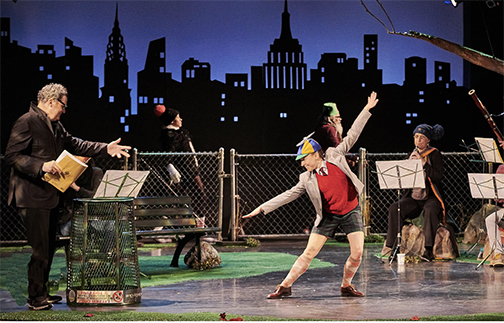
  • PhotoAt Bay Street Theater, bourbon glasses bear tell-tale fingerprints and lipstick traces. A husband and wife and her lover, in evening attire, converse in a London living room, the décor like the players, impeccably soignee. Murder scenarios foreshadow events to come. This is the opening of Dial M for Murder, adapted from Alfred Hitchcock’s 1954 movie, from Frederick Knott’s original script and play. Jeffrey Hatcher’s version raises the stakes, making the husband a would-be writer turned PR guy in publishing, promoting the lover’s new murder mystery.

    As Margot, the socialite wife, Mamie Gummer is sublime, elegantly slim, vulnerable yet capable of anything. It’s Grace Kelly’s part in Hitchcock’s masterpiece. Her husband, Tony (Erich Bergen) suspects she’s having an affair. “The other woman,” Maxine, (Rosa Gilmore) is smart, challenging to Tony. As in the classic, he’s bent on murder. Under Walter Bobbie’s superb direction, the twists keep coming: Is it jealousy or simply the money?

    Enter Lesgate (Max Gordon Moore), down on his luck. Is he a murderer for hire, or a convenient body? This being a period thriller, a black telephone with rotary dial is a character more than a prop. By Act II, Inspector Hubbard (Reg Rogers) with wind swept hair commands the stage in a trench coat, a hilarious bespectacled vision reminiscent of Groucho Marx.

    (more…)

  • Double Helix
    Can science define a musical? Bay Street’s season opened with Madeline Myers’ Double Helix, starring Samantha Massell as Rosalind Franklin, one of the scientific researchers who discovered the DNA helix. As it starts out, tuxedoed men at a podium receive the Nobel Prize for their groundbreaking research. If you know the history, you know someone vital to the discovery is missing. The show seems to follow a predictable scenario: the lab as a male dominated workplace, with the women lunching in a separate cafeteria. Soon, though, because of Myers’ excellent music and book, Scott Schwartz’s fine direction of an excellent cast, the story lifts off from the feminist formula to the particularities of this woman, her dedication, love life, sacrifices, and science. Yes, the Nobel Prize should have gone to her too.

    In lieu of that, her story was so well played at Bay Street, Double Helix should be picked up for Broadway immediately.

    The Eternal Memory
    Summerdocs kicked off its season with a Chilean movie, The Eternal Memory, directed by Maite Alberdi. The story of a couple, Augusto Gongora a historian of his country, covering the horrors of Pinochet’s regime, and Paulina Urrutia, an actress and activist journalist. As we meet them onscreen, she wonders if he knows who she is. Frail, he is not so sure, and she reassures him, they’ve been married for twenty years. Flashbacks to this couple in better times juxtaposed with archival footage of Chile’s difficult political scene provide a background for this story of a marriage, the ravages of his developing dementia, set against the large canvas of Chile’s past.

    (more…)

  • Slattery and Hamm
    Among the pleasures of Tribeca this year, actors have taken the helm of movies, working well with other actors, and finding stories that reveal their strengths as directors.

    Actor John Slattery, well known for his role in Mad Men, is not just another pretty face. He premiered a film at the Tribeca Film Festival as director: Maggie Moore(s), scripted by Paul Birnbaum, could not be funnier given that two, not one, women named Maggie Moore are murdered. Slattery’s Mad Men pal Jon Hamm—let’s just say he’s not the Don Draper heart throb we knew, –leads a cast of loony characters. Hamm plays a lonely widower who works as the cop on this bizarre coincidence of a case. SNL alum Tina Fey, nutty as a peeping tom neighbor, is divorced and their relationship grounds the dramatis personae, including a pedophile, a dumb fast-food store manager, a closeted Nazi freak, and a large, scary deaf man for hire.

    Sad things happen and make you laugh but no one you really know and love gets hurt in the making of this madcap movie. Well, maybe except one.

    And, big reveal, Slattery does fine work making all the comedy and poignance land.

    (more…)

  • A2
    Invited to a party to celebrate designer/ costumer Patricia Field and the fine documentary about her life and career premiering at Tribeca, one ponders the question: what to wear? After the Tribeca screening of Happy Clothes: A Film About Patricia Field directed by Michael Selditch, a colorful romp through her decades-long career in the business of fashion: the 8th Street retail shop, her genius pattern combinations (plaids with florals that work) and accessories for the cultural icons starring in Sex & the City and The Devil Wore Prada, the better question is, is my outfit happy enough?

    We all accepted Sarah Jessica Parker’s Carrie Bradshaw in a tutu, making it New York street attire no less, awkwardly avoiding a splashing puddle; that image adorned the sides of buses for years, and the tasteful matching of Anne Hathaway’s dressy shirts with giant cuffs and mini-pleated skirts, curated by Stanley Tucci for the pleasure of a white haired Miranda Priestly—that is, Meryl Streep styled to look like the supermodel Carmen dell Orifice, not Vogue editor Anna Wintour. Even the detail-oriented Darren Star capitulated to Field’s eye, her unique combos and stylings—for the diva and Everywoman, trans or not.

    (more…)

  • A tony 2013pg
    The Writers’ strike was on everyone’s mind at the 76th annual TONY awards on Sunday night. Opening with a gorgeous dance number on the expansive United Palace Theater stage, the TONY show was its own Broadway show on upper Broadway that is, in the heights, Washington Heights. We do know that Lin-Manuel Miranda has enormous influence in the theater community, and he also has some inspiring ideas. Ubering in, guests missed Radio City Hall for a moment but took in the glamor and glitz of this spectacular venue. TONY host Ariana DeBose welcomed everyone in her own language of movement, with that exuberant dance opening, breathless as she welcomed everyone, acknowledging writers— the lack thereof, –and saluting Puerto Rican day. This was the quintessential New York night.

    Pre-televised, some awards for lighting and sound design were given out, with a wonderful tribute to John Kander whose New York, New York is now wowing audiences. Beowulf Borritt won Best Scenic Design of a Musical for that show, explaining how the sets were hand-painted, not video screened in his acceptance speech. Both Kander (96) and Joel Grey (91) were celebrated with Lifetime Achievement Awards—Grey receiving his from his daughter, Jennifer Grey. A star from the very start of his career, winning his first TONY for Cabaret (and an Oscar for the movie), Grey was the son of a Yiddish actor which goes far to explain his pre-pandemic production of Fiddler on the Roof in Yiddish. He said, you never know when something you are offered that you don’t think is right for you, is actually right, such as Anything Goes in which he starred with Sutton Foster.

    Many such legendary figures were on hand. When Leopoldstadt won for Best New Play, writer Tom Stoppard joined the cast and crew onstage; similarly, when Parade won for Best Musical Revival, writer Alfred Uhry spoke, followed by the “In Memoriam” reel accompanied by Juaquina Kalukango, last year’s winner for Paradise Square, singing “Wishing You Were Somehow Here Again” from Phantom of the Opera. Without saying so, the performance was a nod to Andrew Lloyd Weber who would not have a Broadway show in production for the first time in decades. Even though Funny Girl was not eligible this year, Lea Michele’s “Don’t Rain on my Parade,” was irresistible. And Will Swenson, starring as Neil Diamond in A Beautiful Noise, led a sing-along to “Sweet Caroline.”

    (more…)

  • Persion Lessons
    A hit at the 2020 Berlin Film Festival, Vadim Perelman’s Persian Lessons, a fiction film of a quasi-true story of Holocaust survival might have a hard time being made today. Perelman, a Ukrainian born Canadian filmmaker has been on my radar since his 2003 feature, House of Sand and Fog which starred Ben Kingsley and Jennifer Connelly who forge an unlikely friendship. Based on 14 pages of notes for a short story by the German writer, Wolfgang Kohlhaase, Perelman’s Persian Lessons is similarly grounded in an unlikely frenemy-ship between a concentration camp inmate and the German head of the camp’s kitchen. As Perelman told me on Zoom recently, a co-production among Russia, Belarus, and Germany, would be impossible today, given the war. And yet, with antisemitism a continued issue worldwide, such stories are imperative to tell.

    Persian Lessons might be considered a masterfully told fable. Gilles (Nahuel Perez Biscayart), a French-speaking Jew rounded up for execution improvises a survival strategy, guaranteed to give him one more moment of life. Claiming to be Persian just as the commandant is looking for someone who can teach him Farsi—for when the war is over, so he can open a restaurant in Teheran—this commander, Koch (Lars Eidinger) proceeds to take lessons in Farsi from Gilles, to tragicomic effect. A relationship ensues, life-saving, yes, comic at times, amidst the barbarity and random cruelty of concentration camp agenda, but mutually sustaining. The conceit of the film is how Gilles creates a language that does not exist.

    (more…)