Old Harlem is celebrated in Harlem, and on Broadway in After Midnight. Last weekend, a ribbon cutting at Minton’s, Richard Parson’s supper club, marks the return of a legendary Harlem jazz joint, where large photos of Duke and Dizzy, Ella and Billie grace a renovated dining room and all eyes lead to a small back room stage ready for the downbeat. That spirit travels downtown, to a show featuring the big sound, the moves, the silver and white elegance of a bygone era. “It’s gonna be good,” Wynton Marsalis grinned confidently as Hugh Jackman with Deborra Lee Furness, Mary Louise Parker, Barbara Walters, and many others filed into the at the Brooks Atkinson Theatre for opening night of After Midnight, a revue evoking The Cotton Club of the 1920’s.

recent posts
- Marisa Tomei and Matthew Broderick at Guild Hall: The Plight of an Upper West Side Arts Space Gives A-List Actors The Big Chill
- Raul Esparza and Lily Rabe in The Winter’s Tale: Wet in Central Park
- Authors Night in East Hampton: If it’s Not One Thing It’s Your Mother
- Documentaries: Jocelyn Wildenstein The Lion Queen/ Tovah: How Jewish is It?
- Hamptons Journal: John Waters at Guild Hall: “Gay is not Enough” / “Cagney” at Bay Street/ “Signs” at the Bridgehampton Museum Tractor Barn
-
 First to say, A Midsummer Night’s Dream at the newly built Theatre for a New Audience in Brooklyn, is jaw-dropping great. When you tell its creator Julie Taymor, she shrugs and says, Well, it’s Shakespeare’s play. Uh, yes, but what Taymor has done with a work you know so well is utterly astounding, melding storytelling techniques she learned studying Asian puppetry with the bard’s language and whimsy. Collaborating with composer Eliot Goldenthal, she has taken what we admire most about her innovative The Lion King, Titus Andronicus, The Tempest, and even the beleaguered Spiderman: Turn Off the Dark to a new level. First rate too are the performances she elicits from an ensemble headed by her Puck, a pint sized British actress named Kathryn Hunter, Oberon, her master (David Harewood), Titania (Tina Benko), and Bottom (Max Casella), to single out some of the fine acting.
-
Death has a sweet-tongued tone, like a benevolent grandpa narrating the movie of Markus Zusak’s much beloved novel, The Book Thief, as he picks off characters on the large canvas of small town Germany during World War II. Yes the citizenry suffered bombings, conscription into the army, and deprivations of all kinds. But at least they weren’t hunted down like vermin. At a recent luncheon at Michael’s, “the book thief,” Sophie Nelisse, her blue eyes wide and apple cheeks impossibly healthy says kids her age, 13, don’t know this history, even in Montreal, her native city, which, like Toronto and other large Canadian cities, has a significant population of Jews and Holocaust survivors. So the question is, will this movie teach them something about a dark time? -
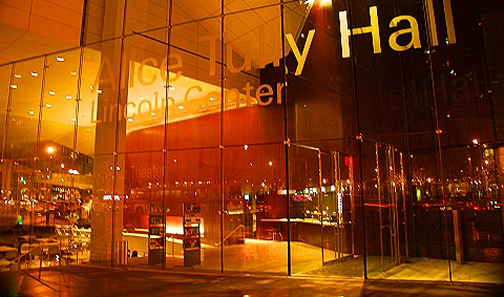
At Alice Tully Hall last week, at a “global premiere” showcasing 10 short films, Eva Longoria announced that she had always wanted to be a stuntwoman. The five foot tall actress was turned down for that career, but a film she stars in and directs was featured among the 10 for “Project Imaginat10n,” a film festival inspired by photos, the brainchild of Ron Howard working with Canon. His daughter Bryce Dallas Howard, who made an acclaimed feature in the festival’s inaugural year, was one of the judges. Eva Longoria joined Jamie Foxx, James Murphy, Georgina Chapman, Kalman Apple, Biz Stone, Ronnie Allman, Jared Nelson, Julian Higgins, and Arrius Sorbonne for this distinction. In “Out of the Blue,” Longoria cast herself as an action hero mom fighting off a formidable foe. In Georgina Chapman’s delicate love story, “A Dream of Flying,” a girl played at one stage of life by Dree Hemingway, is stopped from flying. Jamie Foxx shot his film, “…And She Was My Eve,” about a man searching for the perfect mate, in Brooklyn. Harvey Weinstein, Danny Strong, Alexis Bledel, and Vincent Katheiser were among those cheering the filmmakers on. As to Eva Longoria, she’s clearly ready to be cast in the next great blockbuster; she might even direct.Graphic Design: Salpeter Ventura


-
When we first meet them in this laugh out loud comedy Last Vegas, Robert DeNiro, Morgan Freeman, Kevin Kline, and Michael Douglas look like they might have wandered off the set of a movie called Bad Grandpas. But then, as they go off to Las Vegas for a wild pre-nuptial blast for Billy (Douglas), all cleaned up, they veer close to GQ models. The now familiar Sex & the City shot: the four stars walking in slow motion toward you, has you realizing, as one bosomy broad in the movie does, that mature may not be so bad. Disarmingly funny despite being predictable, the movie comes with a message about ageing, mature love, and friendship, points affirmed by a lounge singer in the shimmering sheaths of Mary Steenburgen who wrote a special song for the film. Following surgery, the actress had an anesthesia induced epiphany, discovering that she wanted to sing and compose music—and guess what, she’s good. At the premiere this week, the Ziegfeld was chockablock with well-wishers who made their way to the “21” Club to sample the beef and yes, gamble at roulette. Morgan Freeman affirmed he did his own dancing, and DeNiro reprised his Raging Bull boxing chops. Director Jon Turteltaub said the dynamic foursome took their scenes in stride. In this company, no one dared play diva.Graphic Design: Salpeter Ventura
-
The lovers in Felix van Groeningen’sThe Broken Circle Breakdown, Belgium’s entry for the Best Foreign Language Picture Oscar, live and love so intensely, you know from the start that something has to give. It was too good to last, says Elise (Veerle Baetens), a tattoo artist as her marriage to Didier (Johan Heldenbergh), a banjo player in a bluegrass band, goes to a place few people ever experience, even in movies. A possible exception may be Derek Gianfrance’s Blue Valentine, which also features a beloved child, heated sex, and shall we say, irreconcilable differences. Here the frisson results from tragedy moving irrevocably toward more tragedy. Ranking “Broken Circle” by tissues, it achieves a ten, even when it veers political with a tirade against the American freeze on stem cell research during the W. Bush administration. Which is why, at the end of a special screening this week at The Tribeca Film Center, guests needed a drink. Accompanied by mussels, fries, and individually prepared Belgian waffles, Belgian beer was a must. A specialty of Belgium, each kind –and there are many—has a glass of its own. “Palm,” mildly sweet and delicious in a wide mouthed wine glass, offered solace. But even days later, the deeply felt emotion of The Broken Circle Breakdown lingers in the heart.Graphic Design: Salpeter Ventura
-
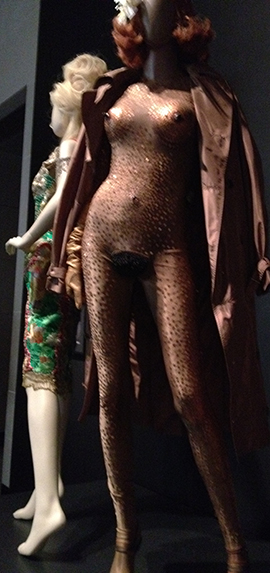 Only some of the crowd greeting French designer Jean-Paul Gaultier at the Brooklyn Museum, wore his clothes, easily identified by the tab on the back. But many chose the occasion of the opening of a lavish exhibition, “The Fashion World of Jean-Paul Gaultier: From the Sidewalk to the Catwalk,” to pay tribute, riffing on his most camp and louche looks without actually wearing HIS designs. That’s to be expected for the man who gave Madonna the pointy cone bra! But upstairs on the museum’s fifth floor, rooms fitted with mannequins whose facial expressions move in delight or dismay display his art in a spectacular show to rival the splendid Alexander McQueen at the Metropolitan Museum a few seasons back.
-
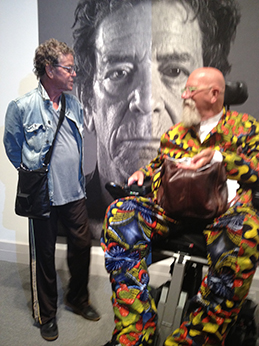 Rock icon and beat poet, Lou Reed had an edgy downtown presence. My Lou Reed stories: so engrossed in his music, head stuck to the ground under a table at the Bottom Line to get a better shot. I swear never to become a photographer. At St. Mark’s Church: Lou Reed and Allen Ginsberg mix it up. Allen sings accompanied by his harmonium. Lou reads his poems. At White’s in Montauk: Lou waits in line like everyone else, a skinny guy in grubs. As visual artist: His high gloss photos at the Hermes boutique on Madison. Scapes looking like those drawings we made with crayolas covered in greasy black. Scratching the squiggles. The self-portraits look down to earth enough to have been done by Lou Reed. Well, they are his after all. His voice on Doc Pomus’ diaries in the documentary about the famed songwriter. When last we ran into him, at the stellar Chuck Close exhibition at Guild Hall, near Chuck’s giant portrait of him, he was happy to say that he would celebrate William Burroughs’ centennial this coming year. Ahhhhh! We will miss him.
Graphic Design: Salpeter Ventura
-
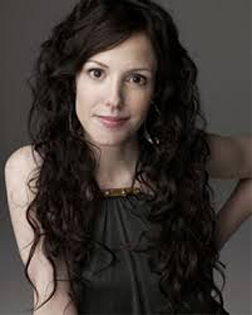 In Sharr White’s new play The Snow Geese at the Samuel J. Friedman Theater, Mary-Louise Parker as Elizabeth wears black, in mourning for her dead husband, but really she is attired in Jane Greenwood’s circa 1917 period detail, eh weeds, for a lost way of life. Under Daniel Sullivan’s direction, a family who thinks it has money, now doesn’t. Two brothers (Evan Jongkeit and Brian Cross, both very fine) vie in Oedipal conflict. Max Hohmann (Danny Burstein), a doctor put out of business because he is German, administers laudanum while his wife and Elizabeth’s sister Clarissa (Victoria Clark) keeps everyone in line. The pretty Ukrainian maid Victoria (Jessica Love) learns to make coffee, now that she’s a refugee from former upper class wealth. A gun brandished, fires off. Wild geese fly afrenzy as if in Hitchcock’s The Birds. As soon as you know the house will go, you are in Chekhov country, even though the setting is rural New York.
 -
The Jazz Foundation of America’s loft party, an annual concert to benefit a vital organization that helps players with medical expenses, housing, recording, you name it, is wall to wall music occupying three large spaces simultaneously. It is hard to know which room to occupy,–choices must be made– but when we heard that Kenny Barron would be playing in the Jazz Loft, we simply had to be there. We caught the tail end of Sharon Clark who scats like Ella, singing “Moonlight in Vermont” and “You’d be So Nice (To Come Home To).” And then Chad Smith from the Red Hot Chili Peppers introduced Kenny Barron’s trio featuring David “Happy” Williams on bass and Victor Lewis on drums performing “Blue Monk,” “Dialogues in Blue,” Eubie Blake’s “Memories of You,” and “Autumn Leaves.” Kenny Barron asked if anyone noticed he forgot the bridge on the Eubie Blake. No one complained. -
After much buzz on the festival circuit, including Sundance, Venice, Toronto, to name a few, Kill Your Darlings opens the Hamptons International Film Festival tonight.Before there was Neal Cassady to whom the writer Jack Kerouac was in thrall, there was Lucien Carr. A St. Louis friend of William Burroughs, Carr was a fast and scary driver, catalyst for acts of rebellion, and key player in perhaps the first bit of beat scandal, the murder of Dave Kammerer, his former boy scout leader and stalker, with a boy scout knife. “Kill” co-screenwriters, director John Krokidas and Austin Bunn, play fast and loose with beat lore, favoring a point of view from Allen Ginsberg’s journals, fashioning a gay coming of age tale featuring a deflowering when they could have sought out the more fully formed fictions in Kerouac’s ample telling and retelling. They clearly wanted to tell a gay story, and in skewing events this way, describing a period when heterosexual yearnings too had a subversive edge, they come closer to a beat vibe than any other movie fictionalization thus far. They even make leering Dave Kammerer (Michael C. Hall) seem sympathetic.
-
The songwriter of rock & roll classics like “This Magic Moment,” “Teenager in Love,” “Viva Las Vegas,”—yes, Elvis Presley’s hit– and “Save the Last Dance for Me,” Jerome Felder, AKA Doc Pomus, was an American original. A Brooklyn boy, crippled by polio as a child, he was big hearted enough to charm the girl he loved as well as just about everyone in the music industry of his time. You may not remember his name now as much as the music he sang and wrote, but the documentary directed by Peter Miller and Will Hecter, and co-produced by his daughter Sharyn Felder, AKA Doc Pomus, will keep you humming tunes you know and love. -
She may have been jet lagged and slightly tipsy from a drink or two at a pre-Tribute dinner at the New York Film Festival evening in her honor, but that did not make Cate Blanchett babble like Jasmine, her character in the latest Woody Allen movie. Quite the contrary, articulate, generous, and funny, Blanchett fielded questions from the Film Society’s Kent Jones, speaking about her astounding wide-ranging career and the directors she has worked with at the tribute Q&A at Alice Tully Hall. Of Woody, she spoke of the rigors of getting it right as there’s no post-production. Surprise for Cate: Woody Allen taped a congratulatory message to her. Her reply: He must have been thinking of Winslet.
-
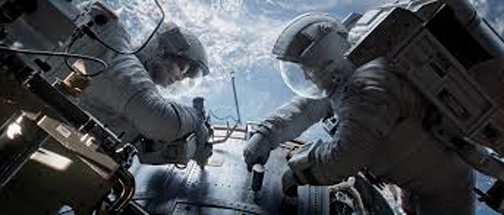
A buoyant crowd settled into lunch at The Explorers’ Club to celebrate Gravity. Producer David Heyman exulted about the beauty of the film, about two astronauts stranded in the weightless ether. Wow, “You should see the sun on the Ganges! It’s amazing!”This movie does what CGI, 3D, all the bells and whistles of movie technology were meant to do, put audiences literally there, in this case, outer space. Under the superb direction of Alfonso Cuaron, with whom Heyman had worked before on the most critically successful of the Harry Potter franchises, “Prisoner of Azkaban,” the director of photography Emmanuel Lubezki and visual effects supervisor Tim Webber even invented a trick or two. But Heyman could not say enough about the two actors who suffered the rigors of those heavy space suits for the 62 day shoot with nary a complaint. All you see is part of their faces, eyes and breath registering joy, fear, relief, humor, whatever is required, creating, in fact, an old school narrative.
-
 Just as the news seems bleak, a government shut down translating to national parks closing their gates to tourists, and workers home without pay, Google’s celebration of Yosemite’s anniversary seems especially ironic. The documentary Inequality for All turns its penetrating gaze onto another piece of evidence of meltdown: the vast gap between the 1% and 99%. The film delves into how we got to this economic chasm, which while not necessarily a new question, is interesting to look at spelled out, graphs and all. What’s new is the focus on former Labor Secretary Robert Reich and his optimism.
-
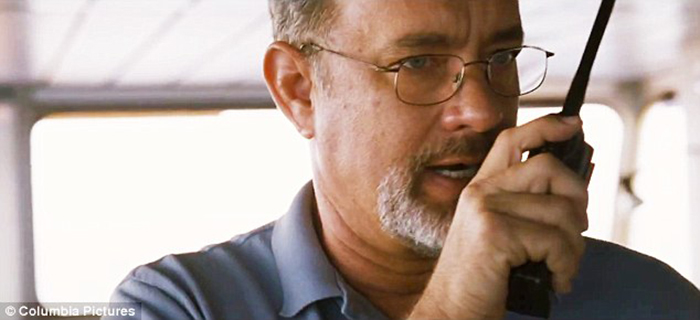
The New York Film Festival must have a thing for danger on the high seas. Last year’s opening night featured the fantasy ocean crossing Life of Pi: a boy on a raft with a tiger. This year: it’s the real life adventure of the Maersk Alabama with Captain Richard Phillips at the helm, invaded by pirates off the coast of Somalia. Tom Hanks stars as Captain Phillips in this gripping tale, co-starring with a bunch of lean Somalian actors who hail from Minnesota. Hanks, as always, his excellent Everyman, albeit no nonsense leader, registers fear in just the movement of an eye. And those pirates: You will not see a more menacing looking cast in any movie this year. -
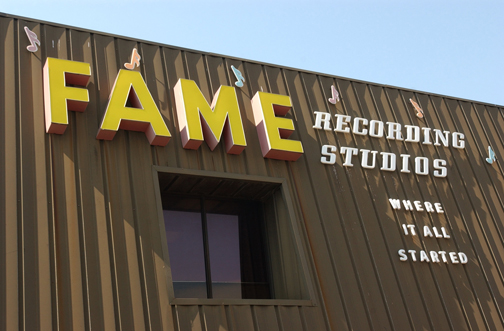
The name Alabama has such beautiful assonance, its flow of “a” makes its own Southern comfort! So the sound of “Sweet Home Alabama,” one song in a stellar soundtrack for the documentary, Muscle Shoals, is proverbial music to the ears, an anthem to the Southern rock that flourished in this idyllic spot.A mecca for recording artists from the Allman Brothers to Simon & Garfunkel, Dylan to The Rolling Stones, Muscle Shoals, Alabama occupies a singular space in music history. Yes, there’s Memphis and Nashville, but Muscle Shoals had its own magical vibe. As Mick Jagger and Keith Richards testify, the place was integral to the recording of “Wild Horses” and “Brown Sugar.” With Fame studio founder Rick Hall as impresario, and central focus, this film under the able direction of Greg “Freddy” Camalier, limns a significant chapter of Americana, where Aretha Franklin recorded “I Never Loved a Man,” backed by the white soulful house band, a turning point in her career.
-
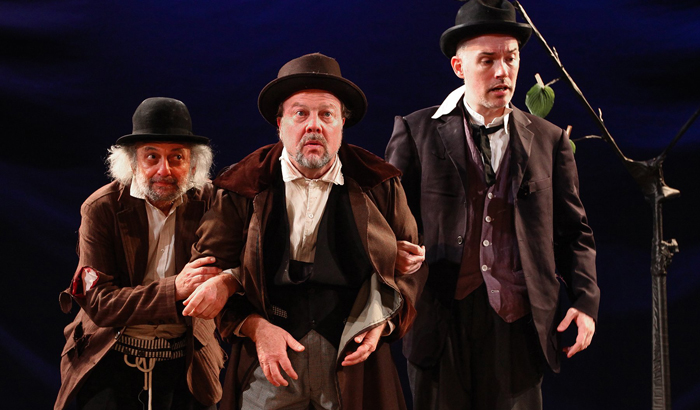
Oy vey is mir! Everything hurts but, thanks to a carrot and a hug, I’m still here. That kvetch could sum up Beckett’s classic tragicomedy in any language. In Yiddish, as performed in a new superb production, a collaboration of the Yiddish Rep with the Castillo Theater starring Shane Baker, Avi Hoffman, David Mandelbaum, and Rafael Goldwaser, the human condition is pared down as only Beckett’s universal sounds can render its absurdity—well, why not? -
“I’m a sports nut,” explained Hugh Jackman, joyful that his son decided to join the school soccer team. The actor and song man was making his way around The Monkey Bar at a luncheon celebrating his new movie Prisoners on Thursday. He might just as well have been talking about the thriller’s opening scene, when he, as Keller Dover, praises his fictive son for killing a deer. The falling animal may prefigure deaths to come, or provide the occasion for a proud parent before Keller loses it when the unthinkable happens. His daughter is taken and he, albeit a good man, holds the alleged abductor Alex (Paul Dano) prisoner, torturing him. His wife Grace, played by Maria Bello, loses it too, withdrawing into a drug induced fetal pose. Bello said the film’s nightmare premise expressed the characters’ “shadow side.” -
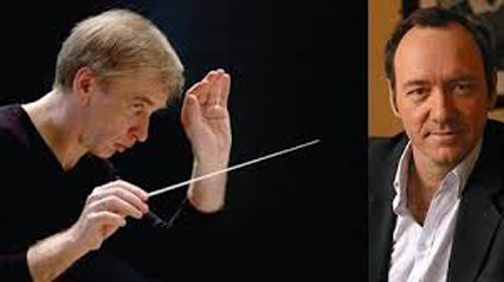
Kevin Spacey still talks about the excitement of meeting Jack Lemmon when he was 13, and hearing him say, “You were a touch of terrific.” Now introducing 134 young musicians from 50 countries, at Lincoln Center this week, he recounted that story as a way of explaining the importance of encouraging young talent. The World Peace Orchestra performing on the anniversary of 9/11, with President Obama deciding the efficacy of a military strike against Syria, lent an extra air of authority to the stellar evening. Patricia Clark, a host of the special night remarked, how often do we go to a premiere that even has a concept of world peace, as Darlene Love, Susan Lucci, Kathleen Turner, Jefferson Mays, Celia Weston, Rosanna Scotto, Peter Cincotti, made their way up the escalator to Avery Fisher Hall. -
The biggest revelation in the new documentary Salinger is that The Catcher in the Rye author was not a recluse. Rather fame averse and a champion of innocence as his signature books show, he simply removed himself to a New Hampshire retreat and wrote more books without a plan for their publication. The second reveal, and more significant for book lovers: over the forty years he retreated from the public, he wrote books in a woodsy bunker, producing manuscripts that will now be published. Are they any good? No one in Salinger could say, but J.D. Salinger’s literary reputation will change, and contrary to the midcentury notion held by many writers–that we should know an author only through the books he wrote– the Salinger life story unfolds like a thriller. A literary Garbo, Salinger’s presence in absence remains catnip for celebrity culture. -
Is Alec Baldwin a good sport? At a pre-screening cocktail party at Mary Jane and Charles Brock’s East Hampton residence, a property complete with croquet and golf courses, Alec Baldwin M.C.’d a competition, kids against adults putting on the green to benefit the Hamptons International Film Festival. Of course one of the kids was Sky Sudberry, a 9-year old from Texas, second place at the World Championship of Junior Golf at Pinehurst, N.C. with poise to kill and a killer grip. As she was planning her swing, Baldwin was hacking a pretend cough. Sky just took it in stride besting him in this lawn competition. She is, after all, one of 8 kid sport stars in a new movie, The Short Game, directed by Josh Greenbaum, to open on September 20. To put it mildly, the documentary is killer cute, and funny, and as Alec Baldwin put it at the Q&A following the Guild Hall screening, he learned a lot.
-
Among the many pleasures of the Grease-themed benefit for the Prostate Cancer Foundation this weekend in Wainscott, was seeing Michael Milken in a letter sweater like the reformed Danny Zuko at the end of that 1978 movie set in 1959. At East Hampton Studio, a vintage Chevy parked outside, women channeled either Sandy in bobby socks and saddle shoes or edgy Rizzo in tight black capris and off the shoulder tops with red neckerchiefs. Like many a felt flare skirt, Colin Cowie’s table treatments featured cut out poodles. Formica and steel chairs and gym bleachers went far to keep the ‘fifties fantasy going. Only the white bling of an Elvis impersonator seemed to come out of another era. Many talents went into the production of this special night including those of guest chef David Burke who created a cafeteria style buffet dinner for the occasion: chicken, mashed potatoes, coleslaw, onion rings, chocolate pudding—comfort food. But the entertainment, the band Hall & Oates, perfectly hit that nostalgia mood performing their signature tunes without feeling old: “She’s Gone,” “Man Eater,” “You Make My Dreams Come True,” “Your Kiss (is What I Miss).” In their words, “I Can Go For That.”
-

An intimacy with the protagonist of the movie, The Patience Stone, is immediate. We see the young mother, performed by Golshifteh Farahani, at home, revealed in casual dress. In the street, she must cover up so completely, even her eyes are shielded by the cloth grate of her burqa. More remarkable: the intimacy goes further. We hear her voice. The caretaker of her husband who is in a coma, the woman speaks her mind, protecting him from soldiers and other invaders at a difficult political time, but not from her inner world.Struck by the film’s freedom, I interviewed the story’s writer and film’s director Atiq Rahimi via email.
-
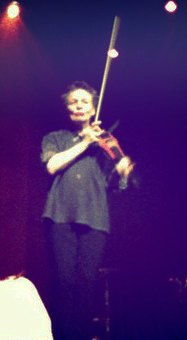 On a field of lights, on a stage bare except for a podium, a big chair, and a neon rectangle that could have been a James Turrell design, Laurie Anderson performed violin, made vocal sound, and mused on many topics at Guild Hall Saturday night. What if we renamed the planet Dirt, she challenged: “Then we could have Dirt Day.”
Much of what this edgy performance artist had to say in this hour and half tour de force evening turned on language, tautologies, syllogisms, puns, and mechanisms of voice such as the pillow speaker Anderson demonstrated in her mouth, distorting her sound so well suited to monologue. The neon rectangle turned into a screen for a home movie featuring her dog Lulabelle, taught to play piano.
 gossipcentral.com