Looks like hell is a step up, as the characters in Jean-Paul Sartre’s mid century allegory step off the elevator into a swank upscale loft in the Pearl Theater Company’s stylish production of No Exit. A first New York revival since its award winning Broadway debut in 1946, the play, adapted from the French by Paul Bowles, is freshened up: a statue of Napoleon from the original is now a modernist sculpture, a microcosm of the loft space. In this peculiar art piece, the rectangular shoebox-sized spaces are multiplied and piled up, like apartments in a high rise, reflecting the dwelling where three characters discuss life’s meaning, as it were, romping about, posing on three divans. The ensemble, featuring Bradford Cover, Jolly Abraham, Sameerah Luqmaan-Harris, and Pete McElligott, is good at conveying this imagined post-death dialogue. And this being 2014, the politics are less specific than Sartre’s post-war vision of eternity, but the mood could not be more focused. Behind a scrim on both sides of the stage, the detritus of lives, broken furnishings, and just plain stuff are a reminder: You won’t need them here.

recent posts
- Marisa Tomei and Matthew Broderick at Guild Hall: The Plight of an Upper West Side Arts Space Gives A-List Actors The Big Chill
- Raul Esparza and Lily Rabe in The Winter’s Tale: Wet in Central Park
- Authors Night in East Hampton: If it’s Not One Thing It’s Your Mother
- Documentaries: Jocelyn Wildenstein The Lion Queen/ Tovah: How Jewish is It?
- Hamptons Journal: John Waters at Guild Hall: “Gay is not Enough” / “Cagney” at Bay Street/ “Signs” at the Bridgehampton Museum Tractor Barn
-
-
As last week’s Oscar ceremony fades from memory, it is useful to consider, as Marlon Brando’s character in Last Tango in Paris says, when it’s over it begins again. The “it” here is the Hollywood cycle from Sundance to the Oscar red carpet, awards, and after parties, the subject of a new book, “The $11 Billion Year: From Sundance to the Oscars, an Insider Look at the Changing Hollywood System.” Veteran Hollywood reporter and “Oscarologist,” Anne Thompson focuses on 2012, the game-changing year when declining sales in the movie business turned around. Examining the journey of the nine best picture nominees of that year toward the Oscars, and other key films, Anne Thompson begins with the news of indie film champion Bingham Ray’s sudden death and puts together a picture of the industry’s movers and matters, offering a glimpse of the personalities, the talent, the risks, the marketing, and a view to the future. -
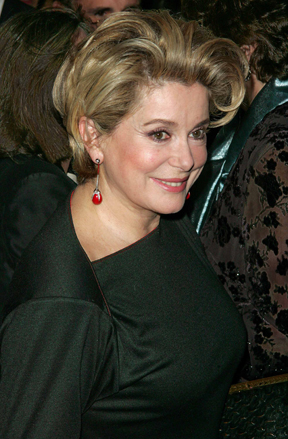 “You’re stunning,” an admirer shouted out at the Paris Theater on Thursday night, when Catherine Deneuve, the undisputed queen of international cinema took the stage. In bulk-enhancing horizontal striped mink, a standout among the others of the French delegation, her first words were, why was the mike given to me? And then poised and elegant she welcomed the crowd to the opening night feature, On My Way. The focus of every frame, she stars as an aging beauty queen on a road trip in rural France. As daffy as that premise could be, Deneuve pulls this romp off with comic aplomb: after a lover’s betrayal, Bettie sets out in search of serenity and a good smoke. A man with sausage fingers rolls a cigarette in excruciating slow motion. Bettie has a one-nighter with a guy half her age, a photo shoot during which she faints, a bonding with her adorable grandson, a surprising rapprochement with family, and a romance. It was only later I found out, the French find this movie serious.
 -
The Partridge Family mom took center stage at the Café Carlyle this week, singing classics from the American musical theater, and recounting anecdotes from a life well lived. At nearly 80, yes, she does reveal her age exaggerating upward, Shirley Jones sounds and looks great. In Oscar week, with a stunning June Squibb nominated for her role in Nebraska (at age 84), the ‘80’s are maybe not so fearsome. Shirley, named after Shirley Temple, won a Best Supporting Oscar in 1960 for playing a prostitute in Elmer Gantry. She credits the movie’s star, Burt Lancaster, for launching her career into acting on top of the singing career she already had performing in Oklahoma, Carousel, and many other musicals. And guess what, of all the stunning leading men she’s loved on stage and screen, Burt was the best kisser. -
Omar, one of the five nominees for Foreign Language Film Oscar did not win. The sumptuous Italian film, The Great Beauty, did. But the Palestinian entry, about a young Palestinian man who, despite his youthful dreams of love, peace and freedom, becomes an asset for Israeli intelligence, offers a glimpse into the fraught Middle East situation. With another film opening this week, Bethlehem, Israel’s entry for the Academy Award that did not get nominated, Omar doubles the picture of despair about the region. The films’ titles say much about their differences: Omar has a sympathetic character at center: in the film Bethlehem, the arid Biblical place is the focus, yet each features individuals on opposite sides of the conflict sacrificed in cycles of violence.I had the opportunity to interview Bethlehem’s director, Yuval Adler, who wrote the script with Ali Waked, a Palestinian writer and journalist.
-
This is a great American myth: a mysterious stranger comes to town, briefly, and changes everything. Reference: Mark Twain. As the Italian-born homemaker Francesca (Kelli O’Hara) falls in love with Robert (Steven Pasquale), the young hunk who breezes through her Iowa town for a photo shoot, she thinks The Patron Saint of Housewives shined his beneficence on her. As operatic as these emotions come, the new musical, The Bridges of Madison County at the Gerald Shoenfeld Theater on Broadway, under the direction of Bartlett Sher, is sexy fodder for women of a certain age. -
Season two of the award-winning, much acclaimed FX cold war series The Americans kicks off this week, proving that Americans were ready to embrace a television series about appealing KGB operatives: Matthew Rhys and Keri Russell. Without giving away too much of a sensational first episode, at one point the couple is caught in flagrante delicto by Paige, their teenaged daughter. What follows the next morning over breakfast is a by-the-book conversation about privacy and closed doors. When they are not shuttling family around to carnivals, where son Henry comes close to inadvertently joining the family business, the couple, wearing an assortment of guises, take out whom they must, and the scenes are often bloody. -
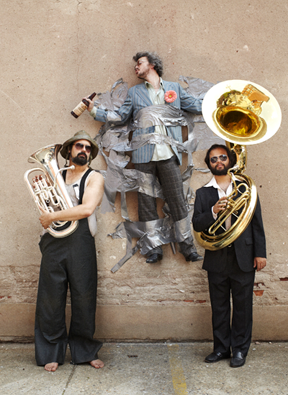 How is it possible: two incredibly good productions of Shakespeare’s Twelfth Night in the same season? One of the bard’s bawdiest, the comedy inspired the recent Broadway hit featuring Mark Rylance as Olivia, in a brilliant stab at staying true to Elizabethan strictures: men play the women’s roles. Rylance makes a damned good woman, but in the Pig Iron Theatre’s production, the women (real women) are saucier, the partying heartier, the drink flowing so freely, viewers in the front row of the Abrons Center may require raincoats.
 -

When William S. Burroughs died in August 1997 at age 83, he was the last of the seminal beat writers to go. Jack Kerouac died in 1969, and Allen Ginsberg in 1997. Some argue that Gregory Corso who died in 2001, should have enjoyed that status too. Despite Burroughs’ known heroin use over many years, his hundredth birthday on February 5, the same week that Philip Seymour Hoffman appeared to have died of a drug related cocktail, made many ponder: how do some addicts maintain till old age? Yearlong celebrations, in Bloomington, Lawrence, Seattle and other American cities including New York will mark the occasion with parties and poetry in the expectation that the beat generation will endure in their efforts, and it does in spirit. -

147 docs were eligible for Oscars this year. 15 made a short list, and 5 are now contenders. One, The Act of Killing, a first feature length film for director Josh Oppenheimer, working with an anonymous partner, raises questions of morality, conscience, and accountability related to the 1965-6 genocide in Indonesia. As Oppenheimer explained at a special Academy of Art & Sciences screening series of the Oscar nominated documentaries, he had met some survivors of the killings, and in the process of deciding to make a film on this subject, he met with perpetrators, proud and still in powerful government positions. -

Canadian pop and country singer k.d. lang took over the role originated by Fantasia Barrino in the exuberant Broadway revue After Midnight this week. Channeling Tony Bennett, who came by the Brooks Atkinson Theater to hear her on opening night, lang performed “I Can’t Give You Anything But Love,” “Stormy Weather,” “On the Sunny Side of the Street,” and “Zaz Zuh Zaz” wearing different tuxes, in black and white, her hair slicked up. Yes, with the orchestra onstage under Wynton Marsalis’ direction —you are not going to hear a better big band sound anywhere in New York, and the dancing still wildly entertaining–, lang does not disappoint. She is the crooner whose debonair jazz style marks a new level in her careerGraphic Design: Salpeter Ventura


-
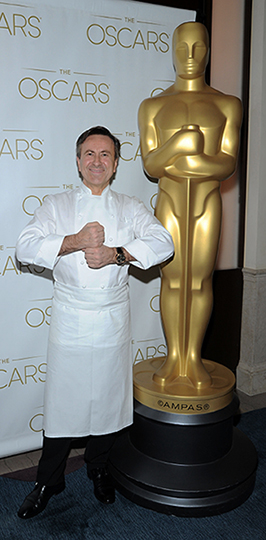 Daniel Boulud makes a mean red carpet, a special cocktail of that name for Oscar night. This, the second year in a row chef Boulud is host to the east coast academy of arts & sciences members, everyone hopes his restaurant, Daniel, will become a tradition; the fare matches the grandeur of the occasion. Daniel Boulud wants to ensure that he is on the East Coast what Wolfgang Puck and Thomas Keller are to the West where those chefs are hosting the parties and dinners. Of course, some diners there will surely have their statues in hand.
 -

On Tuesday night with an ice storm looming, George Clooney worked the room, a very big room. The elegant Metropolitan Club featured its signature ice sculptures dripping over the raw bar; with its ceiling paintings, this was an opulent and fitting locale for Monuments Men, a movie about the recovered art of Europe during World War II. Honoring the rescuers, a dream cast includes Matt Damon, John Goodman, Bill Murray, Jean Dujardin, Hugh Bonneville and Bob Balaban in what must be called an extended buddy movie directed by George Clooney, and based on a true story from a book by Robert Edsel. Affable, fixing a fan or friend with a steady gaze and an arm firm on the shoulder, Clooney fielded questions about the film’s casting. He’d see Balaban at parties, and at one for the movie Argo, he and co-producer Grant Heslov had a Eureka! moment, deciding to cast the versatile bespectacled actor. -
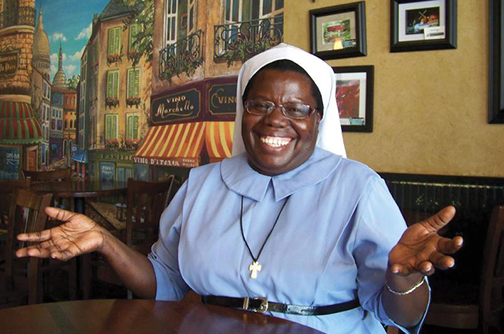
Forest Whitaker takes her calls. Sister Rosemary Nyirumbe so epitomizes the strength of simplicity, the Oscar winning star of Last King of Scotland— he portrays the dictator Idi Amin-– form a likely alliance in helping young people in Africa recover from the horrors of vicious murderous rebels like Joseph Kony who, like Idi Amin, brutalized them. Whitaker founded a school for boys, to re-humanize them. Sister Rosemary founded a school to teach women to sew, specifically working pop tabs into fashionable bags. That trade allows them to survive with dignity for themselves and for the children many bore against their will. St. Monica’s also serves as a safe haven and hospital for the women. Last week, Sister Rosemary met a group of journalists. She was carrying one of the bags woven of the silver aluminum tabs. Everyone at the table at Milano wanted one, but we all settled for an autographed copy of the book about her life and work, Sewing Hope, and chatted with Derek Watson, the director of a documentary about this woman of faith. Her secret: exuding serenity, Sister Rosemary exacts tough love in situations many would find impossible. -
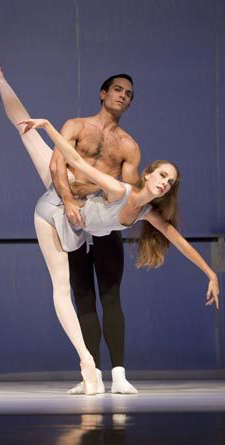 Tanaquil LeClercq was a lithe, angular beauty, a dancer who graced ballet until polio struck, paralyzing her and ending her career at age 27. Nursing her to a life beyond this disease, a crippler in the 1950’s and now nearly eradicated, were her husband George Balanchine, and friend Jerome Robbins. She had been muse to each of them. The luminous documentary about her, aptly named Afternoon of a Faun from a memorable performance when she is coupled with Jacques d’Amboise, limns her brief career. Archival footage shows this remarkable talent in key performances, including a prophetic dance choreographed by Balanchine for a March of Dimes benefit; in “Resurgence,” she is a girl afflicted with polio as Balanchine himself dances the role of Death.
 -

When the Frick Museum featured “Girl with a Pearl Earring” in “Vermeer, Rembrandt, and Hals: Masterpieces of Dutch Painting from the Mauritshius,” its formidable Fall exhibition that just completed a 3-month run, curators could not have anticipated a timely coincidence: that a new documentary in which a humble, self-effacing and very talented inventor seeking to copy Vermeer ‘s “The Music Lesson,” would be taken up by the duo Penn & Teller. Teller’s directorial debut, Tim’s Vermeer, follows Texas-based Tim Jenison as he constructs a room taken from the famous painting; the original is housed in Buckingham Palace. Jenison has one of his daughters model for the young woman at the harpsichord, and essentially repaints the Dutch masterpiece, all on the hunch that Vermeer crafted the work using mirrors. The Frick show underscores Vermeer’s greatness, while the documentary demystifies the notion of high art. -
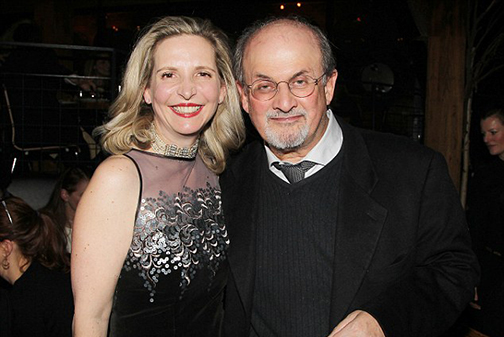
Good news: the written word thrives downtown. The brainchild of Doctor Amanda Foreman, the author of historical works like Georgiana: Duchess of Devonshire, “House of Speakeasy” was founded to keep writers visible, engaged with audiences, and earning money for their craft. At a sold-out salon at City Winery on Monday night, the first of a series, some writers who do, also showed another side of their chops as performers: moderated by humorist Andy Borowitz, authors Adam Gopnik (The Table Comes First: Family, France, and the Meaning of Food), Susan Orlean (The Orchid Thief), Simon Winchester (The Men Who United the States), and songwriter Dar Williams sang—in other words, working writers at The New Yorker magazine and other venues– who also earn a living—told stories on the theme of “plays with matches.” -
It would be impossible to imagine two more wrong-headed individuals than Anthony Reilly and Rosemary Muldoon, the next-door neighbors in John Patrick Shanley’s new play, Outside Mullingar. The idea that they would live side by side for their entire lives and not realize their desires for one another strains the imagination. But if the playwright of Doubt is looking for a fresh window into the human heart, or a way to express his inner Irishman, this old school play at the Samuel J. Friedman Theater, produced by the Manhattan Theater Club and directed by Doug Hughes, is surprisingly satisfying, especially in our age of social media with its laconic exclamations.
-
For the 18th edition of YoungArts on HBO, Josh Groban, the youngest ever to give such a class, challenges three YoungArts alumni to write a song in two days. Karen Goodman and Kirk Simon, Academy Award winning documentarians, follow the creation and ultimate performances of the SB3 (Super Baby 3), Miranda Scott Johnson, David Stewart, Jr., and Elena Pinderhughes, all the way from brainstorming to the ultimate performance with Groban in Boston. It’s a thrilling ride, entertaining as a reality show, but with Groban’s insights about what works and what doesn’t useful to anyone who is learning anything. Josh Groban charmingly seems surprised as his pupils succeed so well in this process. As a display of what YoungArts, a foundation dedicated to providing life-changing experiences to young artists, can do, this film is both entertaining and inspiring. On Monday night at a special screening at MoMA, they all performed their song, “Fade Away” for family and friends. Everyone could see, these young artists have a big future.Graphic Design: Salpeter Ventura
-
It’s fitting that the 200th episode of American Masters on PBS features writer J. D. Salinger, an author so influential it is hard to imagine the course of 20th century American literature without his imprint of lost innocence in the novel The Catcher in the Rye. Not only are at least three assassination attempts attributed to this book, but much in the arts bear its stamp. Just look in the Museum of Modern Arts’ Education Center’s display of a facsimile of the first edition, an act of appropriation by Richard Prince, and thereby an appreciation. Featuring interviews with notables: John Guare, Edward Norton, Philip Seymour Hoffman, A. Scott Berg, Phoebe Hoban and many others, this copiously researched documentary also has Joyce Maynard and the “Esme” girl, Jean Miller, telling their side of seduction and betrayal by Salinger. Back in September, when the film first screened at MoMA, Simon & Schuster published a valuable accompanying volume compiled by David Shields and Salinger’s filmmaker Shane Salerno. -

Among the fine documentaries on the short list for Oscars is HBO’s Life According to Sam. Not your usual leading man, its star Sam Berns was an odd looking teen, bald and pin headed because of a genetic disease, Progeria, so rare few have heard of it. Last summer Life According to Sam made the rounds of the film festivals, garnering praise for the filmmakers Sean Fine and Andrea Nix, the husband and wife team who made the Oscar winning short, Inocente, about a talented artist who was also a homeless teen. At the Nantucket Film Festival in late June, I had the opportunity to meet the filmmakers, Sam, and his remarkable parents, doctors Leslie Gordon and Scott Berns. You could call them Sam’s secret weapon, committed to curing this disease, not only for their son, but for the children worldwide who endure it, dying by the time they reach 13. Creating a foundation, they researched, finding ways to impede Progeria’s quick progression. -
Woody Allen sat aisle right next to his wife Soon Yi opening night of the new musical Beautiful, about fellow Brooklynite Carole King. Well, everybody has to be somewhere! Where he wasn’t? Picking up the Golden Globes Cecil B. DeMille Lifetime Achievement Award in Los Angeles. Diane Keaton accepted the statue for him. Nevertheless, he endured his own limelight, grimacing as a fan took a picture with an iPhone. Nearby Jerry Seinfeld chatted with Katie Couric, and checked the football scores on the way out. But hey, noted a companion, at least he was there. Elsewhere present: Clive Davis and Phil Collins. Sting and Trudie Styler just back from L.A. joined in for the party at Cipriani 42nd Street. Whatever was going on out west, the place to be in New York on Sunday was the Stephen Sondheim Theater. That’s because the show Beautiful really is. -
When a fan tells him she’s tongue tied, Martin Scorsese becomes wildly animated: “Why? You don’t need to be. It’s just me,” and gives her a hug. You could say his buoyant spirit reflects some optimism. It was Tuesday, and he’d just been nominated for the Directors Guild Award. Now surrounded by friends and colleagues at a luncheon at Michael’s, he would receive an award for collaboration with Leonardo DiCaprio at the National Board of Review gala that night. It was all good. New Year’s week is a bit like the circus comes to town: and in a day or so, they’d all leave town for L.A. and the Golden Globes on Sunday where his film Wolf of Wall Street may pick up a Best Motion Picture-Comedy Award. -
What can’t Meryl Streep do? Presenting a Best Actress award to her friend Emma Thompson, she offered the 700 gala guests of the National Board of Review at Cipriani 42ndStreet an option, a short speech of praise, or a longer complaint. I don’t remember a show of hands. Wearing a souvenir trucker hat emblazoned with the words, “Prize Winner” evoking Woody played by Bruce Dern in Nebraska, Streep launched into her kvetch with full gusto. “I’m not the prize winner,” noted Streep in mock rivalry, “That’s so weird.” Recounting instances of Walt Disney’s gender bias, in her final moments of praise for Thompson, she recited a poem she composed in her honor, ending:
-
In 1935, at age 5, Harry Belafonte saw his first movie, Tarzan, and knew he never wanted to be one of those people from Africa. This bit of personal history was the entry point for the 87-year old performer and activist, putting the achievement of Steve McQueen, the British director of 12 Years a Slave in the context of this country’s untoward history. He looked forward to more work from McQueen, but even if his career ended now, 12 Years a Slave was enough to move the conversation about slavery in America to a new place. Belafonte’s speech limning his experience of racial identity was so powerful that when the critics’ group’s choice for the best film, American Hustle, was presented by veteran director and film historian Peter Bogdanovich, the evening’s finale in a night honoring excellent work in cinema, director David O. Russell left the stage at The Edison Hotel speechless.
 gossipcentral.com