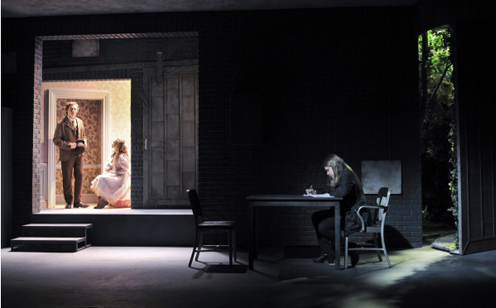
If art has the freedom to display human foibles in the extreme, the “ick” factor of Jennifer Haley’s play The Nether, the MCC production that opened this week at the Lucille Lortel theater is through the roof. On first view, the stage is a somber gray, an interrogation room where an investigator named Morris (Merritt Wever) pushes middle aged men to near tears questioning their online languishing in a virtual paradise called The Hideaway. By the time doors open onto sunlit verdant gardens, and the baby pink of a child’s bedroom in this quick 80 minute tour de force, the suggestion of edenic innocence is as welcome to the audience as this splendid, if non-existent place is to Mr. Sims (Frank Wood) and Mr. Doyle (Peter Friedman). Morris demands to know the server, information that the men are loathe to deliver, lest they never see “Iris” again.

recent posts
- Marisa Tomei and Matthew Broderick at Guild Hall: The Plight of an Upper West Side Arts Space Gives A-List Actors The Big Chill
- Raul Esparza and Lily Rabe in The Winter’s Tale: Wet in Central Park
- Authors Night in East Hampton: If it’s Not One Thing It’s Your Mother
- Documentaries: Jocelyn Wildenstein The Lion Queen/ Tovah: How Jewish is It?
- Hamptons Journal: John Waters at Guild Hall: “Gay is not Enough” / “Cagney” at Bay Street/ “Signs” at the Bridgehampton Museum Tractor Barn
-
-
“Do you want me at the piano,” Alexa Ray Joel asks in a kitten voice several times during her set at the Café Carlyle. Eager to please, in her low cut dress and cascading curls, she sings her own compositions, with one or two exceptions she’s tailored the lyrics to: “How Lovely to be a Woman,” her favorite song Ann Margret sings in Bye Bye Birdie. Aside from her father, Billy Joel, Randy Newman is her favorite songwriter; Stevie Wonder is her favorite singer. Joel pays homage to all of them and covers Gypsy’s “Let Me Entertain You,” with a line about “My mom’s too damned pretty.” -
If you are Jewish, you want your son to be a doctor. But think again. Ziggy Gruber, the “deli man” among several featured in Erik Greenberg Anjou’s new documentary, Deli Man, will do just fine. Trained for cordon bleu at the Culinary Institute, the young Ziggy was so attached to his grandparents, he went into the family business, and now, successfully situated in Houston, the deli restaurateur of his dreams and married to his masseuse, he is worth way more than his weight in chopped liver. Dimple cheeked, Ziggy is a Jewish boy in the great Jewish tradition: he honors his ancestors, and the crude and heimish cuisine of his people. -
J. K. Simmons’ music teacher from hell may earn him an Oscar, but he is also having an unanticipated nightmare effect on anyone who has had rigorous training, no matter what the field. We’ve seen movies about cordon bleu culinary school. Can cooking school really be as severe as the blood-letting in Whiplash? Last week Daniel Boulud explained his edible tribute to those rigors. After having seen Whiplash on the airplane from Japan, he had flashbacks to severe culinary masters. Creating his dinner for the East Coast Academy of Motion Picture Arts members for Oscar viewing tonight—this is the third year he is hosting—his dessert team created a confection called “Drums:” Saint Honore, Yuzu, and Raspberry. According to Oscar prognosticators, Whiplash may not have a chance at the top award, but, believe me, this is one winning dish.
-

Shakespeare’s The Winter’s Tale, one of the bard’s problem plays with its themes of wrong-headed leadership and outright cruelty, may not seem a likely source for a ballet, but choreographer Christopher Wheeldon thought otherwise. In the play, King Leontes’ (Edward Watson) jealous rage leads to the deaths of his young son, his wife Hermoine (Lauren Cuthbertson), and her unborn baby. Just as operas are now brought to audiences in state-of-the-art films, so too will The Winter’s Tale follow the highly successful ballet of Alice’s Adventures in Wonderland onto the big screen. Featuring commentary by Christopher Wheeldon, composer Joby Talbot, and designer Bob Crowley, the film of The Winter’s Tale is exquisite, at once accessible and richly absorbing. -
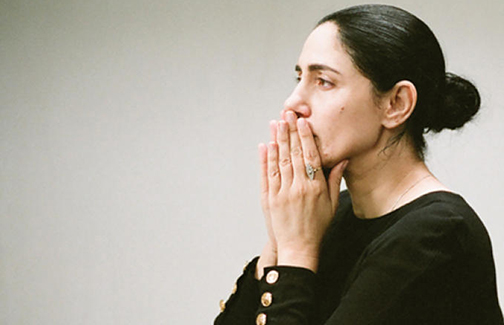
The injustice of women trapped in unhappy marriages by husbands who refuse to let them go has long been acknowledged in religious Jewish communities. If a woman cannot get a “gett,” she is not officially divorced, and therefore is not free to remarry, continue with conventional domestic life, perhaps remarrying. Shlomi Elkabetz, director of the movie Gett: The Trial of Viviane Ansalem, says that in Israel, the situation is even more egregious because there is no civil recourse as there is in the United States, but then again, in observant circles, the result is the same: the woman remains a social outcast, the husband free to do as he wishes. -

When Benjamin Scheuer walks onto the Lynn Redgrave Theater stage, picking up an acoustic guitar, announcing he’s 10 years old, you believe him. He is about to tell his story in song, accompanying himself with several guitars, instruments he mastered at his father’s knee. His one-man show, The Lion, follows him through a Freudian mind field, coming of age under the tutelage of this strict father and finding his own roar; you weep at his misfortunes, particularly loss and then survival, which Scheuer has managed to express so beautifully in his music. -
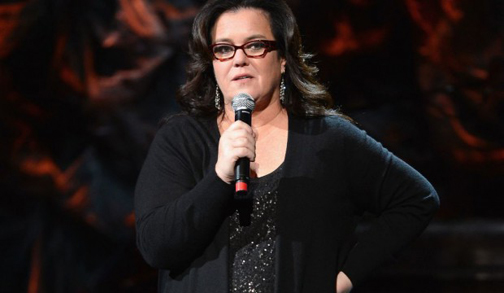
The irrepressible Rosie O’Donnell could not help herself. Coaxed to do stand up on the not funny subject of her heart attack by HBO’s Sheila Nevins, the television star created a routine that is more than the heartfelt in its title, “Rosie O’Donnell: A Heartfelt Standup,” it’s a PSA for women, a wake-up call to the astonishing fact that the leading killer of women is not breast or ovarian cancer, but heart disease. After a special screening at the Athena Film Festival, a panel of doctors weighed in on heart health for women offering tips for prevention. O’Donnell created a mantra for detection, HEPPP: Hot, exhausted, pain, pale, puke, which she made into an infectious ditty. When someone in the audience told her own heart story, O’Donnell strained to find a place for H, an added symptom of heartburn. -
Paris may be exotic to many, but two visitors touring with their music in 1989 had opposite takes: for Osceola Mays, (Lillias White) untrained singer from Dallas formed by gospel at church and a history of slavery, Paris was a place that did not discriminate for her color. She never wanted to leave. For John Burrus, (Scott Wakefield) white rodeo cowboy who had been there before, during the war, the concert series was a job working his guitar, in Western regalia, pointy boots, wide-brimmed hat, and cowboy shirt. A more unlikely pair you will never meet but for the York Theater production at Saint Peter’s that brings them together. Alan Govenar’s Texas in Paris tells a little known story of these two, brought to Paris to entertain; Govenar deftly teases out their world, creating a dialogue about race, justice, and class in America. Director Akin Babatunde makes the music dovetail beautifully. That the two come to understand each other is no surprise, but the fine performances are this entertainment’s miracle. -
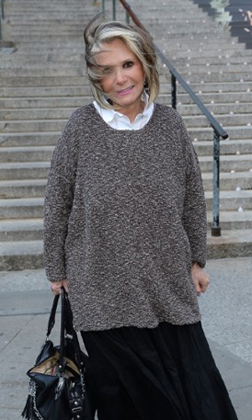 What an impressive record of documentaries on the subject of addiction! Then again, what an impressive record of documentaries! Last week, Phoenix House honored President of HBO’s Documentary Films Sheila Nevins at Cipriani 42nd Street. With Michael Douglas and Catherine Zeta-Jones by her side, Nevins had a ringside seat watching the reel of her green-lit films, from her comprehensive 9-part series, Addiction, to Wishful Drinking, Elaine Stritch: At Liberty, and others from a stunning decades long career. Many film insiders were abuzz, fresh from Sundance where HBO’s controversial new non-fiction film, Going Clear: Scientology and the Prison of Belief, premiered to a packed house. This weekend she is to be awarded at the Athena Film Festival at Barnard College, in tandem with a screening of Rosie O’Donnell: A Heartfelt Stand Up, and a panel about women and heart disease. I had the opportunity to talk to Sheila Nevins about her awards, and HBO’s current documentaries. For this veteran television producer, what appears to be a crazy busy time may just be business as usual.
 -

Wiry and wise to life’s vicissitudes, soul singer Bettye Lavette took the stool at the Café Carlyle, commanding from that small perch a powerhouse of songs featuring her new album, Worthy. Building up to the title song, Lavette’s set included tunes from Bob Dylan (“Unbelievable”), Mick Jagger and Keith Richards (“Complicated”), John Lennon and Paul McCartney (“Wait”), not one of them a hummable known despite the fame of the songwriters, which made the evening a treat of discovery, providing a glimpse into some soul-searching moments in those artists’ careers. Another tune was inspired by Lucinda Williams: “Don’t Count Me Out Just Yet;” her “Before the Money Came” caused her to admit, “I have the worst time remembering the words because I wrote them.” Bettye Lavette explained her choices: “I recorded these songs because I liked them. They didn’t sell.” -
“Is that how I sound?” exclaimed dancer Tiler Peck, reminding everyone around her at the premiere screening of the documentary Ballet 422 that ballerinas are usually seen and not heard. Peck was not even aware of the cameras because Jody Lee Lipes’ film was meant to be a promotional short; that he was taking sound was news. Lipes had so much rich footage, the decision to make a feature seemed the next big move. The result, an engrossing backstage glimpse into the making of a ballet from dancer/ choreographer Justin Peck’s initial conception through casting, lighting, costuming, and the vital give-and-take between choreographer and dancers up to the staging of the New York City Ballet’s 422nd work, “Paz de la Jolla.” Justin Peck (no relation to Tiler) is part of the NYC Ballet’s corps de ballet, and like Tiler, became part of the 90-dancer group at age 15. Among other revelations is that dancers double in other aspects of the ballet’s creation.
-

The parting shot as we left Miami for Cuba last week was NBC’s Brian Williams reporting from Havana. Talks were under way, and news crews were on it. Andrea Mitchell was spotted crossing the Hotel Nacional’s grand lobby. Everyone wanted to know how President Obama’s move to finesse diplomacy would land. Already the word was out: while he welcomed an accord with the Americans, Fidel Castro (88), was not going to budge on the values he enforced over the decades of his rule, no matter what. What this means was a subject for discovery, anyone’s guess, as many Cubans must petition for permission to travel, a Kafkaesque process. -
 “Are there any thespians in the house?” asked Simon Doonan at City Winery for the 2nd annual House of SpeakEasy gala on Wednesday night, looking for sympathy. The writer and window dresser long associated with Barney’s (he’s now the store’s creative ambassador at large), had launched into his story about having been tapped for the part of Nigel in the movie of The Devil Wears Prada, a good choice in everyone’s estimation, but he had reservations. “It’s the role of the helpful homosexual,” he quipped, “and I’m not that helpful.” Concluding they were merely picking his brain, “Nigel” did in fact go to a thespian, Stanley Tucci, and yes, there were at least three thespians present in a roomful of writers and other book lovers: Uma Thurman, Jim Dale and Dan Stevens.
 -
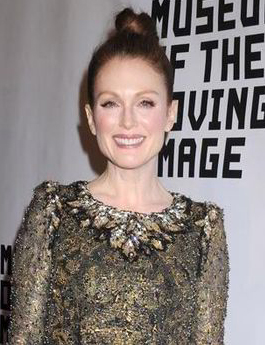 Even before the Golden Globes win, and the Oscar Best Actress nomination, Julianne Moore was having a good year. Her roles in David Cronenberg’s Maps to the Stars and Still Alice, two very different characters, one terrifying and satiric, the other heartbreaking and realistic, were noticed. Moore has been around for a long time: she could be all fashion as in Tom Ford’s elegant movie, A Single Man, or the housewife next door as in Lisa Cholodenko’s movie, The Kids are All Right, her performances are always noticeably excellent. That she will win the Oscar this year seems a given. And the career salute from the Museum of the Moving Image, is just the proverbial icing on the year’s cake.
 -
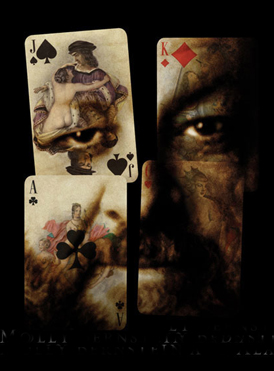 How many assistants does it take to cut a watermelon? One of 52, if you ask master conjurer Ricky Jay who wowed the crowd at The Paley Center for Media last Thursday night. He has starred in a show, “Ricky Jay and his 52 Assistants” for years, expertly fanning his deck at nightclubs around the country. This occasion, however, was a PBS event celebrating a documentary profile called Deceptive Practice, part of Channel 13’s American Masters series, to air on January 23. Ricky Jay is the first magician to have a documentary portrait as part of the prestigious series begun by Susan Lacy several decades ago. Now with executive producer, Michael Kantor, it is evident the program continues to be in good hands.
 -

No surprise: the Museum of Modern Art has extended its exhibition of Matisse’s cut outs as a result of popular demand. The same happened when the show featuring the master’s late in life career debuted in London’s Tate. But viewers in 350 American cities as of this week do not have to travel to get a state of the art tour through the galleries. As a result of a new film project, Exhibition on Screen, audiences can walk through the galleries of the show, a melding of the UK and US venues in their local cinemas, with many extras including curator talks, archival footage of the artist at work, and a view of the artist’s inspiration, in Matisse’s case, a ballet dancer’s lithe figure in performance. -
The big question when it comes to Cheyenne Jackson is whether or not the intimate cabaret stage is enough of a venue for this dynamic multi-talented performer who does Elvis complete with swiveling hips. At last night’s opening at the Café Carlyle, this Broadway star finessed the space with flair; you would think he was born to it. But no, growing up in Idaho with no running water and two goats, Harmony and Melody, as he charmingly informed the audience, he thought Broadway was one theater called Broadway. At six foot three, he was a likely candidate for football, but his understanding dad let him know, it was fine if running at giant guys wasn’t for him. As it turned out, running at guys may have been just the thing: his show, titled “Eyes Wide Open,” celebrates surviving a rough patch involving a divorce, the death of his grandparents, and awakening to another marriage, and sobriety. He met his husband at AA.
-
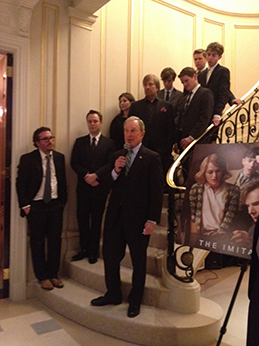 Benedict Cumberbatch and Keira Knightley, stars of The Imitation Game, were still in the U.K.—he shooting an episode of Sherlock Holmes– but everyone else from Morten Tyldum’s riveting movie about Alan Turing attended this final celebration in an exhilarating campaign season at the Christine and Stephen Schwartzman residence on Park Avenue Wednesday night. Michael Bloomberg, Eric Schmidt, Robert DeNiro, Charlie Rose, Trudie Styler, Damien Chazelle, Oren Moverman, Daryl Roth, Bob Woodruff were among those in heated discussion about Turing’s achievement in solving the unbreakable Nazi Enigma code, and then criminalized as a homosexual. Everything from your cell phone to laptop comes from Turing’s genius as a mathematician. His treatment as a gay man, forced to take debilitating drugs until he finally killed himself at age 41, was especially embarrassing to the Brits in the art-filled room–and there were many, including the talented young actor Alex Lawther, Turing in his youth, and Downton Abbey’s Allen Leech who here plays John Cairncross, Turing’s colleague.
 -

Bracing an icy rain, Harry Belafonte, Gay Talese, Henry Louis Gates, Jr., Ruben Santiago Hudson, Phylicia Rashad, Gayle King, Tamron Hall, and many others filled the grand ballroom of the Metropolitan Club on Tuesday for a luncheon honoring Ava DuVernay for her movie Selma. The journey was worth it. Backed by an ensemble of ten musicians, John Legend and Common performed their song, original for this historic film. With “We Are the World” on her mind, DuVernay gave these artists their freedom when she asked them to compose a special song for the film, but instructed them: it should be memorable. Coming at the end of this important movie about a benchmark moment in American history, “Glory” is a powerful anthem, but now performed at this special venue, you could hear the relevance of bringing the 1965 event into the present ethos. Ferguson is intoned, and you know the Martin Luther King, Jr.-led march across the bridge remains a metaphor for a democracy that is a work-in-progress. -
The New York Film Critics Circle announce their film honors early, so you know just who you are going to see at their annual awards dinner: with Boyhood taking top honors, the team was a distinct presence at Tao Downtown, with Patricia Arquette, Ethan Hawke, the star, Ellar Coltrane, and director Richard Linklater. The NYFCC’s impeccable choices included Marion Cotillard for two roles: in The Immigrant and Two Days, One Night, Timothy Spall as the painter Mr. Turner, J. K. Simmons, as the music teacher from hell in Whiplash. Patricia Arquette won the best supporting actress for her role over a dozen years as Mason’s mom in Boyhood: “Thank you for sharing your childhood and your chicken pox” she said to him. “Thank you for a role honoring all mothers.” -
It’s a cliché of the season to list award favorites, but it is also a thrill to be able to recommend so many good films: at this moment the pundit’s favorites are Boyhood, Birdman and Selma, with additional mention of Unbroken and The Theory of Everything. In a rich year, many films deserve our attention: -

“We like to make it intimate here at Joe’s Pub,” says Sandra Bernhard, illustrating her trademark penchant for frank talk, “You don’t need that Broadway Waspy Albee bull–.” Arriving onstage in a sequined Suzy Wong number and silver go-go boots, Bernhard sings, “Where am I going?,” delighted that she’s right here, accompanied by her long time music director Mitch Kaplan on piano, John Badamo on drums, and guitarist Kevin Andreas, for a happy, entertaining blend of snark and sass. She had the opening nighters of a six-day run at Joe’s Pub eating her brand—now that she is one– out of the palm of her hand, and buying “merch” in the Public Theater lobby, as candor gives way to commerce. -

The idea of Important differs from Best: for American Sniper, Selma, and Unbroken, Best is beside the point. Each film is enormously engaging, highly recommended, and grounded in history on a large canvas. While many reviewers are concerned with the qualities that push films into the awards race, and all three deserve the Oscar nod for Best Picture, it is the aspect of Important that makes them must-see films, even when the subject may be difficult. -
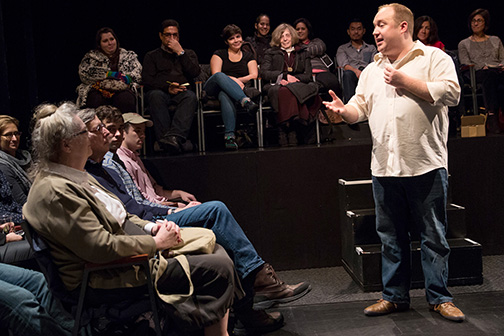
Jonny Donahoe walks around the theater dropping notes on the audience members’ laps as you are seated for Every Brilliant Thing. “Oh, you are the star, right?” observed a man picking up his paper. “I am the play,” said Donahoe. Well, not quite. I hope it is not revealing too much to say that his supporting cast is you, if you are adventurous enough to attend this brisk hour of an uplifting, funny play on a potentially grim subject. Author of this engaging night of theater with Duncan Macmillan, Donahoe treats the delicate subject of a suicidal mother and a son’s attempts to cheer her into life by listing as many brilliant things as can be imagined.
 gossipcentral.com