Now that Mad Men has reached its endpoint, with critics dissecting its meaning and import, not to mention its influence and destiny during awards season, it is time to further point out its antecedents in literature. In a penultimate episode, the viewer could contemplate Don Draper’s demise by dropping from the windows of McCann-Erickson, as he took a look out and measured the window’s width, eying the vista sadly. The viewer could only conclude he would make this fatal jump. But in the finale, he’s seated in lotus position on a cliff at Esalin, chanting. The end of all his bad boy behavior, identity crises, marital troubles, ambivalence about the world, he’s on the West Coast far away from the business of advertising and family. Learning from Sally that Betty is soon to die of lung cancer, he is asked to stay away, finding out You Can’t Go Home Again, in the words of Thomas Wolfe, an American author of the early 20th century who died at age 33 after completing only four novels. Of course that’s a lesson he’s learned again and again through seven seasons.

recent posts
- Lorne Premieres at Lincoln Center: Glimpsing Lorne Michaels Backstage at Saturday Night Live
- Alden Ehrenreich and Patrick Ball: The Men in Becky Shaw on Broadway
- Audra McDonald and “Original Nepo Baby” Gwyneth Paltrow: Honorees at the NYWFT Muse Awards 23 March 2026
- Zach Bryan Buys the On the Road Scroll/ Happy Birthday, Jack Kerouac!
- William S. Burroughs/ Nova ’78 at MoMA/ Remembering James Grauerholz
-
-
 Melissa Rivers was a perfect fit as honored guest at the annual Mamarazzi luncheon, hosted by The MOMS, Denise Albert and Melissa Musen Gerstein’s mother advocacy lifestyle brand. Not only one of the most famous of daughters, a mom herself, Melissa Rivers has a book out, The Book of Joan: Tales of Mirth, Mischief, and Manipulation. While Joan Rivers died unexpectedly, as we all know, a consequence of botched throat surgery, she still left her daughter clear instructions on what should happen should she die, and the reassurance that Melissa would get everything. That seems to include her mother’s hairdresser for the last ten years, Raymond Rosario, who deftly patted down Melissa’s sleek do, curling a stray strand, as she arrived at Juniper Bar, a chic Garment Center bistro.
 -
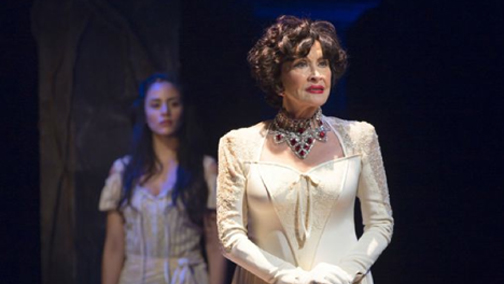
As Claire Zachanassian, the richest woman in the world Chita Rivera makes an outrageous demand in Friedrich Durrenmatt’s 1956 “The Visit.” Now a show at the Lyceum Theater, with Terrence McNally’s book, John Kander and Fred Ebb’s music, and choreography by Graciela Daniele, whether or not The Visit wins its Best Musical Tony, the show is one of best on Broadway, a deeply satisfying 90 minute parable with historic dimension. -
Blythe Danner is a sublime and funny actress, as we’ve seen in the Meet the Focker comedies, and decades of movies and stage plays. In I’ll See You in my Dreams, she’s the femme fatale of the geriatric set, sure to make you rethink 70. Vibrant, with it, her character Carol sings karaoke, plays golf, and is appropriately terrified of rats. She’s lonely, but not desperate, and perfect for a smooth guy named Bill who she begins to date. The actor Sam Elliott, with a miraculous shock of white hair, gives this mysterious stranger his joie de vivre. He’s attentive to Carol and knows what he wants. Not only that, he takes her into the water in his cabin cruiser for moonlight dinner. When he near proposes, to get his feet wet, he says, she says, get out of that water, stunned but not disinterested. He’s a good catch and they have chemistry. -
Playwright Mike Poulton spoke to a British contingent at the Morgan Library last week about adapting Hilary Mantel’s Man Booker prize-winning novel, Wolf Hall, for the stage. Tony-nominated Wolf Hall, parts I and II, about Thomas Cromwell and Henry VIII, his wives and politics, is now wowing audiences at the Winter Garden Theater. Poulton said he usually works on material when the author is dead. This time, he made an exception when he met Mantel, and they collaborated well together. Ah, a harmonious moment for writers!
-
 MoMA’s Titus I theater looked like a gathering for New York filmmakers and artists on Monday night: Wes Anderson, Noah Baumbach, Greta Gerwig, Jim Jarmusch, Laurie Anderson, Hal Willner, Gay Talese, and others, many of whom had already seen the Apu Trilogy as Satyajit Ray’s masterwork is called. They were there to see part 1, PATHER PANCHALI (Song of the Little Road), in a new 4K restoration. Based on books by Bibhutibhusan Banerjee, the films have their own dramatic story, involving a fire that destroyed the negative, and a painstaking restoration by hand of charred film, sprocket by sprocket. The result is now released by Janus Films in its rich black and white, and one of the great epics about a boy and his family in rural Bengal.
 -
Film festivals flourish in beautiful places. The Montclair Film Festival in Montclair, New Jersey, now at its midpoint, adds to that rule, expanding to ten days, and inaugurating awards for filmmaking in memory of two Montclair residents who died this year: New York Times media writer David Carr, and documentary filmmaker Bruce Sinofsky. -
Beginning with her first song, “Open the Door,” Judy Collins had her audience at the Café Carlyle on the opening night of her 2-week run in thrall. A performer for 56 years, her crystalline sound, whether she’s accompanying herself on acoustic guitar or at piano, rang clear. Not a glass clanked, nor dish rattled. And that’s for the intimate supper club the Café Carlyle epitomizes. The last time I heard her sing “Amazing Grace,” she commanded the stage at a ballroom in the Hilton with 2200 guests to the same effect of rapt euphoria. There’s nowhere else you’d wish to be than with her singing for you. -
 In Something Rotten!, as in the famed line from Hamlet, “there’s something rotten in the state of Denmark,” two Bottom brothers, one a talented poet named Nigel (John Cariani) and the other Nick (Brian d’Arcy James), compete with Shakespeare (Christian Borle), the rock star of the Renaissance. You can tell by his codpiece, he’s got something sizable going on.
 -
 Orange would not be the new black for Iris Apfel, who wore that color in fur for the movie premiere of Iris last week at the Paris Theater: the brighter the better, it was practically neon, and contrasted with saucer-sized turquoise beads. The outfit would be unusual for anyone, let alone the 93 year old “geriatric starlet” Iris Apfel whose resume includes textile designer, model, and now professor of fashion for students from The University of Texas, Austin. The students come to New York to learn “real” lessons about the glamorous world of fashion from this style icon: what’s trending, licensing, history; Iris complains that designers today do not know how to sew, a craft like beading near lost. Iris teaches the business side often omitted in the traditional curriculum. She knows from what she speaks, having had a giant successful show at the Metropolitan Museum, an honor normally accorded to high profile designers with world careers like Alexander McQueen or Jean-Paul Gaultier. She can put together ensembles most could never concoct, matching fantastic fabrics with highend designer dresses with street fare, but her specialty is layered bangles and neckpieces.
 -
Barbra Streisand, presenting the 42nd Chaplin Award to Robert Redford, her co-star in The Way We Were, recounted a story about a fan screaming “Hello, Gorgeous.” She thought it was for her, for Funny Girl. But no, the “gorgeous” was for Robert Redford. Indeed, there was no elephant-in-the-room in the spacious Alice Tully Hall: every woman presenting from Jane Fonda to Elisabeth Moss spoke about Redford’s good looks. But clearly, he is much more than eye candy. -

In this comedy about a wedding, It Shoulda Been You, the “you” is a young man, the former boyfriend of the bride-to-be, played with gusto by Josh Grisetti in his Broadway debut at the Brooks Atkinson Theater. His Marty Kaufman is Jewish, so of course he’s perfect for the bride, who has instead chosen a goy (David Burtka) who insists upon learning Yiddish. I’ve had a crush on Josh Grisetti ever since I died laughing watching him in Enter Laughing at Sag Harbor’s Bay Street Theater a few seasons ago. The show went on to a run Off Broadway. Now Grisetti gets to display the full force of his talents in a show of eminent performers including Tyne Daly as mother of the bride, and Harriet Harris as mother of the groom, who go head to head, curlered to coiffed. Directed by David Hyde Pierce, this farce including the genre’s traditional slamming doors, is a shtick fest with a twist. -

The musical based on that Russian classic Doctor Zhivago inevitably evokes comparisons with the Omar Shariff-Julie Christie, David Lean 1965 movie, from Boris Pasternak’s 1957 novel. A Broadway show with name recognition, Doctor Zhivago has played in Australia and South Korea—in Korean—and was much loved. Given its politics, that’s a coup. Les Miserables Russian style, under Des McAnuff’s direction, Doctor Zhivago has The Broadway Theater exploding with war, unexpected petards from the rafters, casting the stage in smoke and fire, and jarring the audience with attention commanding noise. By contrast, Lucy Simon’s score with lyrics by Michael Korie and Amy Powers features memorable songs: “Now” and “Love Finds You” are standouts. -

La Grenouille experienced a British invasion yesterday for a lunch celebrating the film Far From the Madding Crowd, based on Thomas Hardy’s beloved 19th century novel. Carey Mulligan, currently starring in Skylight on Broadway, plays Bathsheba Everdene, a strong-willed and occasionally wrong-headed heroine, a pre-feminist, you could call her. Belgian actor Matthias Schoenaerts portrays Gabriel Oak, the pre-feminist hunk who protects her. He is loyal, kind, brave, talented, hard-working, and dreamy. When I asked Schoenaerts, memorable for his performance opposite Marion Cotillard in Rust and Bone what he thought of this character, he enthused, “I can learn from him. I want to BE him.” -

As film festivals go, Sarasota Film Festival is hard to beat, for films, parties, and people. In addition to the awards listed below, Jane Seymour spoke about her career in film with Regina Weinreich, representing her latest, Bereave, directed by Evangelos and George Giovanis. Rachel Weisz, spoke with David Edelstein about her work producing Radiator, directed by Tom Browne, and Blythe Danner, star of the festival’s closing night film, I’ll See You in My Dreams, directed by Brett Haley, received the festival’s Impact Award at a ceremony at the Sarasota Opera House. Blythe Danner noted that this festival screened over 100 films by women. Then guests moved onto the stage for Sarasota Film Festival President Mark Famiglio’s closing night dinner, where, in an informal tribute, legendary documentarian Albert Maysles was remembered. -
 At heart, Finding Neverland, now charming audiences at the Lunt-Fontaine Theater on Broadway, is about the creation of theater: this is the backstory to J. M. Barrie’s Peter Pan. Following closely enough to the Johnny Depp starred movie, the Broadway musical begins with J.M. Barrie’s colossal writing block when the playwright (Matthew Morrison) is past deadline with theater impresario Charles Frohman (Kelsey Grammer). Among the many joys in this musical is seeing the backstage shenanigans of actors who, quite frankly, need the work Barrie fails to deliver. Where can the writer find inspiration? A man who won’t grow up, he finds it in the park with the Llewelyn Davies boys including Peter (Aidan Gemme for the opening) and their lovely if ailing mother (Laura Michelle Kelly).
 -

As An American in Paris opens at the Palace Theater, a Nazi flag seemingly draped over an entire city, drops down and floats away. The city is Paris, its narrow streets dour until we get to a café, where an American soldier, Jerry (Robert Fairchild) meets an American composer, Adam (Brandon Uranowitz), and a Frenchman, Henri (Max von Essen) who wants to sing cabaret. As color and light envelop the city, all three fall in love with the same girl, Lise (Leanne Cope), a shop girl who aspires to dance. If you know the 1951 movie on which it is based, this story provides the perfect premise for a traditional Broadway musical. This new incarnation features George Gershwin’s classic score, well known, (“I Got Rhythm,” “S Wonderful”) and lesser known songs (“I’ll Build a Stairway to Heaven” and “Fidgety Feet”), Craig Lucas’ book, Bob Crowley’s costumes and set, and the prodigious talents of Christopher Wheeldon, ballet choreographer extraordinaire working the Broadway musical genre for the first time, as choreographer and director. Given this mix of gifted artists, this production promised to be wonderful, a Tony contender, a huge hit—and indeed it is. -

Divorced, beheaded, died. Divorced, beheaded, survived. School kids learn the fate of Henry VIII’s six wives in this chant. At the end of the daylong Wolf Hall Broadway premiere on Thursday, at the restaurants in Rockefeller Center where a lively celebration for the epic holding court at the Winter Garden Theater was underway, my hands were clasped in those of Nathaniel Parker, the actor who so winningly portrays Henry VIII in Wolf Hall, and we were singing it in unison. Wolf Hall, based upon historic fiction by Hilary Mantel, focuses on the period in his reign when the king, smitten with the sexy Anne Boleyn, concocts a strategy for ridding himself of his wife of 18 years, Catherine of Aragon, and then tiring of Anne in favor of Jane Seymour, finds Anne guilty of treason in the form of adultery. That costs the new queen her head. As to kings having their way, it doesn’t get juicier. -
As the vice president, Selina Meyer (Julia Louis-Dreyfus) was just a heartbeat away from the presidency. Call it fate: the president has stepped down to care for his ailing wife, and Selina, whose bungling White House antics we’ve gleefully enjoyed on VEEP for three HBO seasons, now gets her shot at the most powerful post in the land. In her first episode as president, screened for the show’s premiere this week at the SVA Theater, Selina addresses Congress as her teleprompter goes blank mid-sentence. In the second, she unwittingly has a work of art painted by a Native American, a yellowish abstract called “Massacre,” removed from the oval office, causing a PR nightmare. Heads roll. Needless to say, she and her hilarious team– including aides, advisers, press secretary, strategist played by a great cast, Anna Chlumsky, Matt Walsh, Mike McClintock, Gary Cole, –surface intact, the great fun of observing this behind the scenes glimpse of government a la showrunner Armando Iannucci. -
You think a Tony-winning star would perform Broadway show tunes for her engagement at the Café Carlyle. Not Lena Hall, who told me at the “Kinky Boots” opening night back in 2013, that her true music metier was rock in the manner of Robert Plant and Janis Joplin. Of course she was a rocker in her awarded role as Yitzhak in “Hedwig and the Angry Inch,” so when she was invited to sing at the Carlyle, she was not sure they even knew what she’d do: had they made some kind of mistake? And, would a loud sound work in an intimate room?
-
A favorite at film festivals throughout the fall, the movie Time Out of Mind, stars one of the great cinematic heartthrobs, Richard Gere. “Lord have mercy,” exclaims one of the retirees in the recent Best Marigold Hotel sequel when Gere’s silver haired character enters the room. Of course we all fell in love with him in Garry Marshall’s Pretty Woman, Runaway Bride, and even when he was impossibly handsome eye candy in Paul Schrader’s American Gigolo. But here, in Oren Moverman’s film to open the Sarasota Film Festival, Gere plays against type, a homeless man living on the streets of New York City. Oren Moverman, recently interviewed, was surprised that Richard Gere brought him the project, and that Mark Famiglio invited him to Sarasota with this film: -
Hand to God, a delightfully subversive, dark comedy opened this week on Broadway at the Booth Theater after successful productions downtown by MCC Theater and Ensemble Studio Theater. Featuring a puppet provocateur called Tyrone, wreaking destruction and devilish mayhem on a church schoolroom set, the actor Steven Boyer as Jason whose task it is to give life to the gray wool mass swaddling his left hand reminded everyone at the after party at Urbo, “Hey it’s only a sock!” But to the rest of the cast, like Geneva Carr, excellent as Jason’s widowed libidinous mother, Tyrone is a being with whom to reckon. -
In an age when a coinage such as “frenemies” has meaning, the operative word in the title of a new documentary, Best of Enemies, is the word “best.” The film, about a particular historic event of verbal jousting, is between two very well matched public intellectuals, “best” practitioners of the English language of their time, the conservative William F. Buckley and the leftist Gore Vidal, author of the controversial Myra Breckinridge. That they were enemies aided the cause: to boost ratings for ABC, in 1968, when the network was third, or last in the age’s few channel options. In the view of Best of Enemies and its creators, Morgan Neville and Robert Gordon, this televised sparring changed television forever. Ratings for ABC skyrocketed. -
Bruce Springsteen’s voice sets the tone for Alex Gibney’s riveting documentary portrait of Frank Sinatra: All or Nothing at All. “The Boss” says, I first heard him when my mom and I used to hunt down my dad in New Jersey saloons. Hear that? His mother would say. That’s Frank Sinatra. Even Stevie van Zandt, who attended the premiere at the Time Warner Center this week, raised an eyebrow at Springsteen’s candor. “All or Nothing at All,” the title of one of his songs aptly defines his code; the film neatly weaves Sinatra’s line, a leitmotif, as he rises in artistry and fame, and personally in cycles of sad and sublime. With testimony from Frank’s family, “Italian” wife Nancy, son Frank, Jr., daughters Nancy and Tina, and stunning actress Ava Gardner (her words from a transcribed interview read by Gina Gershon) for whom he left Nancy, the documentary to air this weekend on HBO reveals filmmaker Alex Gibney’s gift for making films that feel like the subjects, even deceased ones, thrive in the next room, still singing and living their successes and troubles. -
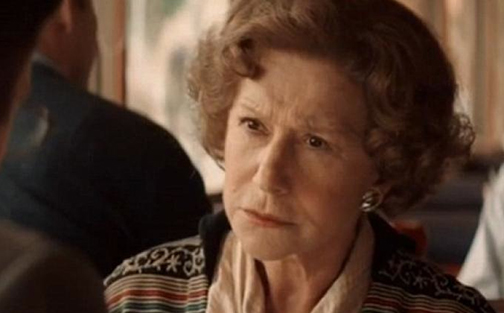
“How’s my German?,” asked British actor Allan Corduner who plays Gustav Bloch-Bauer in the film Woman in Gold. He’s Maria Altmann’s father, in flashback to pre-war and Nazi occupied Vienna, when she was a young woman who managed to escape. Helen Mirren plays Maria’s older version, and they had only one scene together, when Maria, in a time close to the present, walks through the magnificent apartment she was forced to leave, seeing the ghosts of her murdered family in their glory. As stories evoking the terrible history of the Holocaust go, this one, based on true events, has a fairy tale happy ending, as Maria Altmann with her lawyer, E.Randol Schoenberg, grandson of the famed composer Arnold Schoenberg, take on the Austrian government to claim paintings by Gustav Klimt, stolen, like much property owned by Jews.
 gossipcentral.com