In Woody Allen’s new movie, Café Society, Kristen Stewart plays a girl from Nebraska who tries her luck in 1930’s Hollywood, an era of big stars like Barbara Stanwyck and Joan Crawford. Jesse Eisenberg plays a boychick from New York who tries his luck in L.A. too, working with his uncle Phil, a big time agent played by Steve Carell. Jesse’s Bobby falls for Kristen’s Vonnie at first sight, and why not? Close ups of her–Vittorio Storaro’s wonderful cinematography makes this film special in Woody Allen’s already outstanding oeuvre–show Kristen Stewart’s transcendent appeal, a look that’s old glamor, and new. This movie, one of Allen’s most poignant on the subject of youthful dreams, love, marriage, and missed chances, should establish Stewart as the actress of her generation.

recent posts
- Scarlett Johansson in Paper Tiger: New York Film Festival Opening Night/ Mile Leigh’s Tender Loving Care
- KNIFE: THE ATTEMPTED MURDER OF SALMAN RUSHDIE PREMIERES
- Celebrating Allen Ginsberg, Rock Star
- Marisa Tomei and Matthew Broderick at Guild Hall: The Plight of an Upper West Side Arts Space Gives A-List Actors The Big Chill
- Raul Esparza and Lily Rabe in The Winter’s Tale: Wet in Central Park
-
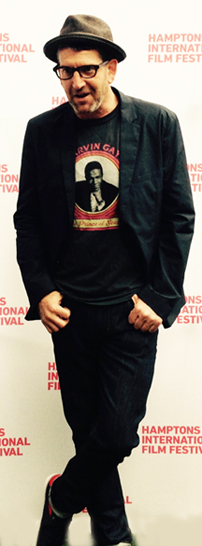 One of the many revelations in Jeff Feuerzeig’s riveting documentary Author: The JT LeRoy Story, was that Laura Albert, the mastermind behind her fictive persona JT LeRoy, an author of some renown, also worked with director Gus Van Sant on his 2003 Elephant, a movie of a Columbine-like mass shooting at a school. She was commissioned to write the script, which was then discarded, the movie retaining only the image of a fat girl in the library, the shooter’s first victim. In the post-screening Q&A at Guild Hall for the Hamptons International Film Festival’s SummerDoc series, Alec Baldwin enthused about Elephant, a coincidence for him to realize the connection to Laura Albert.
 -
Funny woman Sandra Bernhard joins this week’s list of funny women performing at Guild Hall. There was Kathy Griffin, and if you count the many personae of Charles Busch, this Friday night makes the third for her show titled, “Feel the Bernhard.” A few days before, Sandy interrupted her viewing of Venus Williams’ tennis match at Wimbleton—“She’s winning!” –to talk about what she’s bringing to the stage at the beach. -
What is beat? From down and out through saintly beatitudes, beat is an attitude. As a literary movement, the Beat Generation is an American phenomenon, but every geographic area that experienced it, takes ownership, and the French are no different. In Paris, at Centre Pompidou’s 6th floor neighboring a retrospective of Paul Klee, a vast exhibition devoted to the culture of The Beat Generation –with principals Jack Kerouac, William S. Burroughs, and Allen Ginsberg— provides essential visual and auditory material for an understanding of this literati’s global influence. -
Onstage, gravediggers at an excavation site discover a crooked spinal cord. That could only belong to one figure, Richard III. Flashing back to Shakespeare’s play, his history, in the person of Ralph Fiennes unfolds in the Almeida Theater’s stunning production under Rupert Goold’s direction, the image of the misshapen bone only begins to tell you what’s in this man’s heart. Having just murdered Lady Anne’s father and husband, he woos her, Shakespeare’s language suggesting everything you can possibly do with a cane. -
Peter Beard occupies the last house on the East End, and from his perch the expanse of the Atlantic Ocean is compelling. Having made art, collages and photography for decades, both here and on exotic travels, and featuring an array of celebrities including Mick Jagger, Jerry Hall, Bianca Jagger, Lee Radzivill, the two Edie Beales, Karen Blixen, Kamante Gatura, his wife Nejma, and himself often with his head in a fish, he’s taken more than a note about fame from Andy Warhol, his erstwhile neighbor. At Guild Hall’s new exhibition, “Last Word from Paradise,” celebrities and animals mix it up: there’s more than a hint of nostalgia for travels to remote places. Beard’s artwork juxtaposes party photos from Studio 54 with pictures of endangered animals like the elephant, or alligators that live best in the wild suggesting lost worlds: What about precious, fragile Nature on our planet? -
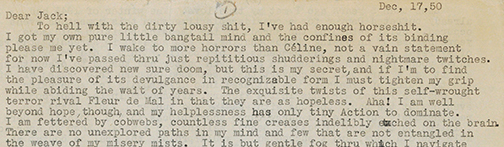
Two Joans were on display at Christie’s on June 16, one was the much-missed Joan Rivers with a sampling of her sequined gowns adorning mannequins in the auction house entrance, going on the block the following day. The other was the famed subject of a 1950 letter to Jack Kerouac from his pal, Neal Cassady, long thought lost. You may have read about it 18 months ago, when Jean Spinosa found the letter among her father’s papers in Oakland, California. Then came a bit of legal wrangling among Cassady’s heirs, the Kerouac estate, and the letter’s finder. Because Kerouac claimed this letter was inspiration to his spontaneous prose, the letter has entered legend. Cassady, famed for fast driving and cocksmanship, met Joan Anderson on a Greyhound bus, convincing her to make it with him, the writing fast, rambling, and rhapsodic. Now on display on the auction floor, with only the first of 16-pages showing, the letter held some surprises. -
A whiff of David Bowie hung over the air at the Café Carlyle as Lena Hall opened her two-week run. Whipping her head punk style, Hall treated her audience to her bad girl history with boys as a way of explaining how a nice girl got here, musically. “I’m pretty sure no one has done a Sex Pistols song at Café Carlyle,” Hall introduced “Holiday in the Sun,” a John Lydon collaboration with John Beverly, Paul Cook, and Steve Jones, and went on to cover The Beatles (“I Want to Hold Your Hand”), Billy Joel (“We Didn’t Start the Fire”), and Elton John (“Someone Saved My Life Tonight”). Rocking on, Lena Hall gave details about the various boys, and her dark side, but it is her voice that emerges, and a story of how music saved her from marriage to the wrong guy. -
Meryl Streep can do anything. In her new movie, Florence Foster Jenkins, she is the title character, a real life self-created diva, Florence Foster Jenkins, who was the subject of ridicule for her very bad voice, at the same time that she had a cult following of fans—and still does. This period movie directed by Stephen Frears in gorgeous saturated color emphasizes Streep’s extravagant brocade wardrobe and her peachy cheeks as she portrays this turn-of-the-century heiress, paying off her singing coach, her pianist Cosme McMoon (“Big Bang Theory”’s Simon Helberg really playing), and whoever, so as to promote her singing career. The penultimate moment is her performance at Carnegie Hall. Aided by her husband, St. Clair Bayfield, a sublime Hugh Grant—trust me, if you are remembering him as the callous beau in the Bridget Jones movies, here he is positively tender, she is mocked until a floozy (Nina Arianda is just adorable) quiets the laughing audience. Renee Fleming, who knows a thing or two about voices, said of Streep, introducing a special screening, you have to have a really good, versatile voice to play one so bad. -
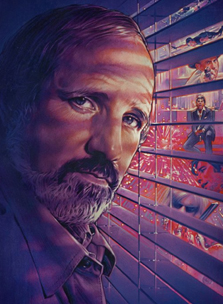 Directors Noah Baumbach and Jake Paltrow pay tribute to Brian De Palma in the best way possible in the documentary, De Palma, by showing his work. With an interview with this Hitchcock-influenced filmmaker at its core, the film features clips of De Palma’s extraordinary career, with lots and lots of anecdotes about craft, compromises, and critical reception. De Palma is a master class with a master.
 -

Typical of Yo Yo Ma: he hides behind the scenes. A prime mover of musical happenings, this world famous, prodigy cellist recedes into the backdrop, even when the event is about him, as in Morgan Neville’s new documentary, The Music of Strangers. You expect an interview with the maestro about his life and work, some talking heads, and what you get is that, including an archival appearance on “Mister Rogers,” and so much more: the story of the international musicians he works with on a global scene, often natives of war-torn countries, Afghanistan, Syria, and contemporary post-revolution Iran, so the film limns the political landscape of our time, and some unusual instruments, such as Kayhan Kalhor’s kamancheh, making beautiful Persian music that transcends a tragic personal story. -

As anyone who has ever spent time in a hospital room knows, the laughs are few. On opening night of Halley Feiffer’s “A Funny Thing Happened on the Way to the Gynecologic Oncology Unit at Memorial Sloan Kettering Cancer Center of New York City” at the Lucille Lortel Theater on Tuesday, the audience filing in did not think otherwise: two beds separated by a curtain, two people asleep, a set so familiarly appointed, prepared for the worst, you might think nothing comic could happen here, not even on the television monitor perched above woman stage left, until you see Karla (Beth Behrs of tv’s “2 Broke Girls”), in oversized sweater and goofy knit cap, as she moves antic testing a monologue for her stand-up act. (Picture: a younger Sandra Bernhard.) With mom (Lisa Emery) in bed, Karla’s got a captive if comatose audience. As she contemplates—loud—the joys of rape with her vibrator, an anguished schlep named Don (Erik Lochtefeld) enters stage right to usher his mom (Jacqueline Sydney) to her final rest. For Feiffer, and for director Trip Cullman, it’s a set up made in comedy heaven. -
 Running up to the Tony Awards, a special lunchtime event celebrated Broadway last week: Stars in the Alley, that’s Schubert Alley fitted with a special stage and eats by Junior’s. Moderated by Sean Hayes and Mo Rocca, two comedians of the first order who kept things funny and zipping along, this show comprised of bits from most shows is a yearly treat. Sean Hayes is now appearing in Act of God in the neighboring theater, “the only theater named after the brother of an actor who killed a president in another theater.” Got it?
 -
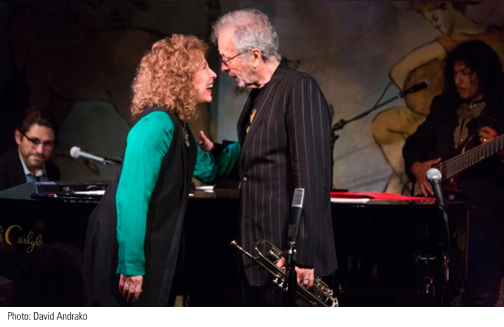
Herb Alpert kept checking in about his pin stripes, asking a rapt audience, some of whom traveled from Florida just to hear him perform at the Café Carlyle for opening night this week: “Was I wearing this suit?” Like a woman who does not want to repeat an outfit for the same group, he joked, told stories, and played that sweet trumpet, bringing in the crowd for an entertaining night of his greatest hits. Beside him was his wife of 42 years, Lani Hall, whose crystalline vocals in Portuguese and Spanish perfectly put everyone in the Tijuana/ Jobim mood. “I love it when she talks to me in Yiddish,” he laughed, as their ensemble with Bill Cantos on piano, Hussain Jiffrey on a six-string bass he can play like a guitar, and Michael Shapiro on drums created a musical dialogue all their own. -
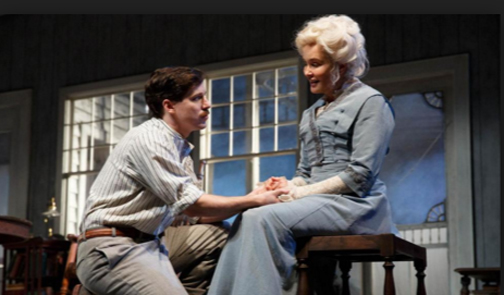
Movie icon—and lately best known for her role on American Horror Story— Jessica Lange has performed on Broadway only twice before, in two Tennessee Williams masterpieces, The Glass Menagerie and A Streetcar Named Desire, and now she’s in Eugene O’Neill’s Long Day’s Journey Into Night. As Mary Tyrone, morphine addled matriarch of the Tyrone family, and wife to James Tyrone (Gabriel Byrne), her presence descending the stairs of the family Connecticut home in the 1920’s, illuminated like a specter in the play’s final moments, is unforgettable. Mother to Jamie and Edmund (Michael Shannon and John Gallagher Jr. respectively), she is frail, a wounded bird, and symbol of shattered hope, loss, loneliness, and heartache. -
“Of all of our movies, this one changed my life,” Chris Hegedus said, introducing her new documentary, Unlocking the Cage at a special HBO screening prior to its theatrical release at Film Forum this week. That’s a lot to claim from the filmmaker pair, Chris Hegedus and D. A. Pennebaker who together made films from inside “the war room” during the Clinton campaign of 1992 to the pastry chefs of France. The cute and cuddly gorillas at play in Unlocking the Cage’s opening situate you at once in a riveting film that follows an endearing nonhuman animal rights advocate, Steven Wise, into the courtrooms to fight for animal personhood. -
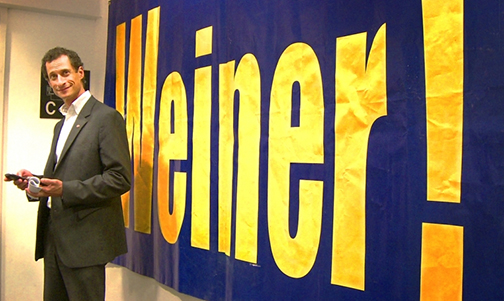
Really? Anthony Weiner wants unconditional love. This big baby, as he appears for real in Josh Kriegman and Elyse Steinberg’s entertaining documentary Weiner, the former congressman wants to parlay his dick on the Internet, and be elected for office. That’s the size of it. After having been outted for this offense, Weiner ran for mayor, the occasion for the film. Josh Kriegman used to work for him and had the politician’s confidence. By Weiner’s side, his wife, the formidable Huma Abedin, aide to Hillary Clinton, grimaces but stands by her man. She is the most compelling reason to take this guy seriously; unrepentant the first time, he does it again. This bizarre self-destruction may belong to the Eliot Spitzer school of politics, but in the Alex Gibney documentary about the New York governor, Client 9, at least he could identify his hubris. Not Anthony Weiner! But still, for this movie, he is a relentless, charismatic star. -
It would be great to think of 2008 as a bygone past, and the dire consequences for workers phased out in a bad economy yesteryear’s news, but the play Skeleton Crew, an Atlantic Theater Company production at the Linda Gross Theater, Dominique Morisseau’s powerful look at Detroit autoworkers, now moved to the, registers a cycle that’s still out of control for many Americans. In a locker room, four characters take breaks, bicker, and make for a company family, an ensemble of workers: -
 Okay. So The Nice Guys is a Russell Crowe / Ryan Gosling film bromance, a hilarious romp, featuring car chases galore, broken glass and bones, bloody bodies, and a startling, zombied Matt Bomer. Still, there’s a touch of nostalgia for an early Russell Crowe who came to the aid of Kim Basinger in a film set in Los Angeles. Remember L. A. Confidential (1997)? In The Nice Guys, Basinger plays a smallish but pivotal role, yet another character in search of a young woman named Amelia (Margaret Qualley). She, a misguided, rebellious porn star, just happens to be her daughter, and Basinger’s job is head of the government’s clean up squad. Talk about acting out.
 -
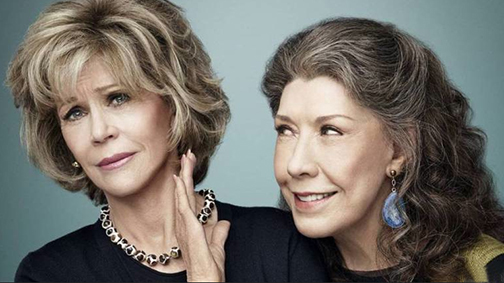
This time of year, Jane Fonda is usually at the Cannes Film Festival, but this year she is working back home. After a screening of the first two episodes of the second season of Netflix’ Grace and Frankie, part of a new Tribeca Talks series at the SVA Theater for the Tribeca Film Festival, the iconic stars Jane Fonda and Lily Tomlin took the stage for a panel moderated by Gayle King. Chatting, bickering, japing, with one another, the stars fielded questions on aging, women in the industry, careers, and lovers. “This is how it is on the set,” they assured a packed audience. In the fall, Fonda was nominated for a Golden Globe for her role as an aging actress in Youth. She said, she’s just happy to be working. With Grace and Frankie now filming their third season, she and Tomlin will be working for a long time. -
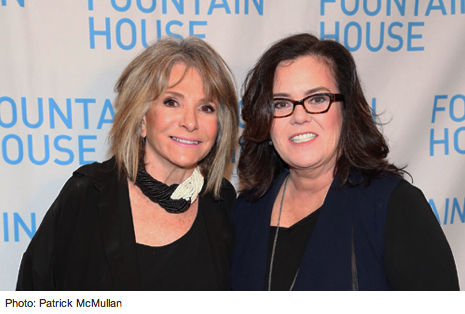
Last week at the Pierre, the Fountain House annual symposium and luncheon focused on the topic of “Suicide: Looking for Answers” with a panel of experts in this field. A special humanitarian award was presented to HBO’s Sheila Nevins, introduced by Rosie O’Donnell.Dr. Maria Oquendo opened the symposium with the grim news that suicide has increased for girls aged 10-14, and for women aged 45-64. Professor Thomas Joiner who had lost his father to suicide spoke of three feelings often shared by those contemplating taking their lives: they often feel fearsome, burdensome, and lonely. Most emotional was Kevin Hines, a young man who survived after throwing himself off the Golden Gate Bridge. Rescued by the coast guard after a woman in a car called, and then immediately operated upon for his broken back, Hines is now an inspirational speaker on suicide, traveling all over the world with a message for those who see a loved one on the brink: “Have a meal together.”
-
Women don’t have it so good in Tennessee Williams’ plays, and Orpheus Descending is one of his darkest. In the production at St. John’s Lutheran Church in the village, you can see why this one, with its histrionic speeches and soap opera story, is rarely produced. Which is why this production, low budget and noble, is its own kind of miracle, set where Christ and the apostles in stained glass can look on in sympathy and dismay. In Lady Torrance (Irene Glezos), Williams created a formidable heroine who is running the store, while her elderly husband (the legendary film star Keir Dullea) languishes sick. In comes a stranger (Todd d’Amour), a young man in a snakeskin jacket, who needs a job. Can you see where this is going? -
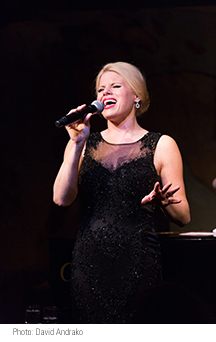 It was a big night for Megan Hilty on Tuesday, not only the opening of her two-week engagement at the Café Carlyle, but she’d garnered a Tony nomination that morning for her comedic bombshell turn in the revival of Noises Off! “And I wasn’t even singing,” she exuded, her blond curls taken back into a chignon. Shining bright in a black, curve hugging, lace and sequined gown, she’s shed the sass for class for this show, a tribute to Rosemary Clooney.
 -
Irritating and irascible, the subject of the documentary short, Claude Lanzmann: Spectres of the Shoah, the French intellectual writer and filmmaker, Claude Lanzmann, could be charming, and cunning as he got his desired interviews. His epic-length Shoah (1985) went farthest to document the Holocaust, the most cataclysmic and defining event of the twentieth century, even as some deny it ever happened. In Spectres of the Shoah, to air on HBO on May 2, Adam Benzine, interviews the interviewer at age 90; the result is essential viewing for understanding Shoah’s remarkable backstory. -
As leading man to the pounding disco drama, American Psycho at the Gerald Schoenfeld Theater, Benjamin Walker is all abs and six pack. Sinfully envious, his Patrick Bateman embodies the ethos of the bygone late century: what he cannot have, he seeks to destroy. His body, and apartment’s walls are often red splattered as if this musical were a circle from Dante’s hell. Credit Es Devlin’s sets. You may question the premise of this show, a British import based upon Mary Harran’s 2000 film of the controversial 1991 book by Bret Easton Ellis, so misunderstood its original publisher cancelled: can you really make a musical about a serial killer? You might say, that misunderstanding can go for Bateman himself, as he compares business cards with friends and foes, diddles both fiancée and girl on the side, and generally acts out in axe wielding mayhem. Fortunately the projectile blood lands on a scrim; nothing living was hurt in the making. And if you can keep the numbing thump as satire, you may just find yourself having a good time.

