 The actress and filmmaker Rosanna Arquette was filling a shopping cart at Whole Foods in Sarasota, Florida. Having just arrived to support her latest film, Born Guilty, written and directed by Max Heller at this year’s Sarasota Film Festival, she realized she had forgotten, well, everything, toothbrush, hairbrush, and other necessities. Cart piled high, she said she had not yet seen the film. Was it okay, she asked, and I was struck by how much this comic market scene could have played in the landmark 1985 Desperately Seeking Susan in which Arquette starred with Madonna. In fact, the next day at Sarasota’s Ritz Carlton, at an interview with Arquette, Heller and executive producer Bill Mahoney, Heller reminded his star that she prepared for the role of Judith, a New York Jewish mom based on his own, imagining herself in “Susan” 20 years later, divorced with a grown son living in LA, on whom she depends for every whim and crisis.

recent posts
- Scarlett Johansson in Paper Tiger: New York Film Festival Opening Night/ Mile Leigh’s Tender Loving Care
- KNIFE: THE ATTEMPTED MURDER OF SALMAN RUSHDIE PREMIERES
- Celebrating Allen Ginsberg, Rock Star
- Marisa Tomei and Matthew Broderick at Guild Hall: The Plight of an Upper West Side Arts Space Gives A-List Actors The Big Chill
- Raul Esparza and Lily Rabe in The Winter’s Tale: Wet in Central Park
-
-
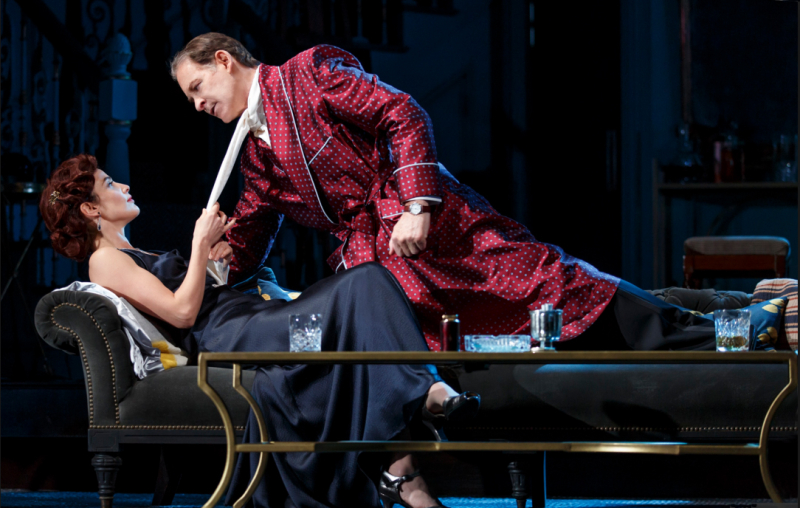
Kevin Kline descends a staircase, not nude, but hung over, his leg making a fancy ballet over the bannister. As the suave, debonair stage actor in his twilight, Garry Essendine, in Noel Coward’s Present Laughter in a charming production at the St. James Theater, he doesn’t remember the cute fan Daphne (Tedra Millan, truly adorable in her Broadway debut), now ensconced in the study behind a closed door, but for his staff, used to taking care of these nights, it’s nuisance as usual. His ménage includes his secretary Monica (the hilarious Kristine Nielsen), his ex-wife Liz (the formidable Kate Burton), two pals/ business associates Henry Lyppiatt (a prim Peter Francis James) and Morris Dixon (a hysterical Reg Rogers). Under Moritz von Stuelpnagel’s expert direction, characters come and go in comic rhythm. When a visiting—read crashing–would be playwright, Roland Maule (Bhavesh Patel) arrives, doors slam vigorously in the manner of a Feydeau farce. Enter Henry’s wife Joanna (Cobie Smulders) in a seductive, slinky gown, a “predator” and Garry’s equal in witty banter, looking for her latest conquest. -

Based on the 2001 hit movie from France, Amelie, brings original music and distinctive whimsy to the Walter Kerr Theater. (“Hoping to see you/ In Macchu Picchu” is one tickling lyric. What’s not to love?) Characters may don fish heads and in one incredibly silly bit, an Elton John sequined suit, but it’s all to Amelie’s happy theme: love conquers even acute cases of fear of closeness to others. And if this musical’s Paris looks familiar, look to the bridge, reminiscent of the children’s classic, “Linnea in Monet’s Garden” for inspiration. Best of all, Amelie is played by Phillipa Soo, Hamilton’s original Eliza; for the 100 minute, no intermission duration of this show, you are in great company. -

Zach Braff’s comedy, Going in Style, from Theodore Melfi’s script, epitomizes the genre of geezer heist. Starring a trio of venerable superstars of a certain age, Sir Michael Caine, Morgan Freeman, and Alan Arkin, the movie’s chase takes place in a shuttle bus rather than a speeding car; everything goes at the pace of a walker, except for the comic timing. A bank is successfully robbed. Matt Dillon investigates, and John Ortiz aids and abets the crime. A forgetful Christopher Lloyd provides contrast to the dynamic three. The laughs keep coming. With Ann-Margret as a hot chick on the make for Alan Arkin, there’s sex too! -

Introducing her friend Daniele Thompson’s new film Cezanne et moi at a special screening at the Whitby Hotel last week, Diane von Furstenberg noted the painterly look, the sheer beauty of this movie. The audience of artists in all media could not have been more fitting: Marina Abramovic, Eric Fishl, Ahn Duong, Bennett Miller, Ellen Burstyn, Fran Leibowitz, Brigitte Lacombe, Art Spiegelman, among many others. Cezanne et moi, limns the intense and passionate friendship between two towering figures of world culture, painter Paul Cezanne and writer Emile Zola, imagining them as schoolmates, and rivals in art and love.Just before the movie’s premiere, I had breakfast with Daniele Thompson, the esteemed director of Avenue Montaigne, co-writer of Cousin, Cousine, and the actor Guillaume Gallienne, who stars as Cezanne. Both Thompson and Gallienne identified with these artists’ struggles, while recognizing Cezanne as something of a mad genius. Thompson originally wanted Gallienne to play Zola. As it turned out, Guillaume Canet, the film’s Zola, and straight man in the bromance, could not make the celebration as his real-life partner Marion Cotillard was just giving birth to their child.
-

Best known as J. Peterman, Elaine’s boss on Seinfeld, John O’Hurley performs his show at the Café Carlyle as if he were that character projecting his outsized personality on an intimate stage. He’s cornered the market on “arrogance and pomposity,” he is quick to point out, as if those were a virtue, and then he launches into “Mr. Clown,” a song he uses to begin and end his hour and a half set. Waxing nostalgic, he reminisces about schooldays when his best friend told he had the worst voice, to later times when Frank Sinatra said he sounded good singing Sinatra: Joe Raposo’s “There Used to be a Ballpark,” the song that wooed Frank, works pretty well for the rest of us too. -

“We still have not come to grips with World War II,” asserted newsman Tom Brokaw, the author of several books on the subject. “It was the largest event in the history of mankind.” Moderator of a panel on Monday night following Netflix’s preview screening of its series, Five Came Back, at Alice Tully Hall, Brokaw shot questions to Guillermo Del Toro, Lawrence Kasdan, George Stevens, Jr., the series’ director Laurent Bouzereau, and the author Mark Harris on whose book the documentary is based. One would have to agree with Brokaw. The series shines a light on little known film work of five midcentury highly successful Hollywood directors: John Huston, John Ford, George Stevens, William Wyler, and Frank Capra. Each left lucrative careers to document what was going on in Europe during the war, with life changing results as Del Toro, Kashdan, Steven Spielberg, Francis Ford Coppola, and Paul Greengrass attest in this riveting documentary series. -

A genuine Holocaust era heroine, Antonina Zabinski could charm a tiger. Now her story is a major motion picture: The Zookeeper’s Wife, based on Diane Ackerman’s 2007 book on this historic figure has everything: animals in mortal danger, an excellent cast led by Jessica Chastain as Antonina, Daniel Bruhl as Lutz Heck, Der Fuhrer’s chief of zoos with a scientific agenda in sync with the Nazi desire for pure breeds, and an imperiled young boy, Antonina’s son Rys. Action packed, the story based on Antonina’s diary of that time, is a nail-biting account of the Warsaw occupation and the miraculous efforts of non-Jews, smuggling their friends out of the ghetto, risking their lives to help Jews survive. -
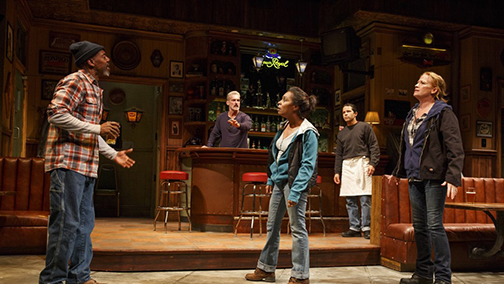
For those still pondering how we got to Trump in the White House, “Sweat,” Lynn Nottage’s play just opened at Studio 54 for this Pulitzer Prize winner’s Broadway debut, and a prescient view of our collective political plight. “Sweat” gives poignant voice to a disenfranchised microcosm of the American heartland, as if Michael Moore’s Flint, Michigan had taken center stage, featuring a fine ensemble under Kate Whoriskey’s expert direction. Kudos to John Lee Beatty’s set design, for a bar in inviting reds, a mecca where birthdays are celebrated and the closing steel mill mourned. It’s “Cheers” with less cheer, with characters of limited career options and a variety of ethnicities when in 2000, the doors of opportunity slam shut. -
 The inspiration for Suzanne Vega’s show at the Café Carlyle is decidedly literary, the Southern writer Carson McCullers, author of The Heart is a Lonely Hunter and Ballad of the Sad Cafe. Vega, a consummate songstress known for her signature songs, “Luka” and “Tom’s Diner,” crosstown and far from the Carlyle on 112th Street and Broadway, claims she’s lived in all the New York neighborhoods except the really nice ones. At the Carlyle, she has arrived. Most important, she finds the uplift in Carson McCullers, singing about her rivals in “Harper Lee,” with snarky snipes at Virginia Woolf, Katherine Anne Porter, Truman Capote, and Lee, the author of only one book. “I’d like to kill more than that mockingbird,” she quips in Carson’s voice. No matter the jealousy at the heart of the writerly persona, in “Lover, Beloved” and “Carson’s Last Supper,” songs she wrote with Duncan Sheik, Vega asserts her muse’s theory of transcendent love: “the love of my life is humanity.”
 -
If you are going to honor Susan Stroman for her achievement in performing arts, as Guild Hall did this week at their annual gala at the Rainbow Room, you may expect, aside from the usual clip reel, some real live Broadway stars. Laura Osnes, a sublime Cinderella, now preparing for the opening of Bandstand, sang the Gershwin classic “But Not For Me.” And Tony Yazbeck, dazzling in On the Town, to star in Stroman’s next musical, Prince on Broadway, sang Gershwin's “They Can’t Take That Away From Me.” Among many highlights on this special night, was Tanya Gabrielian’s rendition of Chopin's Nocturne in C-sharp Minor, Op. Posth. on piano, and poetry from Alice Quinn, Executive Director of the Poetry Society and Philip Schultz, another of this year’s honorees. “Poetry asks us to celebrate our differences,” said the Pulitzer Prize winning poet, and he read a new poem about a same-sex couple called “The Kiss.” -

Cries from Syria, a documentary on HBO, tells such a horrific story, unfortunately the one you know if you’ve been paying attention to Syria, its government’s military efforts against protestors, use of chemical weapons on its citizens, and general violation of human rights. The regime claims it is protecting the country from terrorists. Most often the victims are children, and it is through their voices director Evgeny Afineevsky tells this untoward recent history bringing viewers up to date with Syrians relocating to European countries where they are shunned, and children wishing to return home. Introducing the film at a special screening last week at the Council on Foreign Relations, Sheila Nevins appealed to the audience: “Please, let’s change this.” -

A photo exhibit at the Film Society of Lincoln Center features color stills from the set of Fellini’s 8 1/2, the maestro’s last film in black & white. Photographer Paul Ronald shot them as an aside while he was shooting black & white production stills, and of course, as these things go, the cache was lost—and now found. Glorious Anouk Aimee, and Marcelo Mastroianni seated in profile, waiting, perhaps for his next scene. Curated by Sam Stourdze, the show will stay up till summer, as the Film Society is now planning to screen a Mastroianni retrospective. Back in the day, Mastroianni came to Lincoln Center for the New York Film Festival. Following a press screening, reporters and critics surrounded him, begging for autographs. “But you are the press,” he said gesticulating wildly, reminding the crowd of its place. Icon that he was, he would not tolerate this breach of decorum. -
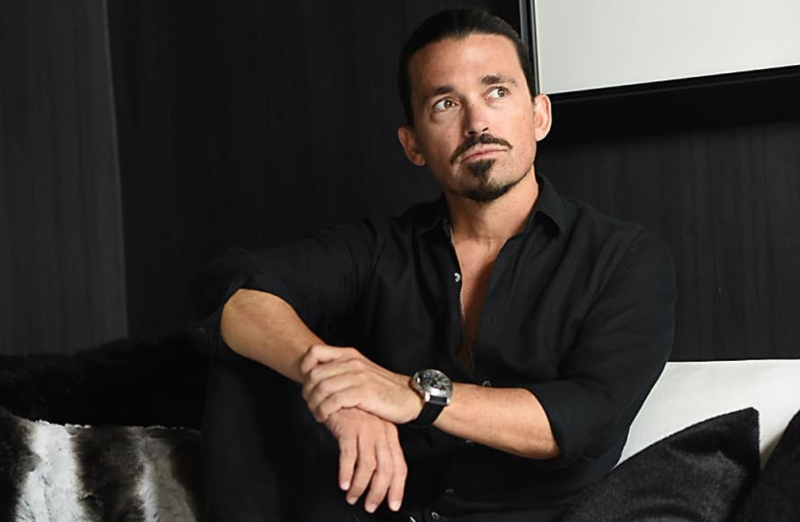
Starring a charismatic New Orleans based investment mogul, Sidney Torres’ new series on CNBC, The Deed, shows how to invest in real estate. In the second episode, a building contractor named Russell, the son of a real estate agent, wants Sidney to invest in his project, but does not want to follow his advice. Sidney really wants to mentor Russell, but Russell seems to have a mind of his own about how to invest in properties, and you see the young man chafing, his ego bruised, as Sidney proves him wrong, about details of paint, floors, and especially pricing. Just before the episode aired, I had a chance to talk to Sidney about his show. He called his time with Russell a failure, but it sure makes for good television. -
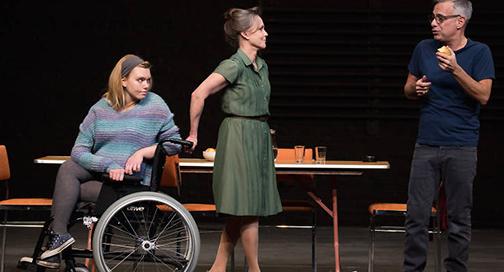
In the stunning revival of Tennessee Williams’ The Glass Menagerie at the Belasco Theater, Sally Field’s smothering St. Louis Depression era mom Amanda Wingfield, exudes the nervous energy of a woman in compulsive command. Her son Tom, Joe Mantello, our narrator, is the butt of verbal abuse. We can see why her husband left this family high and dry sometime before the events of this memory play, abandoning not only this mother and son, but a girl, Laura, crippled with a limp in Williams’ script, but here played by newcomer Madison Ferris, mostly in a wheelchair, and when not, moving about bravely on hands and knees. This choice of actress is a reason that this Glass Menagerie makes you rethink a play you thought you knew. Stretched to abstract extreme by director Sam Gold whose vision this production realizes, the play’s traditional sitting room is gone, replaced by a bare cavernous stage; the whole, including a visit by an affable gentleman caller, Jim O’Connor, a perfect Finn Whittrock, is left to the imagination. -
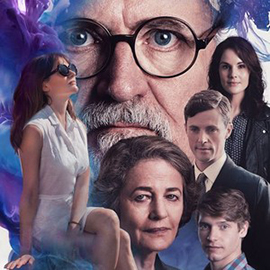 The Sense of an Ending, a Man Booker prize winning novel by the British author Julian Barnes, has at center a protagonist, Tony Webster, an uninteresting man with a vastly interesting past. In Ritesh Batra's movie The Sense of an Ending, intertwining narratives of past and present meet at a point of mystery: a suicide haunts in the way all suicides leave ultimate questions with no possible answers. At lunch at the literary Lotos Club this week, just before the film’s release, Michelle Dockery, Jim Broadbent, Harriet Walter, joined director Ritesh Batra for a panel moderated by Amanda Foreman, to ponder this puzzling story; it’s the sense of an ending, right?
 -
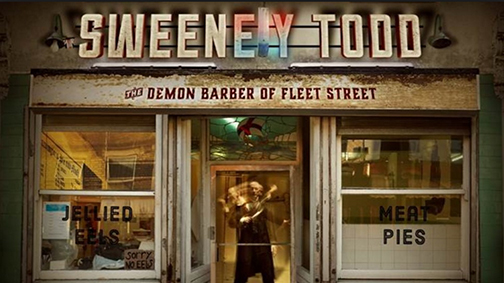
It is a tribute to the brilliance of Stephen Sondheim’s art that two so different productions of his work are now staged in New York. Uptown on Broadway, Sunday in the Park with George illuminates the creative mind of Georges Seurat, and downtown on Barrow Street, at the Barrow Street Theater, The Tooting Art Club’s production of Sweeney Todd: The Demon Barber of Fleet Street inspires terror. With the theater tricked out as a pie shop, the audience seated at long tables designed for pub dining, the actors maneuver in your face, no matter that the play is essentially about a serial killer, a decent man brought low by the vagaries of Dickensian fate, his sidekick a woman trading in meat pies and, eh, alternate truths. -
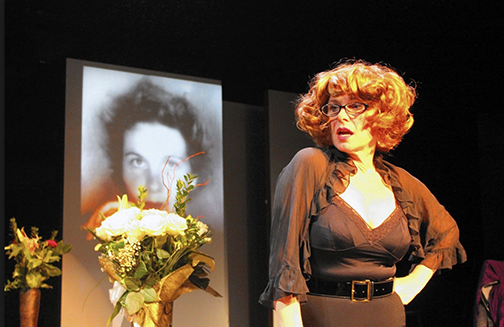
At the outset of her one-woman show, Turning Page, perfectly staged in the intimacy of Dixon Place on Chrystie Street, Angelica Page explains why her mother’s spirit keeps calling out to her. For one thing, Geraldine Page was an Academy Award winning actress who rose to fame in several Tennessee Williams’ plays, and despite the kind of accolades and honors that anyone at Sunday night’s Oscars would die for, no one has written her biography or truly told her story. Encouraged by a psychic, Angelica Page, Geraldine’s daughter with her third husband Rip Torn, does just that, and the play, Turning Page, as its title suggests, is a journey. -
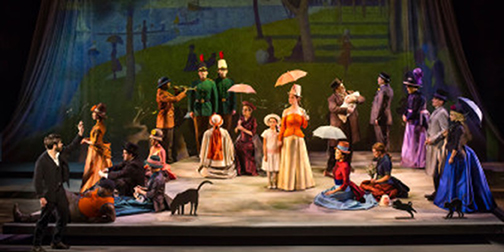
Art isn’t easy. So say the characters in Sunday in the Park with George, now in a stellar revival at the newly renovated Hudson Theater. Part heady yet playful art history, part love story, the imaginative creation of painter Georges Seurat and his muse Dot from Stephen Sondheim and James Lapine, has as its central conceit the painting of his famed “A Sunday on La Grande Jatte.” Directed by Sarna Lapine, with Jake Gyllenhaal as the paint-aholic, famous for pointillism, you wonder, how does a person apply color like that, his hands moving in a staccato to the music. Dot, his appropriately named mistress, sits patiently for him but also attempts to distract the artist with daily living. For one thing, she’s carrying his child. Annaleigh Ashford is charming, as she eye rolls, speaking with a slight nasality reminiscent of Judy Holliday. And can she sing! -
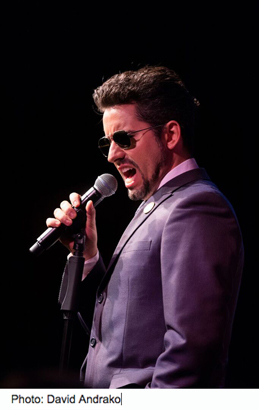 Some men just don’t get old: Dark glasses do not hide John Lloyd Young’s prom date good looks. He may be hiding from his girly fans’ swoons, but on the night we attended his Café Carlyle run, the audience was passionate about another side of this Jersey Boys’ career, his efforts to lobby for arts education. So when this dimple chinned crooner who hearkens back to your coming of age tells you he has serenaded Karen Pence, Lynne Cheney, Michelle Obama and Jill Biden,his bipartisan activism has meaning, as he launches into “Can’t Take My Eyes Off of You.”
 -
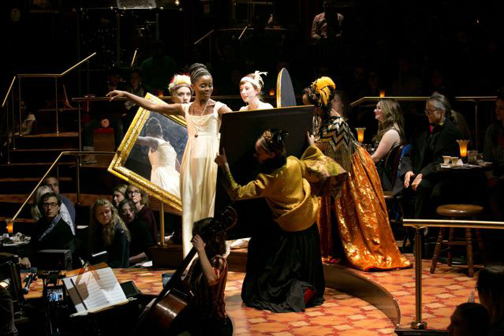
The wild party at the Imperial Theater known as Natasha, Pierre & The Great Comet of 1812 is not your usual samovar affair. This entertainment, referencing 70 pages of Tolstoy’s masterpiece War & Peace, has its own backstory: two downtown versions had the performers mingling among the guests, diners at a banquet. While that novelty is not repeated on Broadway, the audience is privy to the gesture. The Imperial Theater is converted to a kind of supper club, music at center, with tables all the way to the stage, although the staging is not distinctly separated from the theater’s ample front area. Ramps just about everywhere allow the company to enter and exit, and dance, offering—throwing– boxed knishes to those strategically seated. Small bars serve vodka at intermission. A coffee table sized book describes the journey of this new musical to Broadway. -
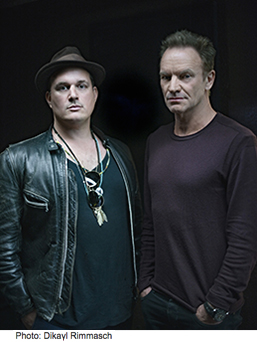 Sting and J. Ralph composed the song, “The Empty Chair” for the documentary Jim: The James Foley Story. As you see the clip of Sting performing that song at Bataclan, the historic Paris theater, for its opening one year after ISIS terrorists gunned down 89 people there, you cannot help but register that in “The Empty Chair—Live from the Bataclan,” his empathy is so overwhelming, Sting puts himself in the place of the man who was so brutally murdered by ISIS terrorists in 2014, singing, “Keep my place in the empty chair/ Somehow I’ll be There”/ “Vive la Bataclan!”
James Foley, was a photojournalist committed to bringing news from war zones. He was taken captive as he was documenting civilian casualties of war, specifically the Syrian refugees. You may remember him best from a widely seen photo of Jim kneeling beside “Jihadi John,” the man who would behead him. The film was made by his childhood friend, Brian Oakes, and features Foley’s family, friends, fellow journalists in the field, and fellow captives, speaking about the life, integrity of this man, and his final days.
Just before the Grammy’s, I had a chance to speak to Sting, on tour with his new album, 57th and 9th, and J. Ralph about their work on “The Empty Chair,” now nominated for a Best Original Song Oscar.
-
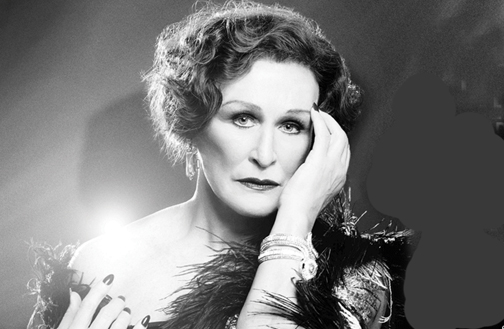
A musical of outsized passions as only Andrew Lloyd Webber could compose, Sunset Boulevard trades in hyperbole. “The greatest star of all,” in the words of Max, her homme d’affaires, Norma Desmond is camp drama queen extraordinaire. With Glenn Close in the role, reprising her Tony-winning performance of 22 years ago at the Palace Theater, Norma is petit as she is large. Need dominates her manipulations so acutely, only the powerhouse chops of the actress who put the word fatal in Fatal Attraction could pull off this tour de force of fragility and grand delusion. -
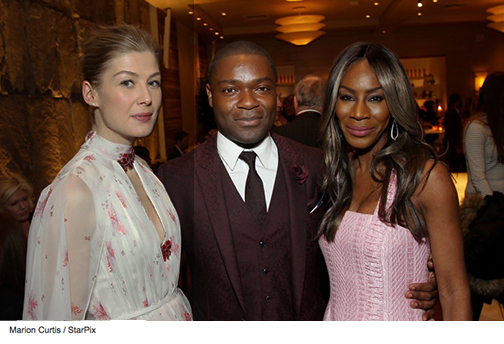
David Oyelowo, so brilliant in a recent theater production of Othello, playing the king against Daniel Craig’s Iago, is now a king again in Amma Asante’s A United Kingdom. Groomed to take the throne of Botswana, Seretse Khama is studying in London where he meets an office girl, Ruth Williams (the lovely, angelic Rosamund Pike). They fall in love. Let us just say, in this period drama based on a true story, the racism works both ways; and the colonialism is in-your-face exploitative. Some lines in this movie had the audience cheering: one wag, predicting the white woman would not last as the king’s wife in dusty Africa opines, “Wait till she finds out, there’s no Buckingham Palace in Botswana.” And when Ruth Williams is picked out of the typing pool, she asserts, “I’m no office girl.” Every time a British official condescends to the king, he offers a sherry, a double dig as in Botswana the blacks are not allowed to drink. -

It’s a given: boys left to their own devices can come to no good. In the fine MCC Theater production of YEN, a British import, at the Lucille Lortel Theater, the unformed men in question are brothers by the same mother, one static, almost comatose in front of a tv when we meet him, the younger bouncing off walls in paint peeling squalor. Then a wasted mess of a woman comes to visit, as an unseen character barks from a distance, disturbing, and a testament to the power of the drama we create in our imaginations—if we are trusted by good writing, as we are in Anna Jordan’s script. Praise to Lucas Hedges as the taciturn Hench in his theater debut just as he was nominated for a Best Supporting Actor Oscar for his work in Manchester By the Sea, and to his foil Bobbie (Justice Smith). And to the women in this story: Ari Graynor as Maggie, their neglectful mom, dead drunk on first appearance, and Stefania LaVie Owen as Jennifer, a neighboring girl from Wales whose nickname is the play’s title, and wistful hope, as a yen might suggest.

