Even when she’s coaxing a cockroach out of her purse as a down and out chanteuse in 1930’s Paris, as she does as Victoria in the 1982 Blake Edwards directed comedy Victor/Victoria, Julie Andrews is classy. Screened at the Hamptons International Film Festival this weekend, just prior to a Q&A with Alec Baldwin, a Lifetime Achievement Award presentation, and a private party to celebrate the actress most well known as Mary Poppins and Maria from The Sound of Music, the movie’s gender bending issues feel charming and slightly retro in today’s world, and make for excellent entertainment. While Victor/Victoria earned several Oscar nominations, it won for Henry Mancini’s original music; Mancini’s widow was in attendance at the Guild Hall ceremony, a highpoint of this premier film festival, now in its 25th year.

recent posts
- Scarlett Johansson in Paper Tiger: New York Film Festival Opening Night/ Mile Leigh’s Tender Loving Care
- KNIFE: THE ATTEMPTED MURDER OF SALMAN RUSHDIE PREMIERES
- Celebrating Allen Ginsberg, Rock Star
- Marisa Tomei and Matthew Broderick at Guild Hall: The Plight of an Upper West Side Arts Space Gives A-List Actors The Big Chill
- Raul Esparza and Lily Rabe in The Winter’s Tale: Wet in Central Park
-
-
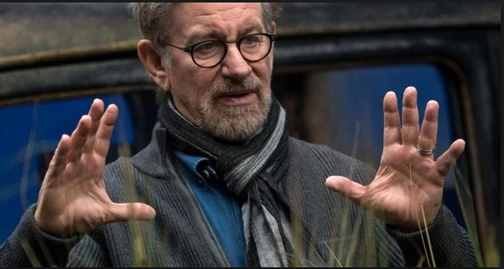
Director Steven Spielberg seems too young to have a biopic made about him, a filmmaker perpetually in mid-career. His The Post, about the Pentagon Papers will be out this November, he told the crowd pressing around him at HBO’s dinner at Lincoln following the Alice Tully Hall premiere of Spielberg, to air this week. Documentary filmmaker Susan Lacy goes far creating a narrative of Spielberg’s career—and what a career so far! Beginning with footage of the epic movie, David Lean’s Lawrence of Arabia as inspiration, the film shows Spielberg sneaking onto the Universal Studios lot and literally, in due time, commanding an office and a world in which to operate. -
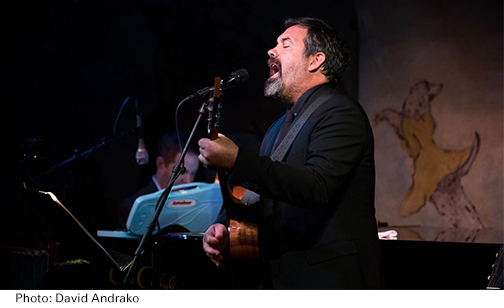
Duncan Sheik, composer of the musical, Spring Awakening, a huge hit on Broadway in 2007, takes the Café Carlyle stage this week for a brief run of his original songs. You may remember, the musical is based on a 19th century play about teens discovering their sexuality, portraying rape, suicide and abortion. “If you think it gets more happy and exciting than this,” he said at the opening, after singing some rather eh, moody songs about “losses I must bear,” “don’t hold your breath.” He thanked the audience, including a friend who was celebrating his birthday, for allowing him to test this material, and never thinking he’d be nostalgic for the “halcyon days of the George W. Bush years,” he became political with “Star Field on Red Lines.” -
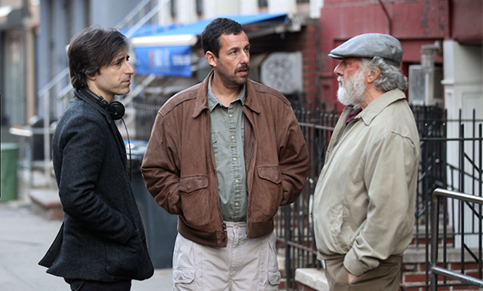
At the Q&A following a recent screening of The Meyerowitz Stories (New and Selected) at The New York Film Festival, viewers professed to have seen themselves and loved ones in the story of a family immersed in the elder care of their father, Harold Meyerowitz, a narcissistic sculptor played to perfection by Dustin Hoffman. To say that his sons, –brilliant performances by Adam Sandler as Danny, and Ben Stiller as Matthew, –are engaged in the Freudian paradigm as rivals to each other in the grip of questionable parenting, is to describe in broad terms the specificity of Noah Baumbach’s fine script, and superb direction. Baumbach has made many movies since his memorable The Squid and the Whale, and this film follows closely, a next step in fictionalizing his own family story. As the writer Paul Bowles used to say, fiction must be truer than the table you can touch. By any measure of literary fiction, this film is a masterful rendition of a New York based family of our time. -
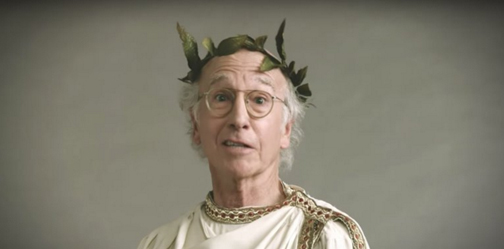
After a replay of the infamous “Palestinian Chicken” episode of Curb Your Enthusiasm on HBO last month, with a scene in which Larry David has sex with the gorgeous Arab restaurant hostess, professing his return to the homeland, so to speak, viewers thought they had seen the limits, but no, the new season features the no-boundaries curmudgeon in fresh forms of insult and hilarity. HBO hosted a premiere screening last week for a who’s who of television and comedy at the SVA Theater, including Amy Schumer, Steve Buscemi, Mark Feuerstein, Lawrence O’Donnell, Aida Turturro accompanied by Michael Gandolfini, and the cast Susie Essman, Jeff Garland, Cheryl Hines, and many more. -

Richard Linklater follows his Everybody Wants Some!!, an affable college boy sports romp, with Last Flag Flying, a buddy movie with older guys, featuring Steve Carell, Bryan Cranston, and Laurence Fishburne, who played a soldier in Vietnam in Coppola’s Apocalypse Now, back in the day, good preparation for this role. Three Vietnam vets on the road, what a set up for wild ride with bad boy shades of Last Vegas! Opening the New York Film Festival, the film touches on war, but stays closer to its aftereffects on survivors and their loved ones. Carell’s Larry sets the events in motion, traveling to find Cranston’s Sal, an alcoholic bartender, and Fishburne’s Mueller, a pious reverend. Gathering them together for a road trip, Larry wants these men, who behaved badly together in Southeast Asia, to help him bury his son, just killed in Iraq. -
Laura Osnes is the consummate performer for large Broadway musicals, and at the Café Carlyle this week, she scales back her American sweetheart persona to the intimate stage, accompanied by Ted Sperling’s piano and extensive lore, and scene partner Ryan Silverman, amping up her considerable charm. The program entitled “Cockeyed Optimists: The World of Rodgers and Hammerstein” pays homage to these masters of musical story telling with selections from Cinderella, South Pacific, Carousel, The Sound of Music, and Allegra, all songs wonderfully familiar, but at times strategically mashed up, so there is always an element of surprise, a great pleasure of this show.
-
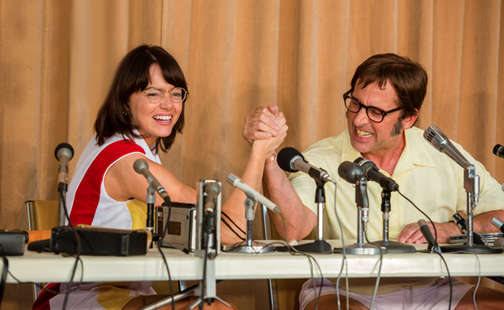
Those of us who remember the events of 1973, including the tennis match between feminist Billie Jean King and chauvinist pig Bobby Riggs, see King’s triumph in the larger context of Roe v. Wade, and other advances for women. In the thoroughly enjoyable new movie, The Battle of the Sexes, filmmakers Valerie Faris and Jonathan Dayton, the directors of the hit, Little Miss Sunshine, score big again with a delightful cast that includes Elisabeth Shue as Riggs’ icy wife and Bill Pullman as tennis promoter Jack Kramer, and a spare telling from Simon Beaufoy’s screenplay that mostly avoids historic clutter, and culminates in the match itself. Even though you know the outcome, the tennis is thrilling. -

You know what they say about show business! At Cipriani 42 Street this week the American Theater Wing celebrated its first 100 years with a great show. Tony Bennett took the stage, to speak the Wing's praises. Broadway stars Brian Stokes Mitchell, Norm Lewis, Rebecca Luker, Beth Malone, Natalie Cortez, Howard McGillin, and Santino Fontana performed favorites from Phantom of the Opera, Fun Home, Company, and other Broadway hit musicals. Laura Osnes who will begin a residency at the Café Carlyle this week sang from South Pacific. Taylor Trensch sang from Rent; currently starring in Hello, Dolly!, he will take over the title role in Dear Evan Hansen. Heather Headley brought the house down with her rendition of “What I Did for Love” from A Chorus Line. Who could possibly follow that act? School of Rock’s bass guitarist Evie Dolan just seized the moment singing “Aquarius” from Hair, and leading the entire group in “Let the Sunshine In.” -
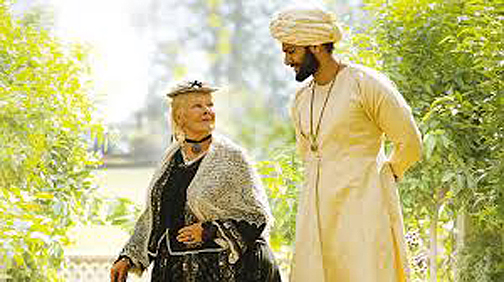
No one does queen better than Judi Dench! And director Stephen Frears has some experience with queens too, having directed The Queen with Helen Mirren as Elizabeth. In his new film, Victoria and Abdul, Dench plays Queen Victoria as both bored old lady and lonely royal, fatigued by outliving everyone she has ever loved. Into this privileged deprivation comes a lowly, handsome servant (Ali Fazal) from India who gives the queen another chapter, conversing with her on many subjects including exotic fruit, such as mango, and teaching her Urdu, much to the horror of her court, and to the heir to her throne, “Bertie” (the divine Eddie Izzard). Based on a cache of letters and other writings unearthed in 2010 from Abdul Karim, a real-life personage whose existence was entirely unknown until the recent find, Victoria and Abdul tells a new story in the well-mined history of the British monarchy. -
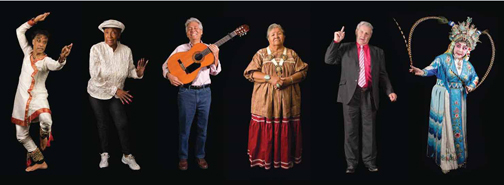
Guinean dancer Sidiki Conde walks on his hands as a result of a childhood accident, but that doesn’t stop him from performing traditional dance, and drumming, dedicated to his mother, and motherland. This weekend he and Sheila Kay Adams, a banjo playing balladeer from North Carolina entertained at Cinema Village, following the premiere of Alan Govenar’s new film Extraordinary Ordinary People. A smorgasbord of unique artists making exceptional art, the film focuses on winners of the National Endowment for the Arts’ Heritage Award, endangered in our anti-arts political climate along with the NEA itself. This exuberant film makes each art sampled, from oud playing to basket weaving to bobbin lace making, feel indispensible. -

Angelina Jolie’s latest directorial –and humanitarian–effort, First They Killed My Father, the film version of Loung Ung’s well-received book from 2000, adds to this gifted director’s body of work illuminating injustice. A personal history of the Khmer Rouge takeover of Cambodia seen through the eyes of a 5 year old little girl, the movie softens what we know, while revealing hard hitting and harrowing details of indoctrination, starvation, torture. Driven from her comfortable city apartment in Phnom Penh with her family, Loung’s survival through the loss of both parents, and two siblings, is the film’s riveting journey. And as she showed in her earlier films, Jolie’s tough storytelling on difficult subjects has a higher purpose, a mission to teach compassion. This is an important film, yes, and Jolie deserves accolades for her fine work as director.
-
 You are never too old to practice yoga—or too young. Nina Salpeter teamed up with her father, award-winning graphic designer Bob Salpeter to create a book Teach Your Child Yoga, to help parents teach yoga to children from one to six years old. Taking known positions, such as “downward facing dog” and “lotus,” to name just two, Nina Salpeter has teased out the family-friendly ingredients, animals, and comfort food—(she calls the familiar cross legged seating, “criss cross apple sauce,”)– in order to capture the essence of each pose, providing a visual prompt that brings the images close to a child’s experience.
 -

A fetus is found in a sex worker’s womb, her dead body encased in a valise washed up on shore in Sydney. Crime detective Robin Griffin (Elisabeth Moss) is on the case, and meets up with her biological daughter, the product of a gang rape when she was 16. Mary (Alice Englert), now 17, has issues with her adoptive mother Julia (Nicole Kidman), and wants to marry a dubious much older type. These mother-daughter themes swirl around the two episodes of Top of the Lake: China Girl, premiering this week on SundanceTV. Jane Campion is the show’s creator, and these two “chapters,” as she calls them, indicate this director’s ease with the long form of television series, as she told me at a Thursday’s Film Society of Lincoln Center preview. That Alice Englert is her daughter adds a layer of maternity to this series. -
 It is not easy to capture a writer’s creative process in a movie, especially when the artist was determined to stay out of the public eye. Danny Strong took on that task in his Rebel in the Rye, the story of J. D. Salinger’s coming of age as a writer, culminating in the publication of Catcher in the Rye, and the protagonist Holden Caulfield’s curious effect on readers. As the film illustrates, fans stalked Salinger, wearing Caulfield’s red hunting hat and proclaiming in so many words, Holden Caulfield, c’est moi.
A first time director, Danny Strong, well known as an actor and screenwriter (The Butler, The Hunger Games, among his many credits), based the work on Kenneth Slawenski’s critical biography, and was challenged to complete shooting in 26 days, he told me at the movie’s premiere at Metrograph this week.
-
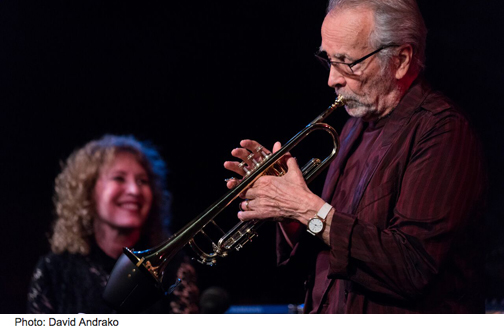
Herb Alpert and Lani Hall, partners in music and marriage for 43 years, still have that “Look of Love.” While he plays his sweet trumpet, bringing in the crowd at the Café Carlyle an entertaining night of his greatest hits, Lani Hall sits beside him, her big eyes trained on him, head and body grooving to his trumpet. Her crystalline vocals in Portuguese and Spanish perfectly put everyone in the Tijuana/ Jobim mood. “I love it when she talks to me in Yiddish,” he laughs, and their ensemble with Bill Cantos on piano, Hussain Jiffrey—from Sri Lanka– on a six-string bass he can play like a guitar, and Michael Shapiro on drums create a musical dialogue all their own. -
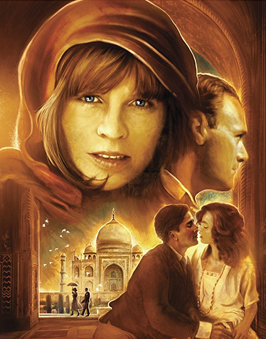 James Ivory, with his partner Ismail Merchant, famously made outstanding films, often based on literary works, for several decades. Charles Cohen, known for distributing fine foreign films, has restored their sumptuous Heat and Dust (1983), his third Merchant-Ivory classic, after Howard’s End (1991) and Maurice (1987) to be revived through his Cohen Film Collection. Set in India in two time frames, the 1920’s and 1980’s, featuring two women protagonists Olivia and Anne played by Greta Scaachi and Julie Christie, Heat and Dust feels contemporary in its portrayal of strong-willed women. Just before the film’s opening at the Quad Cinema this week, I spoke to James Ivory about his work with his longtime artistic collaborators, producer Ismail Merchant and writer Ruth Prawer Jahbvala. This legendary director filled me in on the change in audience reception for films set in India, and his latest project on Luca Guadagnino’s script for Call Me By Your Name, based on Andre Aciman’s novel, a selection in the upcoming New York Film Festival.
 -
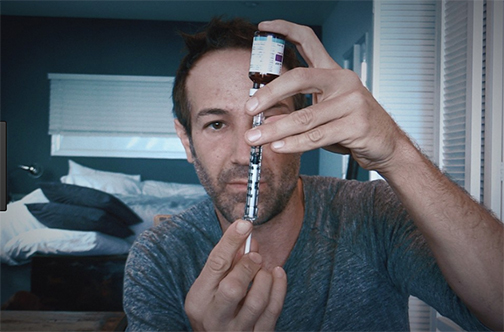
It almost sounded like a good word about ISIS as filmmaker Bryan Fogel compared the tactics of the Russian Government with respect to whistleblowers, to the terrorists we know and fear at the final evening in the HIFF Summerdocs series at Guild Hall. He was saying that when they off people, ISIS steps up and takes responsibility, even bragging about their actions. Not so the Russians: when key individuals suddenly and inexplicably die of a heart attack, suspect foul play. They practice denial to the hilt. Fogel’s film Icarus, now on Netflix is about doping in sports, officially sanctioned by governments to get the win, specifically at the Olympics. Why do we even have them? The question is chilling about an institution that has always stood for excellence. -
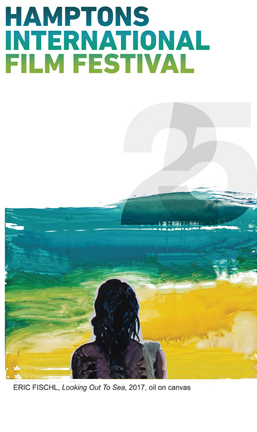
Eric Fischl might be the East End’s busiest artist: aside from painting, and showing his work, the North Haven-based painter is President of Guild Hall’s Academy of the Arts, and active with his wife April Gornik in the effort to rebuild the Sag Harbor Cinema as a community film and arts center. When he was tapped to create a poster for this year’s Hamptons International Film Festival, now in its 25th year, he immediately said yes: “I am honored to be part of it. This poster is my fourth,” the artist told me in a recent interview. “I did the first festival. That’s why they asked me.”
-
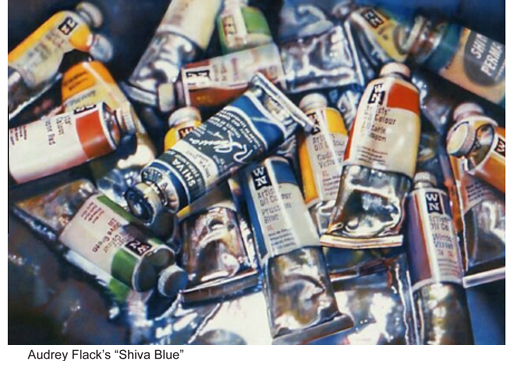
Photorealism had its moment as a genre of painting in the 1970’s, right? The exhibition at the Parrish Art Museum, featuring paintings from every decade since then, gives ample proof that Photorealism has not gone away. Rather the exhibition “From Lens to Eye to Hand: Photorealism 1969 to Today,” provides vibrant work from many artists who use photographs in their capacity to render detail. Early practitioners like Don Eddy: “Wrecking Yard I” from 1971, and Audrey Flack’s “Shiva Blue,” (1972-3), “Petit Fours” from 1976, and “Hers” from 1977 show pioneering work in this style. Flack’s “Wheel of Fortune,” (1977-8) dominates one gallery. These sit comfortably near recent paintings by Yigal Ozeri: “Untitled; Territory” from 2012, “Untitled; Olya” from 2016, and “Untitled; Olya & Zuzanna” from 2017, or Don Jacot’s “Herald Square, 1936 (After Berenice Abbott)” from 2013, to name just a few. -
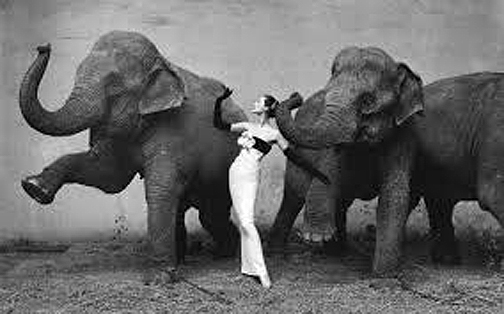
A simple walk through Guild Hall’s exhibition “Avedon’s America” is an encounter with the familiar. Portraits from the world of pop culture: Hendrix, Joplin, Dylan, along with iconic fashion work like Dovima with elephants, evening dress by Dior, Cirque d’Hiver, Paris, August 1955, grace the walls. A favorite portrait of mine is the loving embrace of poets Peter Orlovsky and Allen Ginsberg from 1964, naked and showy, the former with his genitalia limp, just part of the candor from an era when such displays were just not done. So is it merely loving, or up yours to anyone uptight? -

The third play of the Bay Street Theater season is Shakespeare’s As You Like It, featuring some theater royalty: Ellen Burstyn as the pensive Jacques and Andre de Shields, a show-stealer as Touchstone. They form the yin and yang of the bard’s comedy in this Sag Harbor staging under John Doyle’s direction, with Jacques pensive and pacing, and Touchstone colorful and cavorting. Burstyn is a most muted star in hat and tie. De Shields is his usual irrepressible in argyle socks and waistcoat. Of course the others in the ensemble for this musical version that will travel off-Broadway, to the CSC in the fall, are fine. But on the random Tuesday we attended, another was plucked from the first audience row, artist Eric Fishl, who as William with lines written out to read, formed a love triangle for the favors of Audrey, a saucy goatherd (Cass Morgan). Fishl’s wife April Gornik was cracking up, as her husband hates this sort of thing, she said. But Fishl was game, and handled his acting quite nicely, however sheepish he was. He does not win Audrey’s hand. -

On Author’s Night, the yearly festive fundraiser for the East Hampton library, writers sit in rows under an enormous tent, alphabetically, or so the signs say. This year, with books by Alec Baldwin (Nevertheless: A Memoir) and Ann Coulter (In Trump We Trust: E Pluribus Awesome!), the tent could not have been big enough. By some feat of strategic seating, B and C were on opposite ends of the space, with each end drawing huge lines. Fortunately, fisticuffs avoided, the event remained politically correct, with each celebrated at his/her own private dinner following the group book signing. -
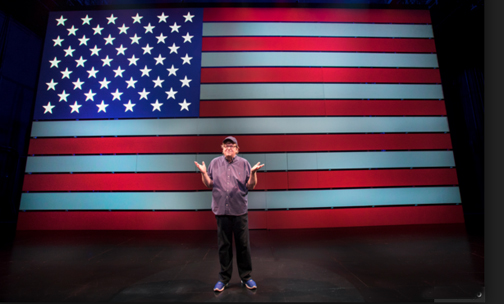
Trump is Michael Moore’s #1 target in his Broadway debut, “The Terms of my Surrender.” “How did we get here,” he asks rhetorically. Forget all the pundits and prognosticators; it was just a year ago when we thought our president’s candidacy was merely a joke, or a publicity stunt, but Moore, with his ear to the ground of the heartland’s disenfranchised older white men foretold the outcome of our election. He tried to get Hillary to travel to places like Wisconsin, but his calls to Brooklyn headquarters never went through. And now deploying an arsenal of jokes, sight gags, SNL-worthy skits, Michael Moore lands at the Belasco Theater, to incite his audience to action, give hope, and most of all, to entertain. He’s even saved a box for the first family, should any Trump care to laugh, or just take him on. -

Back in the day, when Jeannette Walls was a glamorous gossip columnist for New York Magazine, sporting a French chignon and a white suit, she reported on Trump’s clandestine dates with Marla Maples when he was married to Ivana, but she had some secrets of her own. Her 2005 best seller, The Glass Castle, revealed a hillbilly upbringing with parents who were less than protective and nurturing. Let’s say, these disheveled “artists” were advocates of an alternative lifestyle in which they celebrated poverty, moved around in a junk heap of a car, one step away from authorities, where Jeannette and her siblings often went hungry as their father drank himself into a cruel stupor. But Rex Walls had big dreams; he wanted to build “a glass castle” of his own design. Now the popular memoir has been made into a fine, The Glass Castle, film directed by Destin Daniel Cretton who made the movie Short Term 12, a game changer for the young actress who plays Jeannette in the new film, the Oscar winning Brie Larson.


