• Hollywood sent a message at this year’s Oscars. Winning Best Actor for his role in THE BRUTALIST, his second for this prize, Adrien Brody hoped for a healthier, happier, more inclusive world: “Don’t let hate go unchecked.” That’s not a small ask. From his first win for THE PIANIST in 2002, the actor whose mother, the superb Village Voice photographer Sylvia Plachy emigrated from Hungary in the mid-sixties, the actor with a war-torn look has played parts hewing close to this background. He has even said he could hear his grandfather, as he created the accent for this role, reminding everyone of America’s highest ideals even as his partner, Georgina Chapman had to remind him to thank his mother.

    The Palestinian/ Israeli team that made Best Documentary winner NO OTHER LAND, showed how their collaboration as filmmakers cut through the senseless political practices in a town in the West Bank, policies that brought violence and horror to communities in Israel and Gaza. The filmmakers asserted that our government’s current response is not helping to bring peace.

    Zoe Saldana was the first American-born Oscar winner whose history goes back to the Dominican Republic. Honored with many awards on her way up to the Best Supporting Actress Oscar for her role in EMILIA PEREZ, Saldana’s win could not have been easy for her co-star Karla Sofia Gascon, shunned for hate-speech, racist comments made online. For sure, that hurt the Netflix movie’s chances for Best Picture.


    (more…)

  • The fictive White Lotus resort in Thailand, the locus of Mike White’s mega HBO series in its third season, has nothing on the Six Senses wellness retreats in India. Seeing the staff line up to greet guests arriving by boat in episode one recalled entrée into the extraordinarily fabulously fashioned Six Senses Fort Barwara in Rajasthan—modeled after Marrakech’s La Mamounia. On a recent trip, we were treated to a cascade of bright red rose petals on a recent visit, by a staff lining up for this awesome welcome.

    True, the tiger safari is a great lure. Tourists often book multiple excursions in a given day a year in advance, just in case Charger, the alpha male, feels like a stroll in this nearby preserved habitat also occupied by crocodiles, monkeys, mongooses, and spotted deer, the favored delectable dinner for tigers. Snagging a last-minute reservation, we careened around road curves in our open-air jeep, assigned to the park’s Zone 4, hoping to catch a glimpse. Not only did Charger make the scene, so too did one of his lady friends and their three cubs. We had won the safari lottery.

    But just in case, the consolation prize was none too shabby: hanging in a resort featuring prana yoga, sound meditation, classes in pottery and herbal cures—plus pool, sauna, steam, and massage. If this fort had been home to kings, we were next in line.

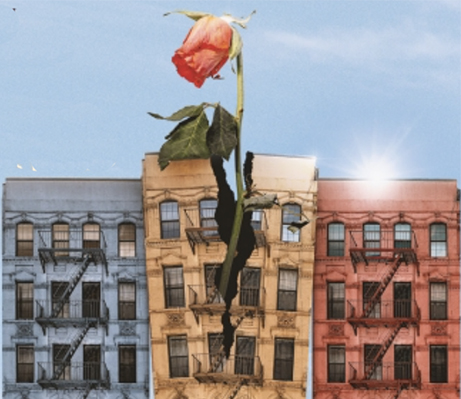
    Climbing up the 720 steps to a white hilltop temple, we encountered a wedding party. Young boys asked to take selfies with us, and the women wrapped in festive red, green, blue saris pulled us into dance. Rose petals may be a metaphor for a valentine’s love, or for the kind of connection that has no price.

    (more…)

  • A fashion crowd crammed into the Campbell Bar at Grand Central station this week, to celebrate Consuelo Vanderbilt Costin, covergirl of Vogue Magazine. For most of us, the issue was unreadable, in Czech, but that didn’t matter. Air kissing is universal, after all. So is the greeting, “You look great.” That applied to everyone in the room but mostly to the men in brocade jackets. And to socialite Jean Shafiroff clad in a blue straight skirt suit and booties. She usually wears a wide skirt ball gown. But with impending snow, no room for flare.

    The highlight of the evening was a grand tour of the inner Grand Central station. Terminal architect Mark Saulnier led the way through the catacombs past David Rockwell chairs, so often the seat of the homeless, they are now hidden away. Looking down at the main floor, people scurrying looked like ants, and we could appreciate the central information booth had a glass top. Saulnier pointed out the a secret echo chamber outside the iconic Oyster Bar, and how the marble in front of the original ticket windows sagged with use. Sometimes when it rains, pools form, he said. All detail was remarkable, even the inner staircases with wrought iron acorns. A move is underway to restore some peeling paint, the price tag astronomical, but worth it.

    (more…)

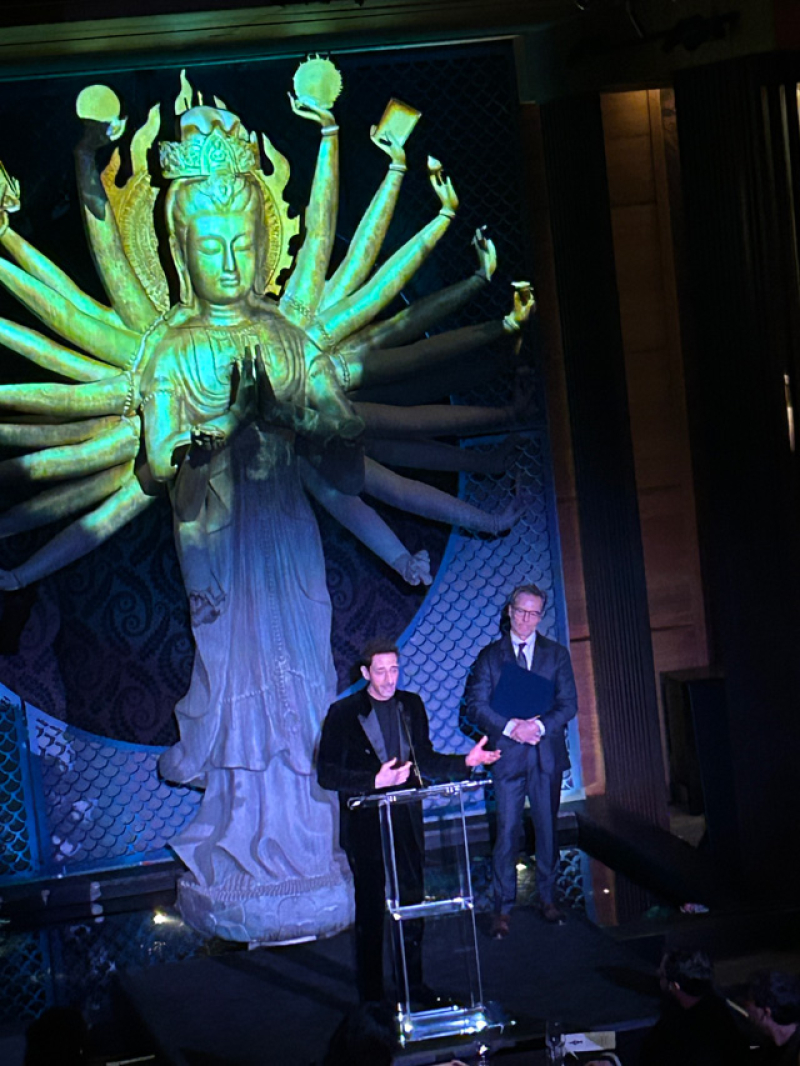
  • The New York Film Critics Circle celebrated its 90th year this week, at TAO Downtown. Member Rex Reed celebrated his 50th year with the group. Many spoke of the fires in LA. Adrien Brody, reflecting on TAO’s décor with its giant statue mistaken for Buddha, pointed out, that’s Shiva the destroyer before becoming emotional, and that’s before the girls were swooning in the bathroom: Robert Pattison had shown up for Brady Corbet’s Best Picture presentation for THE BRUTALIST.

    As celebrations go, this one was cerebral, not raucous which had some attendees concerned. And then there were the outliers: Claire Danes was wildly animated as she introduced Kieran Culkin for his Best Supporting Actor award, the real pain in A REAL PAIN. They had starred together in IGBY GOES DOWN as naughty teens but now, she pointed out, they each have kids. “Only you can be you,” she said gesticulating madly. To wit he got up to say, “You are so kind, I wish I had been listening.”

    Jim Jarmusch presented Best Screenplay to Sean Baker for ANORA who liked the snow falling in the last scene so much he proclaimed, “Hats off to the falling snow.” But you cannot admire the deftly constructed screenplay without admiring the sex. Fawned Jarmusch, “I loved the sex in the film: transactional, silly, showing the variety of what that is. He had heard that Baker demonstrated some scenes coupling with his wife. And Sean Baker fawned back, noting that when he finished film school at NYU he only wanted to be Jim Jarmusch. “I used screen grabs from NIGHT ON EARTH. All that matters is heart, COFFEE AND CIGARETTES.”

    (more…)

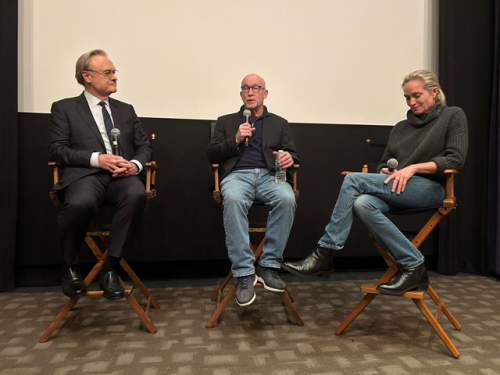
  • At a recent post-screening Q&A, MSNBC’s Lawrence O’Donnell stopped short in his questions for The Bibi Files producer Alex Gibney and director Alexis Bloom, to take a call from his daughter, excusing himself by explaining that she was in the evacuation area of Los Angeles, trying to discern which art to rescue from the fires raging there. Huh? What fire? The wildfires were just starting as big news. Meantime, the documentary, featuring a key interview with Benjamin Netanyahu, had reached its own heat with the realization that the Israeli prime minister had actually allowed funding Hamas through Qatar. To stay in power, to avert jail for corruption, he saw his chance to fuel chaos. Wanting to keep his enemies closer, as he boasted to his interrogators in the secret footage shown in the film, he would control the violence, allowing Hamas to set the fires as he contained the height of the flames.

    October 7 was a direct result. The Bibi Files reveals much through interviews conducted by police in Netanyahu’s office with a map of the Middle East in the background. Investigated for extravagant gifts of champagne, cigars, and jewelry, the prime minister maintains he is the victim of a witch hunt. He had learned from visiting world leaders during his many terms in office, life in Israel, even at the top, is an austere business.

    (more…)

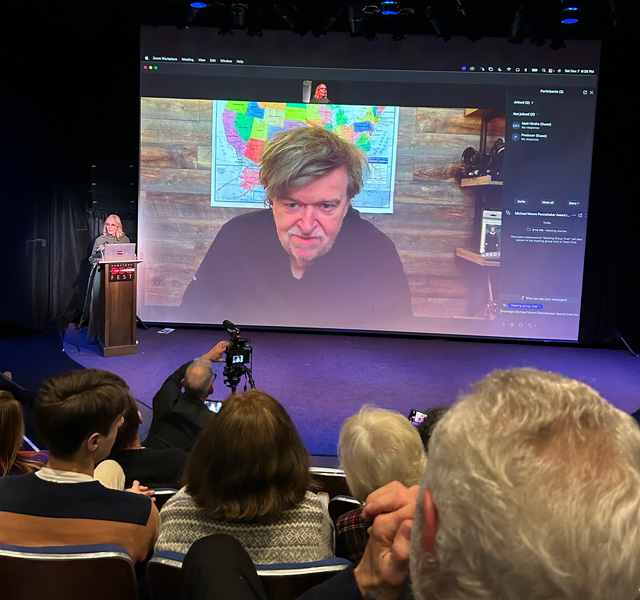
  • Even Covid could not keep Michael Moore back. Of course, everyone at Hamptons DocFest was disappointed the irascible filmmaker could not make the scene for his Pennebaker Career Achievement Award—named for D. A. Pennebaker and presented by Chris Hegedus–, but show up he did, larger than life on Zoom. “Now everyone can see I really have hair,” he said, with a head shake. Usually tamed under a baseball cap, his ample head of hair was making a rare, tousled appearance. Hamptons DocFest would be screening his now classic ROGER & ME, his 1989 confrontational view of GM outsourcing their production from his hometown Flint, Michigan. All a young Moore wanted was to take CEO Roger Smith on a roadtrip around Flint to show him the impact of his business decision. His thwarted attempts are satiric, a sad laugh at his America—and ours– on the decline. How timely!

    The festival, well underway in Sag Harbor, had screened UNION the day before, a look at Amazon and the ongoing protests of workers, underpaid and overworked. Fulfillment indeed! Now on the Oscar docs shortlist for Best Documentary, the film makes you want to say, I thought slavery was ended in America. Think again. Think of the history of unions in America, democracy writ large. Where are you, Jeff Bezos? Attention must be paid!

    Between DOCNYC and Hamptons Doc Fest with the inevitable overlap of non-fiction films, truly stellar work emerged: BLUE ROAD: The Edna O’Brien Story opened DOCNYC. Sinead O’Shea’s doc illuminates the transgressive sexual boldness of the Irish writer. Jill Campbell’s BEYOND THE GAZE: Jule Campbell’s Swimsuit Issue, an inside glimpse into the woman who made the Sports Illustrated’s most financially successful and most anticipated magazine of the year.

    (more…)

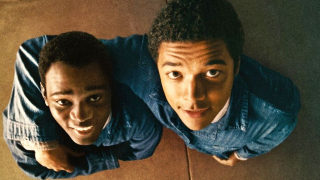
  • Harrowing tales of black boys and men during the Jim Crow era are the meat and potatoes of Pulitzer Prize winning author Colson Whitehead’s fiction. When filmmaker RaMell Ross, who made the acclaimed 2018 documentary “Hale County, This Morning, This Evening,” was given an advanced reading copy of Whitehead’s The Nickel Boys, he was working on an exhibition in New Orleans on the history of the American South and its imprint on the Black soul. His installation and the novel, about two boys in a barbaric reform school serving time for arbitrary crimes—essentially because they were Black and vulnerable– seemed to put the filmmaker on a thematic path toward his exploration of Black identity.

    The result is an edgy film, arty in the best sense. Innovative, the movie takes a novelistic approach to visual storytelling. About a real-life reform school, the fictive Nickel Academy, is grim –and even grimmer for its Black population. Punishment, perhaps a turn on a torture device meted out by Spencer (Hamish Linklater) may also extend to murder and burial in an unmarked grave. Given the disquieting details, as viewer, you may find yourself looking up at a face, the sky, the branches of an orange tree, the interior of a dorm or cafeteria from an unexpected angle, and wonder, how did they get that shot?

    At the premiere screening, on the New York Film Festival’s opening night, Ross spoke about not wanting to overburden the actors with concepts but to have them experience each other. He fitted the actors with camera rigs literally strapped on. In more traditional filming, you always assume the camera is there. With the rig on, actors have always to be more aware. Daveed Diggs spoke about wearing the heavy rig all day for fear of losing perspective. Fred Hechinger observed that actors and cameramen seemed to exchange roles in the filmmaking. The result is as close as I’ve ever seen to a novel-to-film adaptation that translates technique as well as story. Already nominated for top awards, RaMell Ross and “The Nickel Boys” are high on the lists predicting Best Director/ Best Film Oscar nods.

    (more…)

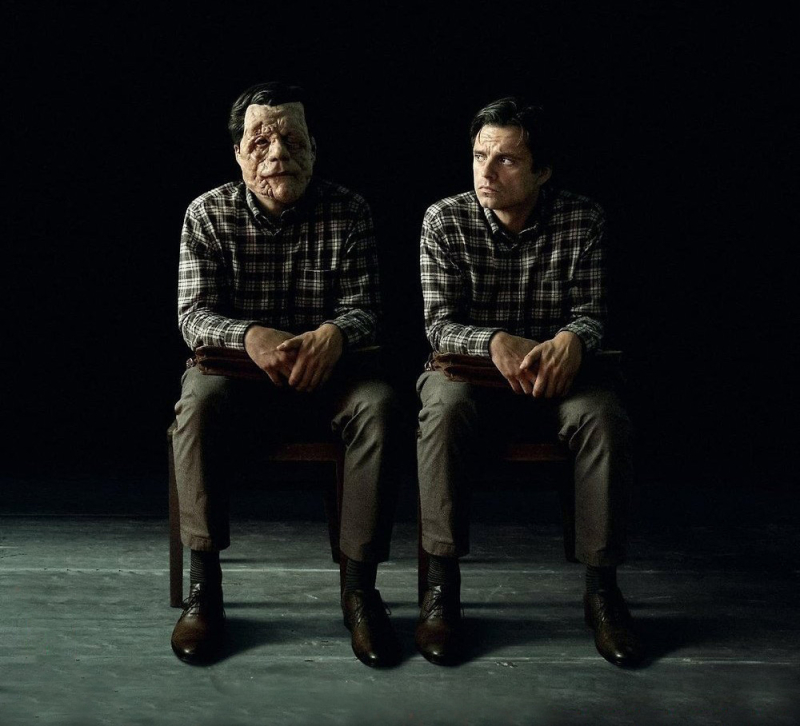
  • Old Hollywood likes their leading men handsome and debonair—think Cary Grant, Rock Hudson—but with this year’s Gotham selection of A DIFFERENT MAN for the top prize, Best Feature, a new look grabs at your attention. You have to love an awards season that starts with a celebration of –well, difference. A hit at the New Director/ New Films series, the film stars a unique protagonist, a man not without his charms, but no traditional heart throb; with a face a Cubist portraitist would love, he becomes all the rage. The film choice is a reminder that no matter how smart, suave, and elegant this start to the awards season, the Gothams still keep a discerning eye on indies.

    That said, the biggest stars were in the room, eh, the cavernous Cipriani Wall Street, mainly as presenters, a great show of support; the stars know this is the night for great food and fun. A-listers: Jake Gyllenhaal, Rachel Brosnahan, Aubrey Plaza, Jessica Chastain, and Oscar Isaac were among the presenters, some nominated for their performances: Nicole Kidman, Demi Moore, Saoirse Ronan, among them, but these did not take home the prize. Gender mixed, the Gothams gave Coleman Domingo Outstanding Lead Performance and Clarence Maclin Outstanding Supporting Performance for their respective roles in SING SING.

    Highlights for me included James Mangold and Timothee Chalamet accepting the Visionary Award for A COMPLETE UNKNOWN, the new Bob Dylan movie. Chalamet does not imitate Dylan so much as make the songs his own. Elle Fanning cheered her director and co-star on. She made her Broadway debut this year in Appropriate and said she enjoyed the challenges of theater, especially working with Sarah Paulson. We first met “Timmy” at the Hamptons International Film Festival. He was in a group of “Rising Stars.” I think his star has risen.

    (more…)

  • Documentary filmmakers Gregory Kershaw and Michael Dweck had a shoutout of praise for their 2022 film, THE TRUFFLE HUNTERS –from Robert Zemeckis and Tom Hanks. These veteran filmmakers, the FORREST GUMP team, are not the only fans. For their latest doc, GAUCHO GAUCHO, about Argentinian cowboys, making the rounds of film festivals to great acclaim, director/ producer Doug Liman, another fan known for popular films such as EDGE OF TOMORROW, starring Tom Cruise, hosted a private screening of excerpts in his downtown Manhattan apartment, followed by a Q&A with Michael Dweck. On the face of it, the filmmakers could not be more different. The evening became a master class in film art.

    Shot in black & white, GAUCHO GAUCHO, takes place in a hilly landscape, featuring a community close to nature, far from our tech world. In one clip, a still mound moves. A horse rises from rest, a man on top of it—all in one long take. The filmmakers knew this “horse whisperer” often slept on his animal, and simply filmed it—like a Warholian meditation. The Hollywood filmmakers appreciate how challenging such a one-shot scene can be. No tricks, cut-aways, or B-roll–just the camera recording what takes place, taking its time. The audience at Liman’s comprised of documentary filmmakers all know that even non-fiction filmmaking relies on crafting. Without the customary “script,” Kershaw and Dweck get as close to the real moment as one can get with thrilling results.

    Prior to their recent screening at DOCNYC, I had a chance to speak to them on Zoom. Onto the next project, they were filming in Burgundy, in France’s wine country, yet another off the grid community—their specialty. While the doc team were honored to be lauded by Zemeckis and Hanks, and to meet Liman and be friends, as they said, they work on a smaller canvas. “We have the luxury of time to create the film we want to make,” said Dweck.

    (more…)

  • Before becoming the pioneering televangelist power couple, Jim Bakker and his enterprising wife Tammy Faye Bakker sold God using puppets out of the back seat of a car, creating an industry and an empire. Religion, as we know, is big business. Limning their rise—and fall– in fame and fortune, the new Elton John musical, Tammy Faye, puts them onstage at the newly refurbished Palace Theater, set against a wall of television monitors. The usual ministry of heavy-weights—Billy Graham (Mark Evans), Jimmy Swaggart (Ian Lassiter), Pat Robertson (Andy Taylor), Jerry Falwell (Michael Cerveris)– pop up like the stars on Hollywood Squares. The story doesn’t get more American than this.

    Except this is Broadway, and it’s Tammy Faye whose arc we follow. Before feminism was a thing, she master-minded much of the God-selling program. A wronged woman once Jim strayed with Jessica Hahn (Alana Pollard), Tammy Faye went off her own rails, spending excessively, downing drugs in her own tearfully sad journey–all to great spectacle; she’s accompanied by Elton John’s tunes—“He’s Inside Me,” “Look How Far We’ve Fallen,” “If You Came to See Me Cry,” “See You in Heaven”–with Jake Shears’ lyrics, book by James Graham, under Rupert Goold’s direction.

    Opening night had Extravaganza written all over in sequins and glitz, from Jake Shears’ multicolored track suit to Elton John’s pearls. A Tammy Faye look-alike played the red carpet, batting winged eyelashes. We met Tammy Faye’s son, Jay Bakker, and his BFF Jeanette at the Tavern on the Green afterparty. No, he doesn’t see his dad, who seems to be in hiding. The great Christian Borle is in his glory portraying a hammy Jim Bakker. Jay Bakker was thrilled to hear Katie Brayben portraying his mom, and meet Michael Stipe who told Jay that when he started out recording in a studio, he was on the same microphone as Tammy Faye, a big moment for the REM singer/ lyricist. Meantime, young Jay said he was listening to “Losing My Religion.”

    (more…)

  • From the edgy look of his movies—FLESH, TRASH, HEAT, to name a few–you would never think of Paul Morrissey as deeply religious. With his friend and partner Andy Warhol, a fellow Catholic, he made art, collaborating on many cinema-verite films and other ventures including the purchase of cliff-high acreage in Montauk overlooking the Atlantic.

    The legendary Eothen had on it a number of cottages—more like rustic Catskill bungalows—where visitors could reside. Realtor Linda Stein who had brokered the deal stayed for a summer with Morrissey insisting that she shut lights when rooms were not in use. Not quite a conservationist, he was old school frugal and utilities out east are not cheap. Notables passed through: dutchesses, Kennedy’s and Radziwill’s, artists, musicians such as Lou Reed, the Rolling Stones. Curmudgeonly and loving, Paul Morrissey was the consummate host.

    Friends and family celebrated him at his funeral this week hosted by his adoring nieces. Gerard Malanga, who had introduced Morrissey to Warhol in 1965, sent a poem. With speakers: the casting director Leonard Finger and music manager Danny Fields, much was made of Morrissey’s contradictions to a knowing crowd including Geraldine Smith and Susan Blond. A promoter of The Velvet Underground, Morrissey nevertheless cautioned against drug use. Compelled to sell the property long after Warhol died in 1987, he bought three units in the newly desirable trailer park nearby, just before the market surged for these waterfront residences now beached on cement foundations in rows. One for himself, the others for visiting family.

    (more…)

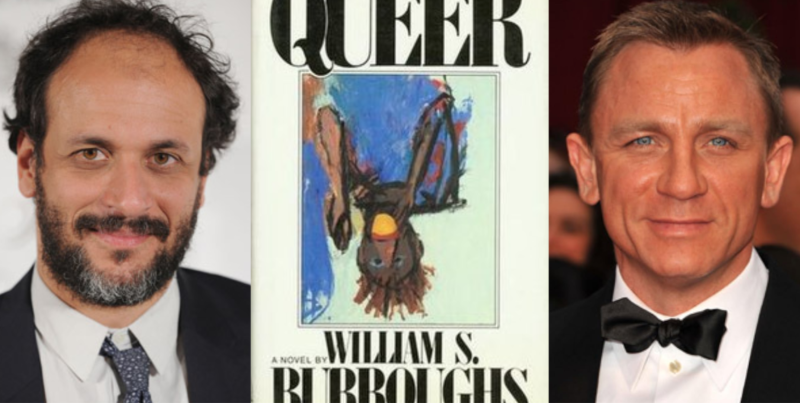
  • The novels of William S. Burroughs may be difficult to adapt—just ask David Cronenberg—but in the able imagination of Luca Guadagnino, the transformation of Queer to film is a triumph. The packed audience at the recent Alice Tully Hall premiere, a high point at this year’s New York Film Festival, went wild as the creative team took the stage for the post-screening Q&A. And it is not only because the movie stars Daniel Craig. Guadagnino explained how as a boy in Palermo, he picked up the Burroughs work and always wanted to make this film. While working on Challengers from screenwriter Justin Kuritzkes’ script, he gifted him the book one day and said “Read this tonight.”

    The text of Queer, unlike say, Burroughs’ most famous Naked Lunch, has a linear thread so a narrative could be made of the love story between William Lee and a younger Eugene Allerton (a formidable Drew Starkey). Yes, there’s plenty of man-on-man sex—minus the testosterone. How else can you explain the tenderness? Prowling Mexico City looking for a connection, Lee has a tryst or two, essential to the vision of what homosexuality meant in the midcentury—achy, twitchy, awkward, and alone, Craig plays Lee’s vulnerability.

    Of course, there are drugs involved. Costume designer J. W. Anderson spoke of dressing Lee in cool whites when the substance of choice was cocaine to the colors for heroin use. A funny moment comes when a doctor asks the sick Lee, are you addicted to opiates? Cut into chapters, Queer proceeds to South America as Lee looks to explore “telepathy;” Lee invites Allerton to travel with him in search of yage. The jungle scenes feature an unrecognizable Lesley Manville as shaman—the one significant woman in this movie, a transformation from the male Dr. Cotter of the book.

    Another significant change: insisting that Queer did not have an ending, Guadagnino and Kuritzkes supply one, bringing closure to their plot. As Guadagnino put it, the novel opens a door and then closes it. Guadagnino proposed, “What if we went through that door?”

    (more…)

  • Forget “meet-cute,” the winning rom-com trope that made writer Delia Ephron’s career. In Left on Tenth, Ephron’s play based on her memoir at the James Earl Jones Theater about finding love after her husband died, we get the more powerful “Bechert.” As Peter Gallagher, in the role of Peter explains, it is Yiddish for fated, –much more cosmic and explosive. That’s how he defines finding love with Delia, Julianna Margulies of ER fame in her Broadway debut, after decades, marriages, and emails. This is more than You’ve Got Mail. What could go wrong?

    Well, as fate would have it, Delia’s watching her blood count after losing her older sister, writer, director Nora Ephron to leukemia. Following many reassuring doctor visits, Delia’s told, it’s not looking so good today. Delia in disbelief exclaims, But I’m falling in love.

    Peter Gallagher, among his many theater credits including Guys and Dolls, is perfect in a lover role he nailed as Jane Fonda’s younger man in Grace & Frankie. Here, as Peter, he helps Delia through the arduous ordeal of cancer. We should all have such a handsome and handy lover helping us through hard life passages. Still, however based on true events, this is a rom-com in high Broadway form, and with Stro directing (that’s Susan Stroman to you), Left on Tenth features dancing. Margulies does a little tap, a little soft shoe, a happy dance. And some old school ballroom dips have the audience kvelling.

    And laughing. When Delia compliments the doctor’s shoes, she says she got them ages ago at a sale at Barney’s. The audience lets out a collective sigh. Barney’s! The name evokes unspeakable loss. Forget cancer! The memory of a beloved department store has us where it hurts, the very heart of elite New York City shopping. This play knows its people! Does this spontaneous expression of deep loss happen every night?

    (more…)

  • IMG_0699
    Hillary Clinton
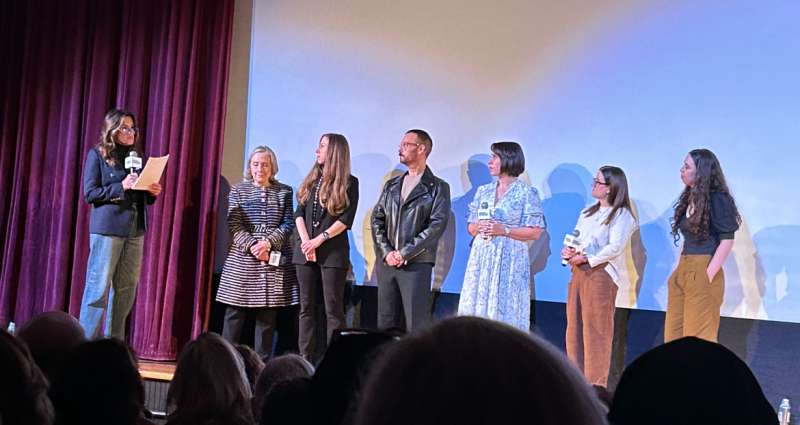
    and Chelsea Clinton led the list of producers of Zurawski v Texas, a documentary by Maisie Crow and Abbie Perrault. After screening in the five states where abortion is on the ballot, this essential documentary is now in a theater near you, following an impassioned event at the recent Hamptons International Film Festival.

    “This means you, New York,” the women shouted from the stage at the East Hampton Middle School in early October, where the packed audience stood to cheer the film team: the directors, producers Hillary and Chelsea Clinton, and a brave and hardworking legal team from the Center for Reproductive Rights who work with women suing Texas over its Draconian anti-abortion laws. The film is an unflinching look at women who have had to endure barbaric cruelty when some basic medical care was all that was needed to avert trauma and in the state of Georgia, now two deaths. What the women want is a clarification of the language—when exactly, under the new Dobbs decision—is it legal for a doctor to perform procedures on women at risk? What is a “medical exception?”

    As it stands, the medical community is scared. Doctors face fines and imprisonment. In one harrowing case, a woman is made to bring a pregnancy to term even knowing the baby had a zero chance to live. Calling her Halo, the parents watched her die in her four hours of life. The mother was so traumatized, she subsequently had her tubes tied.

    (more…)

  • Image4
    The work is detailed and geographic, tonal, you might say, like bop graffiti on brick in a Detroit abandoned building. The artist, McArthur Binions, in fact, comes from Detroit but spent a lot of time in New York meeting Thelonius Monk and Miles Davis, moving on to Chicago where he now lives and works. Artist Rachid Johnson was his student, so favored that he became part of the family, taking care of the kids. At a recent "Brunch with Bob," at the Peter Marino Foundation, he told a packed crowd awed by Binions' art, Binions refused to sell his work at the time, proclaiming it would be worth a lot someday. And Johnson who knew him only in that school setting as his teacher, thought, "This guy is crazy." Yeah, as the saying goes, crazy like a fox. This was the talk's great takeaway.

    In the foundation gardens for brunch, Prudence Fairweather asked McArthur Binions if he had ever met her husband, John Chamberlain. Oh yes, that was at the Fanelli Bar. He had a large vial of cocaine. I ask, did he share? "Yes he did. It was very good."

    A who’s who of artists show up at the LongHouse gala every year. The evening, honoring Kenny Scharf and Tony Bechara, is always an homage to Jack Lenor Larsen, its founder, and a celebration for nature enthusiasts who love the combo of gorgeously curated outdoor art in the leafy setting: Robert Wilson, Ned Smyth, Joan Semel, mingling among many others. The much-awarded “Marvelous Mrs. Maisel” costumer Donna Sakowska said she’s been living in Paris developing a ballet series called “Etoile” with the Palladinos.

    (more…)

  •  Guild Hall 2024AAA
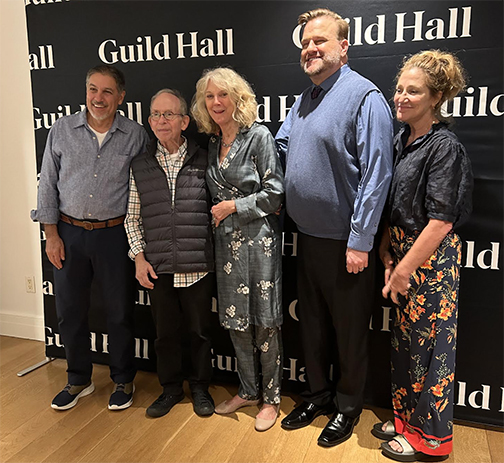
    Begging the question: is it too soon to laugh about the pandemic year, 2020, a collection of short plays by masterful playwrights, did just that in a one-nighter at Guild Hall, directed by Bob Balaban. That was July 2021. Now for July 2024, as we ponder where we are in an arguably post-pandemic year, Balaban assembled a collection of short plays to consider “The Pursuit of Happiness” starring Alec Baldwin, Edie Falco, Blythe Danner, Jim Bracchitta, Steven Wallem, and Richard Kind.

    Baldwin kicked off the staged reading with “Mr. Happiness” by David Mamet, a Dear Abby meets Miss Lonelyhearts, an advice guru which he performed with a stagy voice only Alec Baldwin could muster. Blythe Danner, for a Neil la Bute piece from his “10 x 10 Monologues,” about a woman of a certain age contemplating her current plan to go off for a weekend with a handsome stranger, said after in Guild Hall’s green room, that she merely read it straight, not trying to act at all. The result was so wistful and moving that even this playwright’s words which are often not respectful to women came off as a true insight into the female psyche.

    Lynn Grossman’s play “The Keepsake” took on the subject of memory and its lapses during the COVID era. As performed by Richard Kthis was the longest and most direct evocation of the virus and its aftermath, still uncharted. Grossman said she wrote the play with Richard Kind in mind as perfect to perform its manic ins and outs of memory and ending with a recitation of a Shakespeare sonnet.

    (more…)

  • Audrea FlackAt the end of Audrey Flack’s new memoir, With Darkness Came Stars, published when she was 92, she takes stock of a life well lived:

    I am lucky that my mind remains clear and sharp, filled with ideas for new art. The creative spirit is running strong and I continue to work.

    These words, and the fact that Flack’s mother lived to 100, gave the impression that she would always be there, encouraging artists of every kind, dispensing wisdom on every subject, exuding enthusiasm in her belief that art can heal. Her recent death at age 93 from a torn aorta was a great shock.

    A noted pioneering photorealist, abstract expressionist, and sculptor, she was controversial in every genre. As a photorealist, her work featured lipsticks, mirrors, beads shining bright as the chrome veneers of the men’s autos. Flack’s very subjects, Marilyn Monroe to ç1 as Cleopatra, to teary eyed macarenas, were seen as secondary to the men’s “reflections on metal surfaces.” Excluded from a show, she knew women were being written out of the history of art. Her dealer Ivan Karp told her flat out: “Paint cars and trucks and I’ll make you famous.”

    Flack went her own way. Airbrush was a no-no but she experimented anyway, and favored figuration when abstract expressionism was all the rage. Against the feminist grain, her bejeweled goddess statues were deemed kitsch, totally out of phase. Flack observed the art world from the inside: And she told her stories in the memoir and through her songs written for her “History of Art” bands. She played the banjo.

    Jackson Pollock was a favorite subject, but not the only one. Often drunk, the male artists come off as boorish; the women subservient, and catty, always second place. Flack opines on who’s a feminist (herself) and who is not (Elaine DeKooning and Alice Neel) and tells juicy stories describing the artists’ loft scene, galleries and gallerists, liaisons. In one, she’s instrumental in introducing Jackson Pollock to Ruth Kligman, an aspiring artist, instructing the voluptuous young woman to the far seat at the Cedar Tavern’s bar.

    (more…)

  • Hamptons film 4
    Even more than meeting any Hollywood star, Alec Baldwin loves documentarians, he said this week, after a screening of Skywalkers: A Love Story, the first film screened at the newly refurbished Guild Hall and the first of the series, Summerdocs. The elite doc series, a cornerstone of HamptonsFilm programming, founded by Artistic Director David Nugent and Chairman Emeritus Baldwin, has since its inception showcased crowd-pleasing, feature-length nonfiction films that have gone on to Oscar nominations and wins (think Navalny). With its international focus, outstanding cinematography and core romance, expect Skywalkers to be an awards contender as the season approaches.

    Baldwin, despite legal battles around the accidental shooting on set making Rust, was in top form interviewing Tamir Ardon and Maria Bukhonina, the filmmakers of Skywalkers, on the frontier of a new era of cutting-edge documentaries. Two Russian rooftoppers, Vanya Beerkus and Angela Nikolau, already popular on social media, team up and fall in love. Challenged to climb the tallest construction site in the world, in Malaysia, they allow a film crew along for the trip, but, as Bukhonina pointed out, Vanya was already an expert drone photographer. They climb a 118-story building and spire, a nail-biting journey, and perform a balletic stunt atop, with Vanya holding Angela, a trained gymnast, as she “flies.” Believe him when he tells her, “I will never let you fall.”

    Prior to the film coming to the Hamptons, I had the opportunity to speak to director Jeff Zimbalist and producer/ director Maria Bukhanina:

     What was the most difficult part of making your film?

    Jeff Zimbalist: Our primary challenge was safety. We developed a protocol with Vanya and Angela's families to reassure them that our crew wouldn't distract them during their most daring climbs and we had an agreement with Vanya and Angela that they wouldn't do anything for our cameras that they wouldn't do otherwise. We kept reminding them, this isn't a film about the fear of falling from heights; it's about the fear of falling in love. Like the metaphor Angela uses in the film about trapeze couples, there's the flyer and the catcher, sometimes we found ourselves grounding our subjects when their heads were in the clouds and other times, they grounded us, and fortunately for a film about trespassing and death-defying stunts, that led to a process with few injuries and no arrests.

    (more…)

  • Aaaaaaa
    Opening the Tribeca Film Festival, DIANE VON FURSTENBERG: WOMAN IN CHARGE, features the famed fashion designer who was to the late 20th century what Coco Chanel was to the early century, a game changer on how women dress. Her signature wrap frock, effortless and affordable, was in every closet, and made DVF’s name. Asked, how she became a princess? In my case, I married a prince, she deadpans in the movie. A celebrity life ensued including liaisons with many men (and one girl), respite in Bali, and marriage to Barry Diller. She attributes her success to the lessons in fearlessness taught by her mother, a survivor of Auschwitz.

    As she tells it, upon liberation, her emaciated mother was fed by her parents using a medicine dropper. To those of us who share second generation Holocaust legacy, some essential details are missing in this otherwise informative, vivid documentary of a fascinating life. Belgian Jews, how did her grandparents elude Nazi round ups? Focusing instead on her life in America, two-time Oscar-winning director Sharmeen Obaid Chinoy takes us through DVF’s insecurities and pleasures as a mother, the glitz and glamor of Studio 54, the devastation of AIDS, feminist activism. It’s a lot. And nothing says icon more than the portrait of her by Andy Warhol.

    Of course, Elizabeth Taylor was famously a Warhol subject too. In the new documentary, ELIZABETH TAYLOR: THE LOST TAPES, we are reminded of Liz as child actor, the many beloved films such as NATIONAL VELVET, FATHER OF THE BRIDE, among them, and Liz in the tabloids, the many marriages including Nicky Hilton (enough said), Mike Todd (probably the love of her life), Eddie Fisher (not so much), Richard Burton (twice). Her friendships with Debbie Reynolds (America’s sweetheart) and Cybil Burton, women whose marriages she broke up is not much mentioned. Then again, much of the story comes from Liz Taylor herself, from an interview for a book by journalist Richard Meryman.

    Given these “lost tapes,” documentarian Nanette Burstein had access to Taylor’s personal archives. In a zoomed conversation Burstein said she was most surprised by Elizabeth Taylor’s insecurities. Yes of course Taylor was uniquely beautiful, but she wanted to be known for her art. Awarded her first Oscar for BUtterfield 8, Taylor had a mixed response: she plays a prostitute during a period in her life when her love life was intensely scrutinized. Burstein strategically shows a scene where her character confronts her mother. In real life, her father had called Liz a whore.

    (more…)

  • Steve Vansant
    Wearing orange leathery skinny pants and his signature bandanna, Steve Van Zandt, greeted guests as they attended the premiere of Bill Teck’s documentary about him, Steve van Zandt: Disciple, to air on June 22 on HBO. Many were friends and family, and many knew him simply as Bruce Springsteen’s guitar partner in the E Street Band. Everyone got a refresher on decades-long dedication to R&B. In a riveting two and a half hours, Van Zandt’s energy provides evidence, even in his ‘70’s, there’s more to come: the film limns his early Asbury Park/ Stone Pony years, ups and downs in his music/ songwriting career, acting in the HBO’s “The Sopranos,” and in a Netflix series, “Lillyhammer.” His political activism led to a boycott of Sun City that resulted not only in Nelson Mandela’s release from prison, but to an end to apartheid and change for South Africa’s black community. What’s next? Above all, rock ‘n’ roll has legs, and heart.

    As with many subjects of biopics, seeing his life in a cogent narrative was startling, “more coherent than the way I lived it,” said Little Stevie at the Q&A. Director Teck promised to follow the work, and “Disciple” gave him focus. He worked hard to get the ok, and thanked Stevie’s wife Maureen for her help in finally securing it. Copious research gleaned pictures from their hippie-style wedding, and a two-shot of Van Zandt with Nelson Mandela. Yes, that really happened.

    (more…)

  • The Subject was roses

    At Bay Street Theater, the stage was set for The Subject Was Roses. In the courtyard, the drama was palpable. A wine cart selling Wolffer sparkling rose, a summer intern named Lily giving long stemmed roses to VIPs beside the red carpet where theater royalty such as Nathan Lane and Andrea Martin smiled for cameras. The play features an all-star family, that is John Slattery, his real-life wife Talia Balsam, and their son Harry Slattery, a star-in-waiting in his theater debut, but everyone was waiting for Sarah Jessica Parker and Matthew Broderick who brought family and friends Andy Cohen and Bridget Everett, star of HBO’s Somebody Somewhere, now going into its third season. The show would go on.

    A family story, The Subject was Roses begins as Timmy (Harry Slattery) returns home from war to find his parents, grateful for his return but living out age-old marital issues. Alcohol is involved.

    Let’s just say, he has good genes: Said Balsam, herself the child of actors, Joyce Van Patten and Martin Balsam: “It’s a period piece but it’s the internal lives, the alcoholism, the family dynamic of a boy watching his parents in a dysfunctional situation. Someone who wants to get out and make his own way is universal.”

    As Timmy, navigating the emotional roller coaster of this post-WW II family in Frank Gilroy’s Tony and Pulitzer Prize winning play, Harry makes it all look so easy. John Slattery was happy with opening night, especially for his son. First time out of the gate, “Harry hit it out of the park.”

    (more…)

  • Berstien
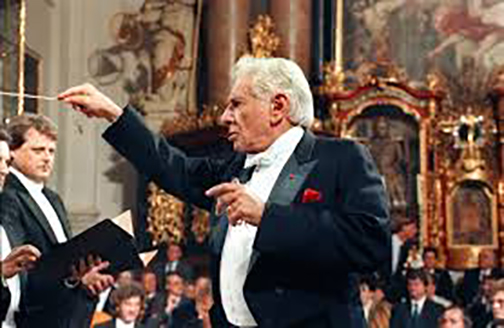
    An elite group gathered this week for a special screening of BERNSTEIN’S WALL, a documentary about the great composer/ conductor/ educator, a fixture of 20th century American cultural history. Well-timed, the riveting documentary comes after Bradley Cooper’s success with MAESTRO, his Oscar nominated biopic of the legendary artist. But here, with Leonard Bernstein’s own words dancing across the screen, we get the inner life of this creative genius.

    This week’s screening and dinner at Jean-Georges’ new Four Twenty-Five restaurant hit every high note, hosted by Spectrum One’s Frank DiLella—not far from the Philharmonic where Bernstein’s illustrious career was launched at 25, when, as an understudy conductor filling in, he garnered raves. Ditto for this exceptional movie. Not quite a biopic, as filmmaker Doug Tirola makes clear—a proper one might be hours long—this film, comprised only of Bernstein’s own voice from tapes and readings from personal letters, recounting the importance of music, his own process, how music informs his life, still manages to touch all bases: his political activism—starting with the Berlin Wall, and coming to the “Kotel” in Jerusalem.

    BERNSTEIN’S WALL was actually ready prior to MAESTRO, and the filmmakers—including producer Susan Bedusa-– strategically held it back. Bradley Cooper’s focus on the Bernstein’s marriage to Felicia Montenegro and homosexuality was a point of contention. What about Bernstein’s politics? At an early BERNSTEIN’S WALL screening put together by Peggy Siegal, Peter Duchin, who had attended Bernstein’s legendary parties, remembered the infamous one Tom Wolfe sensationalized in his Radical Chic & Mau-Mauing the Flak Chasers. Duchin said the encounter was Lenny’s wife Felicia’s idea to bring the Black Panthers to the Dakota: Let’s just hear what they have to say. A not-so-outrageous event that nevertheless made headlines.

    Tirola illuminates these subjects: Black Panthers, McCarthyism, Bernstein’s Talmudic style as a teacher. His pulse attuned to the politics of the day, and mensch that he was, Leonard Bernstein did not turn away. Jewish, he fixed neither his nose nor his name. And even though Bernstein clearly states that at age 10 he wished his strict immigrant father dead—he was dismayed at his son’s career choice—Lenny came to understand and to love him.

    (more…)

  • Commandows Shadow
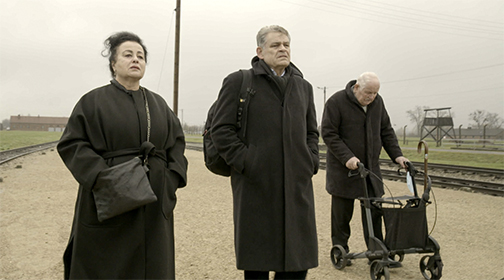
    “I had the best part of my life in Auschwitz,” says Hans Jurgen Hoss, son of the killing camp’s commandant, Rudolf Hoss—without a trace of irony. A fictional version of his time there can be seen in the Academy Award winning, THE ZONE OF INTEREST; he’s one of the five children who frolicked in the garden beside the camp’s walls, oblivious to what was going on. As he says in the documentary, THE COMMANDANT’S SHADOW, he thought it was a prison and was happy to be able to live where his father worked. In his late ‘80’s, taking the filmmakers around the house, he shows where the crematoria could be seen from an upstairs window, noting there were fewer trees then. He does not recall a stench. His son Kai, Rudolf Hoss’ grandson says, understating the difficult matter of his father having been a child next to the murder of millions, “I think my father has repressed memories.”

    Astonishing but true, awaiting trial for war crimes in Nuremburg, Rudolf Hoss wrote his autobiography, segments of which form a compelling narrative of what exactly went on in Auschwitz, providing a detailed account and perhaps varnishing his reputation, a confession. He watched as children were torn screaming from their mothers and thought of his own family, he writes. Director Daniela Volker was amazed that his book was not more widely known. Even Hans only read it for the film.

    Is it merely a German boast when Kai Hoss asserts repeatedly, “My grandfather was the most successful mass murderer in human history?” Tasked with creating an efficient killing machine as the Fuhrer demanded the Final Solution for the Jews, Hoss was hands on. Now a man of the church, his grandson Kai copes with this legacy through scripture, God’s grace, and his ministry to others in Stuttgart, he tells me at the film’s New York premiere at the Whitby Hotel.

    Also present was Maya Lasker-Wallfisch, the daughter of Anita Lasker-Wallfisch, who, as a young woman transported to Auschwitz, was in luck. The orchestra needed a cellist; playing music kept her alive. In the film we see her celebrating her 98th birthday in London. Distant and tough on her daughter, Anita’s mothering was no-nonsense. Now a psychoanalyst, Maya sees her life as a mess.  Moving to Berlin, she memorializes her murdered grandparents who she never met in the effort to reclaim what might have been– had life in Germany been possible. Despite a hopeful and generous world view, Anita’s open hyper-criticism of Maya is evident. “Your Auschwitz is different from my Auschwitz. I did not know if I would live another hour,” she tells her daughter even as Maya is desperate to know more. Anita triumphs hosting Hans Jurgen Hoss for coffee and fruit pie in London—an utterly remarkable, historic meeting, given the sides of the wall each occupied in the war years. This coming together is the film’s climax, and summing it up, Anita delivers the film’ zinger: “Isn’t that beautiful?”

    (more…)

  • BBBB
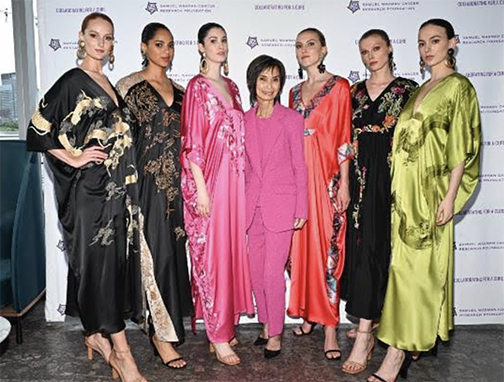
    On my way into Riverpark for the fashion show marking the annual “Collaborating for a Cure Ladies Lunch” to benefit the Samuel Waxman Cancer Research Foundation, I ran into Dr. Waxman making his way out ‘round the revolving door. I’m here to see you, I said, always reminding the esteemed cancer specialist that my mother died in his care. But did we do the best we could for her? Yes, I replied. And I thank you for that. My mother died in 1996, and since that time I come to see the doctor at these special events, to learn how much more has been done by his researchers to combat a disease that affects just about every family.

    While Dr. Waxman had to be elsewhere, he was there at Riverpark to support his wife Marion Waxman and the women who help this annual event such a huge success. This year designer Josie Natori, who I knew for her lingerie created for Lord & Taylor back in the day, presented gorgeous embroidered caftans. Models worked the spacious, elegant room as the ladies lunched on burrata and branzino. One stopped at every table to show off a stunning necklace from Mikimoto to be auctioned. The opulence was palpable at a time when most of us worry about the future of the planet. But that was not the point. The point is cancer, and it is still killing us.

    Dr. Waxman often explains the latest accomplishments of his research foundation, reminding everyone, while we are all ageing beautifully, the older we get, the more vulnerable we are to the disease. I am sure no one wants to hear that news, but it feels worse because as life is extended, that means the greater possibility of illness for our kids—and grandkids. That hits home.

    (more…)

  • Mother
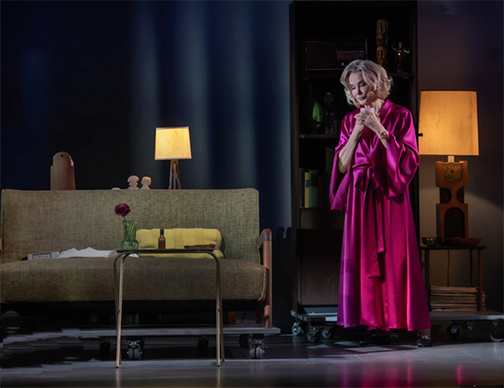
    In a Marilyn Monroe styled wig, Jessica Lange in character as Phyllis swans around her apartment in a hot pink satin robe, self-healing. What other actress can hold your attention for the time it takes to put on some music, fix a snack, just hang out? She’s gorgeous and riveting, even if abandoned by her alcoholic husband, lonely, and poor. Mother Play, by Pulitzer Prize winning Paula Vogel at the Hayes Theater, and directed by Tina Landau, is quasi-autobiographical. Raising two kids, a single mom, we know, is rough. One minute Phyllis cannot buy groceries to feed her son Carl (Jim Parsons) and daughter Martha (Celia Keenan-Bolger); another, she’s hit a second-hand store and come out with a Chanel. Making sacrifices—well, she has her limits!

    Those limits include living in cockroach infested apartments from which she manages to be evicted once she complains. Hence the subtitle: A Play in Five Evictions. New York City audiences will appreciate a chorus line of roaches projected onto the walls, even though the setting is Washington D.C. over several decades. Phyllis may not be the most devoted mother but she has aspirations for her children. Those do not include the fact that they are gay. In one scene at a disco when she attempts to make peace with Carl’s sexuality, she loses it upon seeing Martha kissing a woman.

    While many of the play’s themes of sexual liberation, AIDS, recall bygone eras, the family story resonates. As the vivid Phyllis loses her panache, Martha affirms the deeper values of compassion and love. In rich performances, Jim Parsons and Celia Keenan-Bolger are TONY-nominated, as is the play and Jessica Lange.

    (more…)