
Under a makeshift tent, a staging spot for plating his culinary creations at the Brock residence in East Hampton, Flynn McGarry, a phenomenon as a young chef with his own Lower East Side restaurant, Gem, and a new documentary about him, Chef Flynn, shook hands, his fingers coated in egg yolk. “That’s how you want your chef,” smiled Flynn, at the party celebrating him, the movie about him, and the Hamptons International Film Festival’s Summerdocs 10th Anniversary: “Enjoy my food, and my life,” he told the crowd. He is 19. His Beef Tartare on a grilled lettuce cup, beautifully situated on trays, was a delight to look at, fleurettes with a sprinkle of sesame seed, and even better to eat.

recent posts
- Marisa Tomei and Matthew Broderick at Guild Hall: The Plight of an Upper West Side Arts Space Gives A-List Actors The Big Chill
- Raul Esparza and Lily Rabe in The Winter’s Tale: Wet in Central Park
- Authors Night in East Hampton: If it’s Not One Thing It’s Your Mother
- Documentaries: Jocelyn Wildenstein The Lion Queen/ Tovah: How Jewish is It?
- Hamptons Journal: John Waters at Guild Hall: “Gay is not Enough” / “Cagney” at Bay Street/ “Signs” at the Bridgehampton Museum Tractor Barn
-
-
Patricia Clarkson is getting used to playing villains. If you’ve been watching Sharp Objects, the HBO thriller in 8-parts that will have its final episode this coming Sunday, you’ve seen this actress from New Orleans at her sinister best, a matriarch called Adora who is anything but adorable; her name alone exudes irony. Clarkson wears her bad side with high hauteur, an elegance and beauty that goes icy as human emotions draw near: it is impossible to turn away from her. In a new movie, The Bookshop, a lovely take by Isabel Coixet on Penelope Fitzgerald’s novel, starring Emily Mortimer, Clarkson continues in craven glamor. Bill Nighy’s character calls her behavior regarding the takeover of a bookstore repulsive. Clarkson says her acting strategy for playing hideous is to channel Glinda, the Good Witch.
-
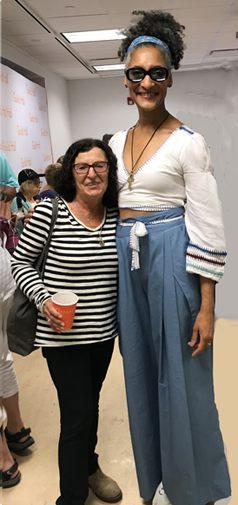 Carla Hall is all about cooking with love. Sharing her food notes and anecdotes with Florence Fabricant at Guild Hall’s popular series, “Stirring the Pot,” the two foodies could not agree more about the limiting nature of food trends. For example, who says that beets must always be served with goat cheese? Duh. Well someone decades ago made that combo a standard and now diners expect that. Cooking with love is way more intuitive about what can go with what, and what is fresh and available.
 -
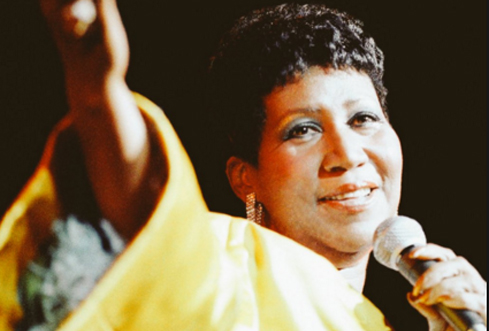
As the tributes to Aretha Franklin’s extraordinary career and legacy attest to the number of people she touched, and her incredible song list awakens our memories of decades of indelible music, it is good to remember her as a natural woman. Not only because she sang the song Carole King and Gerry Goffin wrote for her, but because she was a stealth warrior as a feminist, whether or not she cared about that term. Old school, no nonsense. No #MeToo for her, and you know she had stories. -
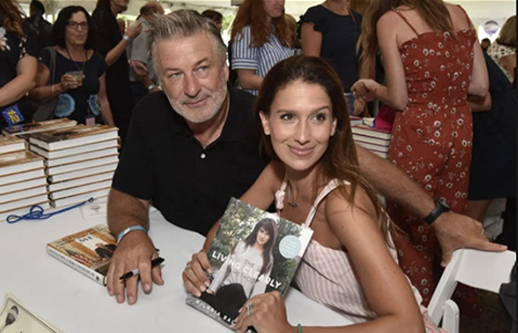
This Authors Night featured its signature mix of celebrity and well established authors, such as Jules Feiffer, Geraldo Rivera, Robert Caro, Dr. Ruth Westheimer, Patricia Bosworth, A. M. Holmes, Lee Child, with first time authors such as Elizabeth Flock who researched five marriages in Mumbai for her novel, The Heart is a Shifting Sea. Hilaria Baldwin sat beside her husband with her book, The Living Clearly Method, claiming it had already made the popular benefit last year, but Alec Baldwin insisted. Of course you could not get near their table. His new book provocatively titled, You Can’t Spell America Without Me, with a photograph of him as Donald Trump gracing the cover, was selling like proverbial hotcakes, huge piles set before him dwindling down rapidly. He gamely brought Michael Lally this year, and had him sit cattycorner to them, at every chance hawking the poet’s book, Another Way to Play: Poems 1960-2017.
-

Stealth operations are hardly associated with Guild Hall, the premiere arts institution of East Hampton, but as artistic director Andrea Grover announced at the summer gala this week, on a horse farm in Amagansett, more and more, Guild Hall is commissioning the work of emerging artists, “a quiet revolution,” as it were.Established artists are not overlooked, of course. The evening was a celebration of a new exhibition of Ellsworth Kelly’s art and the political career of Judith Hope Twomey. Alec Baldwin introduced Twomey noting that much is said about the lack of women in politics, and that is true, but “I wish there were more like her.” Twomey spoke about first coming to East Hampton from Arkansas, and notables such as Chuck Close and Saul Steinberg assisting with her campaign. When Baldwin offered to help, he went to speak in towns in upstate NY and the women turned out in droves to hear him. “They are still talking about it,” said Twomey amusing the crowd. Politically speaking, let’s hope for a bigger revolution.
-

“I think it’s a masterpiece,” exulted Will Pomerantz after a performance of Evita at Bay Street Theater in Sag Harbor. True, he is the director of this lively production with its mainly Latino cast, and he should have bragging rights for his fine work, but he was thinking larger on opening weekend. This very special production made many rethink the well-worn Andrew Lloyd Webber/ Tim Rice musical most associated with songs so familiar you can sing along, Patti LuPone as Evita (or Madonna in the movie), maybe Ricky Martin as Che, stars who made it famous in its Broadway debut and revivals. Bay Street’s production refocuses its epic, historic, sweeping themes: celebrity, revolution, romance and love, and makes them intimate. -
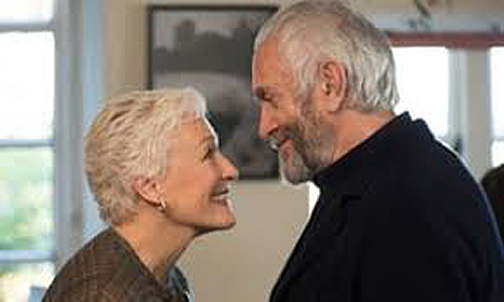
When best-selling author Meg Wolitzer wrote her novel, The Wife (2003), she could not have imagined its current feminist resonance, nor the movie of the book, The Wife, soon to be released starring Glenn Close. The wife of a celebrated novelist as he is awarded the Nobel Prize for literature, Close's Joan Castleman is demure, even restrained as she seethes with resentment at her husband's narcissism. Some men, it seems, believe their lies–mostly, the ones about themselves and their own powers. And Close as the wife, takes it, her affect perfect explosion-under-composure, like her Norma Desmond, until the façade cracks, unlike Desmond's deluded Sunset Boulevard soul. Ever the wife, she reels it back. -
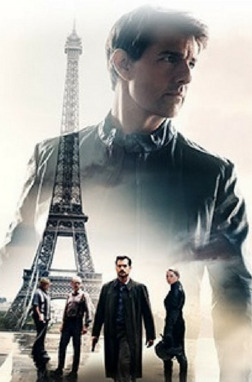 Mission Impossible: Fallout was #1 at the box office this week –no surprise to me. Of all the movie mega franchises, I love Mission Impossible the best. Lalo Schifrin’s score is an aphrodisiac to me. And the rest may have something to do with the hero Tom Cruise as Ethan Hunt, a man of super capabilities who gets the job done. Whatever crazies animate him, he is willing and able to rescue a detonator from the edge of a rock cliff, hang from helicopters, and mess with equally crazy women. The blond “widow” in this one makes Rebecca Ferguson’s Ilsa the picture of propriety, even when she, leather clad, races around Paris on a motorcycle in hot pursuit of Cruise and his posse, Ving Rhames’ Luther and Simon Pegg’s Benji and the nut job of a villain/ social anarchist (Sean Harris) that must lead them to the prize, three globelike balls of Plutonium. We are saving the world here from crazies who believe, the more suffering, the greater the peace. Now I totally understand why chemical warfare on civilians is so necessary!
 -

Comedian/ actor Robin Williams was so beloved, his suicide four years ago at age 63 came as a shock to almost all who knew him. In a new HBO documentary, Robin Williams: Come Inside My Mind, close friend, Billy Crystal recounts the last time he saw Williams he was in tears, and when Crystal asked why, is everything all right, Williams just said it was because he loved him so much; Crystal did not know this was a poignant moment close to the end. Marina Zenovich’s film, which had a special screening this week at SAG-AFTRA Foundation Robin Williams Center, weighs in on the side of a Parkinson’s disease diagnosis as the cause. Still, she makes good points for other contributing factors as she limns the changing times and his alienation. Much as you wish you could, you do not, in the end of this entertaining and insightful film, come inside his mind. -
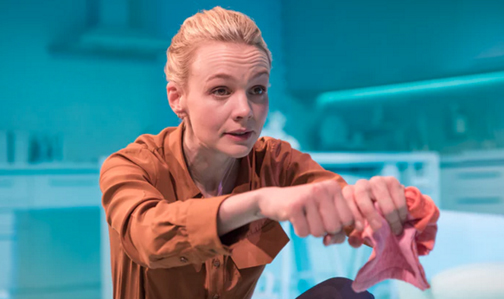
Riveting and poised as she recounts the most horrendous story, Carey Mulligan is the one-woman center of Dennis Kelly’s Girls & Boys at the Minetta Lane Theater, a superb Audible production and Royal Court Theater transplant. Minetta Lane must be ground zero for one-actor tours de force. Witness Billy Crudup’s brilliant turn as Harry Clarke. Dimpled Mulligan in maroon trousers and burnt sienna shirt, against a bare stage, or ghostly living space that colors up as needed, for an hour and three quarters: you can’t take your eyes off her, as she asserts herself shifting from leg to leg under Lyndsey Turner’s fine direction. You hear only about the sensational tales of domestic violence, she says preparing you, as she, dry eyed and wise comes to the play’s climax. You already know it, and it’s shocking nonetheless, the play’s final sentence, a chilling line that could work broadly in our #MeToo moment, roughly: civilization was created to stop men.
-

Imagine longing for Richard Nixon. Anything that smacks of “presidential” sparks pangs of pity for us in our current regime. As portrayed by Harris Yulin, with dignity and a yen for Italian style, in the Frost/Nixon revival at Bay Street Theater, Nixon seems human: he even detests golf. When he says he betrayed the American people, you also believe him, that he was doing what he thought best, even while breaking the law. For him it was clearly complicated. David Frost (Daniel Gerroll), as the play reveals, put everything on the line to get good television out of a four-part interview with the former president, the only one to ever resign rather than face the indignities of impeachment, and what that would mean to the office of president: “Resignation is a noble act! America first!” Nixon was held accountable. And, he could think and speak in complete paragraphs! Oh for the simplicity of the bygone era! -
 Photo: Showbiz411
Topical and terrific, Sandra Bernhard brought her no-holds- barred mouth to Guild Hall this week for a one-night only tour de force performance. Reaching out to Melania in the wings, “You are in a safe space here,” she consoled her. And, “Ooh, I like your jacket.” Calling out to a college student in the front row, she was both confrontational about her choice to quit Sarah Lawrence and go out west to study fashion, and supportive, sort of. “I could have talked to Marc Jacob for you.” She gave with one hand and took back with the other. And it was funny as hell. As she told me in a phone chat earlier this year: “I do not disappoint.” And she didn’t, giving one of the most spontaneous performances yet.
-
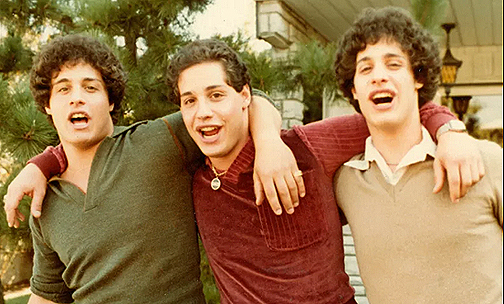
The Paley Center was chockablock with long lost friends and family, a hug fest rejoicing a new must-see documentary, Three Identical Strangers, that starts in the celebratory mood of a miracle: triplets, separated at birth, and their happenstance reconnection as teens. As Tim Wardle’s smart film traces the path of these brothers, through home movies, footage of their appearances on Phil Donahue and all the talk shows, and interviews with the people who knew them best, a mystery unfolds, and the mood darkens until the charismatic New Yorker writer Lawrence Wright shifts the conversation to the science, asking, what is most significant in determining who we are, nature or nurture? -

In his memoir, Without Stopping, the American writer and composer Paul Bowles describes a party held on the beach in North Africa’s Caves of Hercules, with one grotto that had been decorated by Cecil Beaton. Truman Capote, fearful of scorpions, had to be carried down the face of the cliff by a group of Moroccans. Guests lay in the moonlight among cushions in the sand sipping champagne and smoking hashish, serenaded by an Andaluz orchestra. If Lisa Immordino Vreeland’s documentary, Love, Cecil, about the life and times of Beaton, a singular British photographer and illustrator for Vogue and Tony and Academy Award winning scenic and costume designer—for the films Gigi and My Fair Lady– omits mention of this gathering, she must be forgiven, because the detail she does provide—especially of Beaton’s art– is truly illuminating. As she said in a recent phone chat, “Making the film was a pleasure to me.” -

When Laurie Anderson talks about carrying no baggage in her new book, All the Things I Lost in the Flood, a tome literally about loss, of precious objects and dross, of anything that weighs you down, take her seriously. At her current one-woman exhibition at Guild Hall, comprised of large scale paintings of her dog Lolabelle, now deceased, in the Bardo, and films, including “Heart of a Dog,” an Academy Award nominated documentary, plus two extraordinary works of Virtual Reality, let’s just say, she gives the label multimedia new meaning. While all of this work is impressive, the two trips through Anderson’s virtual “looking glass” completely knocked me out. -
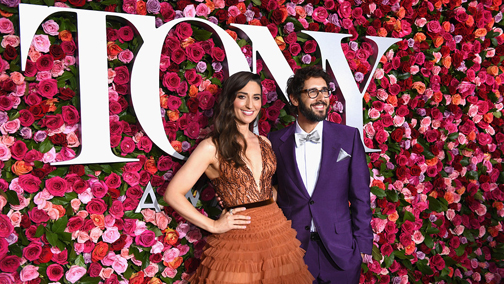
Some like to watch mega award shows from the comfort of home, but the long night that is the TONY Awards is a worthy schmooze fest. Everything said from the rose festooned red carpet at Radio City Music Hall to its ample stage about the generosity, talent, commitment to decency of the theater community is true in spades. Sure, Robert Di Niro’s expletives deployed against the present regime—deleted for television but you can well imagine– were not welcome to some ears, but with his well-meaning heart he introduced his pal Bruce Springsteen –Di Niro calling his Broadway one-man show “Jersey Boy.”Here are some of my favorite moments from the 72nd TONY’s: Chita Rivera exclaiming “There’s still salt in this shaker.” Andrew Garfield, so gorgeous in a turban and gown in Angels in America as AIDS ridden Pryor Walter accepting his TONY: “Let’s all bake a cake for everyone who wants a cake.”Katrina Lenk dedicating her Band’s Visit TONY to the Israeli actress Ronit Elkabetz who brought her character to life in the movie original. Tony Shaloub honoring his immigrant father: “May we never lose sight of what they taught us.”Nathan Lanequipping even Tony Kushner’s emails are Pulitzer worthy. The British Glenda Jackson reminding everyone: “America is always great!”
-

The irreverence of Anthony Bourdain’s CNN series, “Parts Unknown” always struck me as a sign that behind this foodie’s yen for travel and exotic eats was a beat soul. One segment had him on an island off Italy fighting with the fishermen. In Tangier, a city I know well, he found the funkiest place to shoot a crackerjack Moroccan feast. His programs did not feel over-produced. He allowed for the mayhem of spontaneity. And I loved that. -
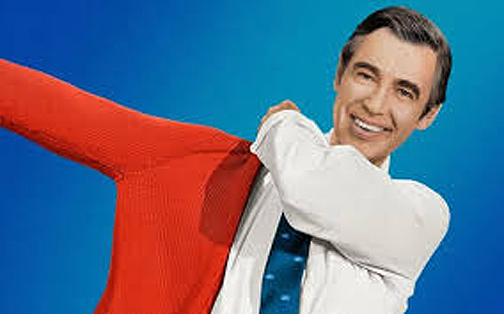
My kids weren’t interested in the nerdy television personality of Fred Rogers when they were growing up, maybe because, as the Academy Award winning documentarian Morgan Neville put it, introducing his new movie, Won’t You Be My Neighbor? at a special screening at MoMA this week, as a cultural figure, he was a two-dimensional. That’s an odd way to describe this former Protestant minister and gifted composer from Pittsburgh. Recognizing television as the ultimate pulpit, Fred Rogers was so committed to the emotional lives of children that he created an imaginary world, a Neighborhood of Make-Believe, for them and encouraged them to just be themselves. When Neville made his documentary about Yo Yo Ma, he was struck by the cellist’s friendship with Fred Rogers. Born in 1967, Neville was the right demographic to remember and admire the man who entered the room, removing a formal jacket, and putting on a comfy cardigan on television beginning in 1968. And now, with this treasure of a film, we can all appreciate just how radical his vision was. -
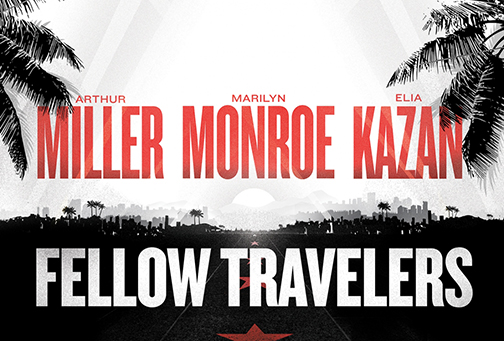
A kittenish Marilyn Monroe in bed with director Elia Kazan, who then introduces the starlet to playwright Arthur Miller! This love triangle, the heart of playwright Jack Canfora’s Fellow Travelers in a world premiere that just opened at Bay Street Theater, is astonishing for more than the sex, who is having it with whom. These were artists of the 1950’s fully committed to their work, and so a backstory for staging the 20th century’s most iconic dramas against the real-life trials of the House UnAmerican Activities Committee, informs the heated, engaging dialogue.Fellow Travelers, under Michael Wilson’s fine direction, will leave viewers deeply moved by the effects of the McCarthy era on creative lives, debating points along the way. Is it relevant to today’s American ethos? The line about paranoia that Russia is infiltrating our country through our movies leaps out. Here it refers to Kazan’s masterpiece On the Waterfront, and to the consequence of fear that so informs the writing of Miller’s stage play, The Crucible. To what extent does the present culture force self-censorship?
-
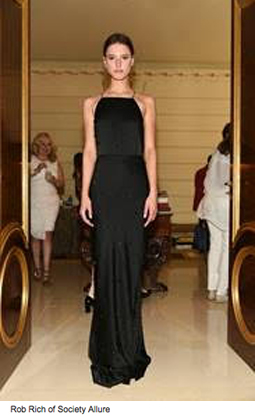 As noted in the past: It is a truth widely held, that ladies who lunch are wont to shop. And so a fashion show to benefit the Samuel Waxman Cancer Research Foundation has become an annual luncheon event. The options for lavish spending were displayed at Susan Gutfreund’s apartment in May, featuring models wearing Jason Wu’s dresses and gowns currently available on Bergdorf’s third floor. While the designer was not present, his assistant assured everyone he sincerely wished he could be, but was mid-air en route to Asia, launching a new fragrance. We would all get one in a goody bag, along with a cupcake from Magnolia. For guilt free spending, the Samuel Waxman Cancer Research Foundation benefits from a portion of the sales. Dr. Samuel Waxman, formidable and inspiring, spoke to the rapt crowd, many women beautifully dressed for the occasion.
 -
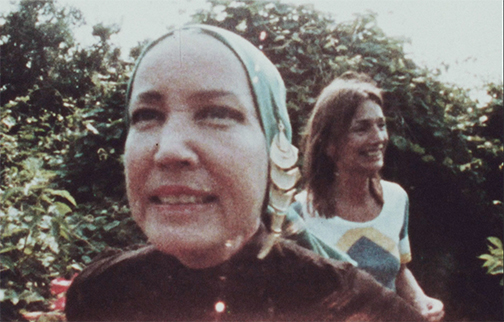
That Summer, the summer of 1972, Peter Beard and Lee Radziwill had the idea to make a film about East Hampton. On the Memorial Day weekend, a crowd of East Enders attended a private screening of That Summer in East Hampton. Director Goran Olsson was not present, nor was Lee, but Peter Beard and his wife Nejma Beard, a producer of this film attended, along with Bruce Weber, Joy Behar, and many others, to hear Vincent Fremont and Bob Colacello, experts on Warhol, tell stories about Andy Warhol and visitors Truman Capote, Bianca Jagger and many others to the Montauk estate back in the day. The film serves as a history of those heady times, of a great group of artists who came to Montauk in 1972. -
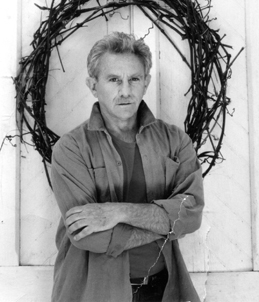 If Sag Harbor based playwright Joe Pintauro is serious about not always wanting to be identified as a former Catholic priest, he is going to have to stop focusing his consciousness on the human foibles of men of the cloth. While that is impossible, let’s hope he never does, because Pintauro’s work asks us to engage more deeply with our core beliefs, and our identity as human beings. On Friday night, the Parrish Art Museum in Watermill staged Salvation, an art song trilogy based on three of Pintauro’s one-acters, published in 1997. Kevin Jeffers composed the book, music and lyrics, having discovered Joe Pintauro’s work as he was looking for plays to put to music. The ethical and spiritual dilemmas of Salvation speak to faith in the unknowable, the divine.
 -

In one scene in the excellent BAM’s Harvey Theater production of Eugene O’Neill’s epic-length, Long Day’s Journey into Night, you see Lesley Manville as Mary Tyrone preening in front of a mirror, as if she were in the fitting room of the movie, The Phantom Thread. The British actress was nominated for an Oscar for her role in Paul Thomas Anderson’s movie. Here in this play, it is an animated moment when Mary Tyrone shows the girlish whims she once had, and it is startling, commanding the Connecticut sitting room, taking center stage from the alcoholic men, her husband James, a miserly matinee idol played to perfection by Jeremy Irons, and their two sons, James, Jr. and Edmund (Rory Keenan and Matthew Beard). Her plight, after all, wrenches this drama, written in the 1940’s and hewn so close to the playwright’s life it was not produced till after his death, into the Zeitgeist: conjuring #MeToo moments, not to mention the opioid epidemic. You get her immediately; forced to go on tour with her husband, waiting in fleabag hotels and “one-night stands,” losing a child, and treated by doctors with morphine; this is not a role for sissies. -

All I ever knew of Saint Francis of Assisi was that he talked to animals, said filmmaker Wim Wenders this week, at a special screening of his latest film Pope Francis: A Man of his Word at the Whitby Hotel, just a stone’s throw from Trump Tower. The current pope is the first to call himself after the saint who lived 800 years ago, loved nature and the earth, and is said to have charmed a sultan of Egypt. If you think of the church only in terms of the gold threaded, bejeweled capes on view at the MET’s Costume Institute exhibition, you will find Pope Francis of another cloth.

 gossipcentral.com