 At a Q&A at the Paris Theater, after a screening of the new Netflix zombie hit, Army of the Dead, to air this weekend, director and D.P.—this is so his movie– Zack Snyder said he was thinking about The Sheltering Sky and how a protagonist dies in the desert of some weird disease. In conversation with Grace Randolph, a comic book writer and YouTube star, and his producer/ wife Deb Snyder, he was invoking Paul Bowles’ midcentury novel and Bernardo Bertolucci’s movie starring John Malkovich and Debra Winger as a married couple who go deeper into anonymity as they leave Western culture behind in the North African landscape. This reference is one of a zillion that makes the movie Army of the Dead so much fun to watch—including Richard Wagner’s Gotterdammerung, a sly nod to the arid humor of doom.

recent posts
- Scarlett Johansson in Paper Tiger: New York Film Festival Opening Night/ Mile Leigh’s Tender Loving Care
- KNIFE: THE ATTEMPTED MURDER OF SALMAN RUSHDIE PREMIERES
- Celebrating Allen Ginsberg, Rock Star
- Marisa Tomei and Matthew Broderick at Guild Hall: The Plight of an Upper West Side Arts Space Gives A-List Actors The Big Chill
- Raul Esparza and Lily Rabe in The Winter’s Tale: Wet in Central Park
-
-
 One could suspect from the way the Oscars were put together at LA’s Union Station, this was an unusual year. How do you dress for well, the imperative to simply show up? Some women took the Hollywood glam route: Amanda Seyfried’s red ball gown seemed from every camera angle to fill the room. Ditto for Angela Bassett’s pouf shoulders. Cleavage and bare midriffs were a thing. And others rocked in covered up understatement: Olivia Coleman in demure Dior, Glenn Close dazzled in Armani Prive, even when she was wiggling her butt. The Nomadland women from multi-awarded Chloe Zhao to Frances McDormand whose wolf howl was the most musical note of the evening wore dour. Even the real-life nomads, like Swankie, so endearing and colorful in this desert toned movie, made up and coiffed, looked more dressed up.
But, had she attended, what would Ann Roth have said or worn collecting her Oscar for costume design? A second-time winner at 89, like Anthony Hopkins at 83, she sat this one out. In 2012, Roth was honored for her work at the Hamptons International Film Festival. Here’s what I learned about her illustrious decades-long career:
-
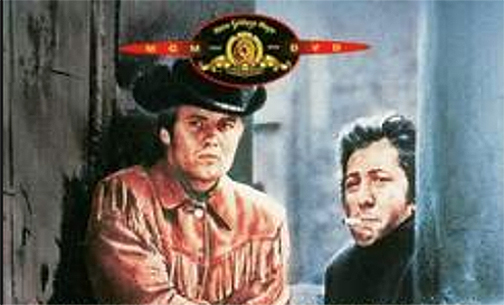
This week, the Academy Museum of Motion Pictures sent out a Timeline featuring many “firsts:” among them citing Midnight Cowboy (1969), the first X-rated film to win Best Picture. With Glenn Frankel’s new book, Shooting Midnight Cowboy: Art, Sex, Loneliness, Liberation, and the Making of a Dark Classic, much has been written clarifying that X-rating: “Few had high expectations that an X-rated movie about an aspiring male prostitute made in New York . . . would do well in the Hollywood-centric Oscars.”But a more unusual circumstance for the film’s Oscar success was that it won with almost no campaign to shepherd it along with Academy voters—certainly, as Frankel notes, it had “no money for the lavish events that Universal and 20th Century Fox” hosted for Anne of a Thousand Days and Hello Dolly, the kind of thing that in recent years Peggy Siegal did so well, hired by the studios to host luncheons that featured filmmakers and actors in high-minded conversation about making art. Instead, the Midnight Cowboy producers made sepia-toned stills, using different ones for each ad. Frankel quotes Gabe Sumner at United Artists, “It was a terrific movie. We didn’t need anyone to stand up and give a speech. We knew what we had.”
-
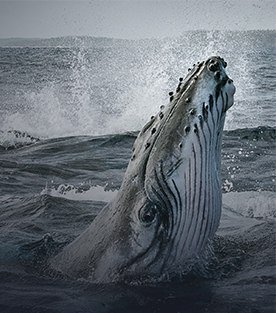 Introducing the National Geographic series at a virtual premiere, to stream on Disney +, part of a weeklong celebration of Earth Day, the actress Sigourney Weaver, found the secrets of whales “astonishing.” What is truly astonishing is how intimate National Geographic photographer Brian Skerry becomes with the whales, learning their “secrets.” It is no spoiler to reveal them: Whales have culture. Using the tag line: they play, they mourn, they are just like us, National Geographic promotes the idea of empathy for another species—big time!
The filming of this epic adventure took three years. Amazing how much humans can bond with their fellow mammals in that time, in many locations: Norway, Antarctica, Dominica, St. Lawrence, New Zealand, the South Pacific, to name a few of the spectacular locations. We were rapt for two hours: one Orca attempted to feed fin and wet suit clad Skerry, undersea camera in hand, who quipped, perhaps she was thinking he was undernourished. She’d picked up a stingray, and knew to turn it upside down to a sleep mode to better serve him for dinner. Yes, survival is key, and that wisdom is handed down through elder females.
-

If I have to ease into live theater, Blindness is a great conduit, and an event. At the Daryl Roth Theater, temperature taken, health form complete, viewers file into the cavernous space fitted with lighting fixtures, a neon of color; seats, 2 together, are distanced. Headsets in place like bunny ears, you are ordered to situate them properly, left ear, right ear, the authoritarian British voice commands, repeat. This is important for a visceral experience based on Jose Saramago’s famed novel, in Simon Stephens’ trim adaptation. Everything depends on sound and light. Sight too, or lack of it. -
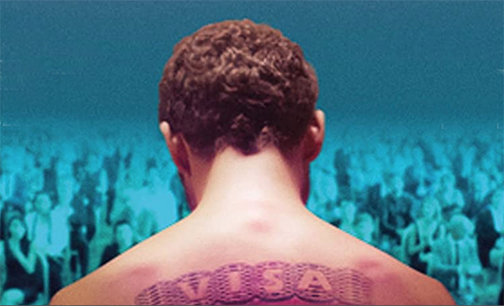
“You want my soul?”“I want your back.”
Provocative and transactional, the dialogue illustrates the film, The Man Who Sold his Skin’s pact with the Devil. From Tunisia, the film frames director Kaouther Ben Hania’s central conceit for the state of Syrian refugees, and is nominated for this year’s Best International Feature Academy Award.
The devil in question is Jeffrey Godefroy (Koen De Bouw), artist supreme, who needs a man’s back to create his latest work of art. Already a highly marketable name, Godefroy (free of God?) and his assistant Soraya, a blond Monica Bellucci, make an offer to Sam Ali (Yahya Mahayni) from Raqqa who fights for freedom, and wants only to be with Abeer (Dea Liane), the girl of his dreams, now married to a diplomat and living in Brussels. Godefroy makes him an offer he cannot refuse, involving his back, and his presence as an art installation. His journey to Abeer takes more than a passport.
-

“All families are the same, but like snowflakes, they are different,” said actor Bob Balaban recently by phone, explaining the rich detail of the play Squeaky, he’s to direct this week for a March 28 Guild Hall Zoom reading.The story attracted not only Balaban to direct, but a dream cast, all noted stage and screen actors. An outsized, charismatic character, Squeaky will be read by Harris Yulin. The exchanges between Jeff and his brother Rob, a conman, will be read by the actors Marc Kudisch and Ben Shenkman. Connie, who watches over Stan will read by LaTanya Richardson Jackson. And their mother Sandy– trust me, you could not invent a character as brilliantly skewed as she is in just one scene– is Jessica Hecht.
Based on playwright Jeff Cohen’s family experiences, noted Balaban, “Squeaky works well because it is so accurate to the details Jeff Cohen lived.” Many families find themselves in situations, the sons in conflict as to how to deal with their parents’ golden years, particularly if problems with dementia arise—but these parents!
-
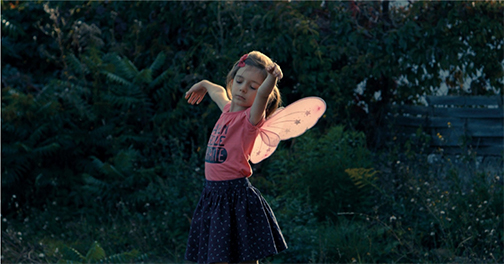
Netflix’ great series Call My Agent put me in the mood to hear as much French as possible. While the sophisticated, cultured patter of this hugely popular Parisian-set series does not speak for all of France, now Lincoln Center’s annual Rendez-vous with French Cinema, in collaboration with Unifrance, is in full swing, expanding the French experience. The festival is once again virtual as it was last year when the pandemic disrupted plans to see the films at the Walter Reade and hobnob with the actors/ directors in person. Still, kicking off with the tender documentary, Little Girl, this year’s Rendez-vous offers many pleasures.The opening night documentary, Little Girl, features Sasha, born a boy, who affirms himself a girl despite the raised eyebrows of school authorities. Director Sebastien Lifshitz follows the family for a year, through Sasha’s routines, her balletic pirouettes, and visits to a psychoanalyst. Sasha’s mother is unofficially the film’s hero. Her support for Sasha’s true self brings tears to the eyes, that yes, Sasha can live in her true body.
-
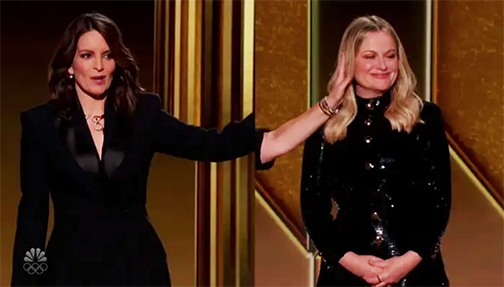
Bicoastal for the first time in its history, the Golden Globes ceremony was a seamless coup, with Amy Poehler hosting at the Beverly Hilton and Tina Fey at the Rainbow Room. In this pandemic year, it managed to pull off the red carpet glitz and glamor and general attenuated awards nights malaise, unfolding before a live audience of elegantly dressed essential workers and first responders. What a happy moment to glimpse the tropes of Globes past celebrating a time when entertainment was more distraction than main event! And still, so many good movies, good series, amazing talent! While the health of the nation might have served as a theme, inclusivity ruled: the usual wink wink wit of this award night, the weight of controversies about the Hollywood Foreign Press Association’s lack of diversity goes to questions of who’s in and who’s not? -

Perhaps you are wondering, is there anything more to say about this decades-old very public scandal? To recap, Woody Allen’s adult daughter Dylan has accused him of molestation when she was seven. Even in his most recent 2020 memoir, Apropos of Nothing, Allen proclaims innocence, affirmed in the courts and in a lie detector test. Allen writes that the charges against him were instigated by Mia Farrow, a woman scorned as Allen dumped her and married her daughter Soon-Yi, adopted with her husband Andre Previn. On the Allen side, many believe him. Yes, that story is now revived in a riveting 4-part documentary, Allen v. Farrow, to air on HBO. The filmmakers, Kirby Dick and Amy Ziering, with Amy Herdy, contend that key voices were not heard, mainly Dylan’s. To agree with them, the assertion that the abused must be heard alone makes this documentary a compelling, must-see testament. In this era of reckoning: by revisiting allegations of abuse, the film shines a light on the psychological damage, the fragility of parenting, the processes of healing, and the tiresome nature of celebrity scandal–even if, especially if, you come away with the central issue of the abuse unresolved. -
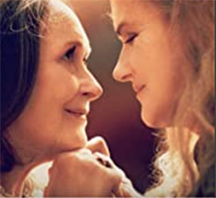 France’s entry for the Best International Feature Academy Award, Two of Us, is now nominated for a Best Motion Picture-Foreign Language Golden Globe. A story of secret love, two women of a certain age attempt to take the next step in their relationship when something goes terribly wrong with one of them. Families take charge. Following a recent preview screening, director Filippo Meneghetti spoke about his astonishment, that his feature debut would become France’s choice. But his casting of the superb actress Barbara Sukowa to play Nina, a tour guide who stays in a small provincial town in the south of France to be with Madeleine, her neighbor on the same floor of an apartment building, might explain France’s decision regarding this movie. And, the casting of Martine Chevallier, an actress from the Comedie Francaise, for Madeleine is brilliant, as the story shifts when her character has a stroke that leaves her mute. Both actresses are simply riveting, in rage, as when Nina smashes up a car, and in tender moments as they spoon in bed.
 -
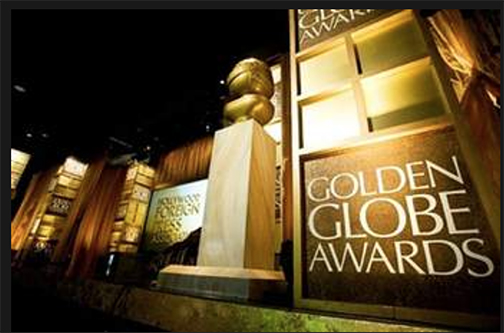
Back in the day, film insiders would say, the Golden Globes was the Hollywood event of the year. The champagne, the parties, the sheer weight of the statue—the air of frivolity for this serious award given by the Hollywood Foreign Press. Protracted in a pandemic, the nominations, announced today, had few disappointments, and few surprises: lavish praise for Promising Young Woman (nominations for Best Drama, Best Director and Best Screenplay to Emerald Fennell, Best Actress in a Drama for Carey Mulligan.) Nomadland was favored in top categories: Best Drama, Best Actress in a Drama, Frances McDormand, Best Director and Screenplay for Chloe Zhao. David Fincher’s Mank got a whole lotta love too, as did The Father with Anthony Hopkins’ especially great performance in the title role, and Aaron Sorkin’s Trial of the Chicago 7 featuring an ensemble of A-list actors. Mank, an inside Hollywood story, led with 6 nominations. These are the films that have been circling around for top prizes. Expect to see them at Oscar time. -
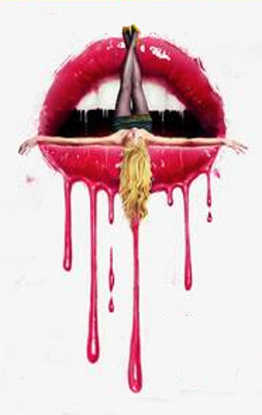 As awards season ratchets up, Carey Mulligan’s performance in Promising Young Woman is the one to beat for over-the-top best actress accolades. She plays a sharp-witted young woman who has had enough! The National Board of Review named Mulligan Best Actress, and screenwriter/ director Emerald Fennell is slated for the Independent Spirit Award’s Best Director. Capturing the Zeitgeist, Promising Young Woman promises recognition for this film, lingering way past its final moments: even as it becomes most outlandish, it rings most true.
The specter of Brett Kavanagh’s unmanly past at a frat party hangs over Emerald Fennell’s feature debut, Promising Young Woman, as do the million microaggressions endured by girls/women finding their place in the world. Carey Mulligan portrays Cassie, a medical school dropout, aprowl in bars at night, picking up men who see her, drunk, out of it equating with easy prey, easy lay. Legs astride, makeup dripping, her look signals anything but control, but she’s got a trick waiting. As they undress her, she bolts up, confronts their predations and takes off, a quiet act of revolt.
-
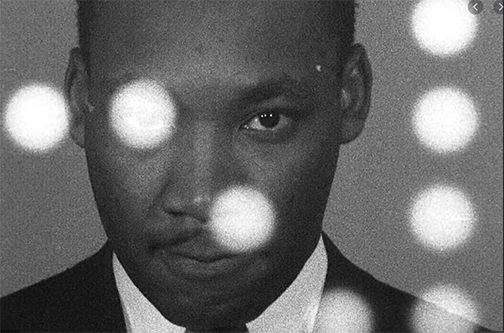
“I love America,” filmmaker Sam Pollard asserts, interviewed by The New Yorker’s Jelani Cobb, “but it’s a complicated, fucked up place.” The occasion was the opening of his latest documentary, MLK/FBI, released in time for Martin Luther King, Jr. Day; the interview from the fall, predated the events of January 6 that more than anything proves the statement true. As is the case with other films he’s worked on, Eyes on the Prize II and 4 Little Girls among them, Pollard revels in complicated, teaching “Anything in America is layered in complexity.” -

Breaking news: the IFP Gotham Awards will now be called The Gothams. Kicking off the awards season, this week’s celebration of “indie” or lower budget films managed to recreate the Gotham experience, seating guests at their packed tables in the cavernous Cipriani Wall Street, virtually, of course. Sipping my wine, I could kibbitz with fellow journalists. Let us say, no one was commenting on the celebrities’ gowns, glitz, or hairdos. For the occasion, I did wear makeup—and a sweater over yoga pants (not pajamas) instead of my usual cocktail dress. I did not work the room, but I enjoyed the experience of seeing Cadillac Escalades occupy the space, along with a few lone well-distanced high-rise tables near a stage with red velvet curtains. Elegance was maintained. I could see that I was not alone feeling out the possibilities. Early on, when the Best Documentary award went to two films, A Thousand Cuts and Time, onlookers heard the winners mutter, “I don’t see anyone. This is weird.” Alone in a room, we were not alone. -
 Two-time Academy Award winning Hilary Swank may be the most famous name attached to the new noir feature, Fatale, but, said director Deon Taylor in a Q&A after a virtual special screening, for black audiences Michael Ealy is a bigger star. Debate this point all you want. These actors are sublime in Fatale, acting out a pas de deux between a police detective and a crime suspect, so nuanced and sexy—Taylor conceived the idea—where race is key to the convolutions of the plot. “There are two Hollywoods,” said Taylor, “white Hollywood and black Hollywood. Hilary Swank did not know who Michael Ealy was.”
 -
Back in the early days of the coronavirus, when we heard the news that Tom Hanks and Rita Wilson, on location in Australia, tested positive for COVID-19, a cry could be heard round the world. How could Hollywood’s essential decent man, in every role—think Sully or Captain Phillips–, and his image in person, be so vulnerable? Playing Capt. Jefferson Kyle Kidd, a Civil War veteran in 1870, in Paul Greengrass’ latest movie, News of the World, Hanks inspires one thought: he’s everything you’ve ever loved about him and more.Maybe with Joe Biden at the helm, decency has increased cache: Capt. Kidd, coming upon a rogue child, a doubly traumatized blond 10-year old he calls Johanna in the woods at the site of a lynching, takes it upon himself to bring her (the superb German actress Helena Zengel), home. America is still the wild west, and much of this trip through harsh landscapes chased by desperados, is beautiful to look at, yet harrowing.
-
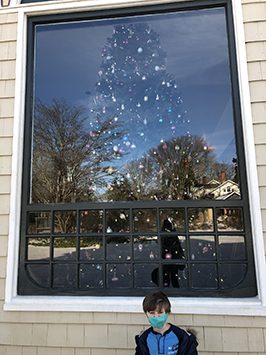 When he wasn’t in a brownstone in Chelsea, the painter Thomas Moran occupied a studio on Main Street in East Hampton. “A shingled two-story boardinghouse with a smoking chimney” facing the pond, described the late Robert Long in his 2005 book, De Kooning’s Bicycle. In the late 1870’s, “Moran thought that this could be his Fountainebleau.” Visible from Montauk Highway, the stately “cottage” was in disrepair for years, and has been restored as an exhibition space for Moran’s etchings, and this year, for a Victorian Christmas.
 -
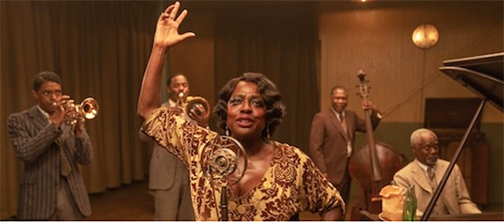
Blues singer Ma Rainey was plus sized in many ways, most especially her voice. In a new film based on August Wilson’s play Ma Rainey’s Black Bottom, Viola Davis gives her Ma a grimace to go with her mega-sound, as large as life for blacks in America. Davis’s Ma is a grand performance balanced by that of one of her horns-men, lithe Levee, played with charm cum mischief and madness by Chadwick Boseman. Ruben Santiago-Hudson adapted Wilson to perfection in this gem, and this week, the movie, to air on Netflix, had its premiere at the Museum of the Moving Image gala. Virtual, this event was a state-of-the-art forum on the movie’s production, starring Viola Davis and cast, costume designer Ann Roth, director George C. Wolfe who accepted an award from producer Denzel Washington.Washington, a longtime interpreter of August Wilson’s art, vowed to make the playwrights’10- play cycle, one for every decade of the 20th century, into film. That vision started with his direction of Fences in 2016, an Oscar nominated film in which he starred with Davis. While Fences does not take place in a recording studio, Wilson's dialogue is always rhythmic. Speaking about the musicality of Ma Rainey, the actors talked about filming with rehearsal time as if this were a staged production, and the bond created among the players. The actor Glynn Turman, Toledo in Ma Rainey, recounted Denzel seeing him in a production of the play and saying, “Stay ready. I stayed ready.”
-
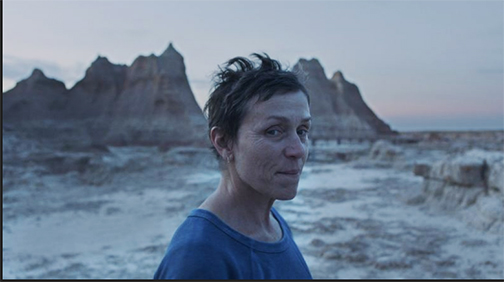
Chloe Chao’s extraordinary film Nomadland is a map of America, seen in Frances McDormand’s face. Unadorned, craggy, her face looms large in every frame—that is, when the camera is not tracking roads along America’s most beautiful open spaces, the deserts of the West. You do not want to take your eyes off McDormand’s Fern, a human embodiment of the American frontier, its resilience and relentless loneliness. We—our culture climbing out of difficult political years– haven’t focused on those places sufficiently, places in Nature threatened by commodification and industry. But the open road motif is an American tradition, a promise of freedom inherent in the pursuit of happiness, the heart of democracy’s foundation.Rocks feature as prominent edifices in this landscape, and Zhao juxtaposes their humble majesty with the Amazon fulfillment center where Fern sometimes works when she’s not on the road. The steel grid, hive of busyness, brings to mind last year’s excellent documentary American Factory. Fern, maybe a nickname for Frances, although the actress goes by Frannie, is otherwise an unglamorous shrub close to the earth. The cast, an ensemble of real-life nomads, go by their names including co-star David Strathairn, David, a man Fern connects with in her travels, or stasis in one of the RV stations she parks her tricked up van, “Vanguard,” now her home after her mining town, Empire, shut down. Charlene Swankie is a stand out; with a few months to live, she’s in charge of her destiny. She makes you understand Fern’s choices, including one you wish she’d reconsider: a future with David and his warm family.
-

Kudos to this year’s Gotham Award nominees. Traditionally, the IFP Gotham Awards kicks off the film awards season. As celebrations go, this decidedly downtown dinner brings together New York’s movie making elite while honoring lower budget fare in Oscar-like categories. Ah, longing for Cipriani Wall Street, packed to the gills with the year’s moguls and stars, I will be merely content to celebrate this stellar event pandemic style, perched at my computer in pajamas on Monday January 11, 2021—as I now applaud the choices, some of my favorite nominated movies, that since March, have given me the comfort of knowing the show must go on: To highlight a few in different categories: Time, Beanpole, The Assistant, The Nest.The documentary Time from director Garrett Bradley, probably this year’s Oscar non-fiction favorite and a hit at the fall film festivals, puts you in the place of what it means to be incarcerated. With its sharp focus on the Rich family, Time takes you inside, as if Ava DuVerney’s 2016 Oscar nominated doc, 13th, about what pervasive prison life is for black families, becomes your reality.
-
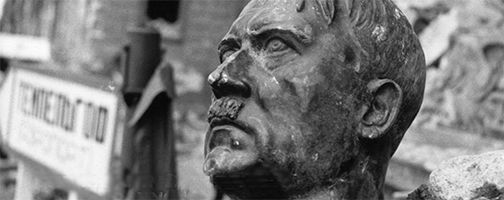
Of the extraordinarily fine offerings at this year’s DOCNYC 2020, The Meaning of Hitler, from directors Petra Epperlein and Michael Tucker stands out in illuminating the continued fascination with dictatorial psychopaths epitomized by Adolf Hitler and extending to the Nazis of World War II. Leading off on the topic, novelist Martin Amis,who has grappled with the Holocaust era in several books, wastes no time comparing Donald Trump to Hitler: noting, neither had problems with lying.Taking off from Sebastian Haffner’s 1978 German bestseller of the same title, the film features interviews with many experts and provocateurs including Deborah Lipstadt, Yehuda Bauer, Saul Friedlander, Sir Richard Evans, Francine Prose, and Beate and Serge Klarsfeld, Nazi hunters who famously brought Klaus Barbie, the “Butcher of Lyon” to justice. Exploring Hitler’s meaning takes the filmmakers to Hitler’s bunker in Berchtesgaden, to the memorial site that once was the death camp Treblinka, and to the forest at Sobibor where 250,000 were murdered without a trace.
-

As I write, Joy Behar asks Kamala Harris tasteful if anxious questions about the election/ COVID/ and Joe Biden’s plans on her daytime show The View. Her respect is through the roof, though you know, after years of experience, she has her doubts about the role of government on the planet. Wearing a blue sweater embroidered with the words, “I’m speaking,” she’s a lot to reckon with; with her, nobody’s going to mess. It’s a leap to think of her as a playwright, and now, we must. In five tidbits she wrote, an entertainment to benefit Guild Hall this week titled, A Totally Disrespectful Evening of Virtual Short Plays, she puts her views to dramatic effect. An A-list of her pals—Lorraine Bracco, Dylan McDermott, Robert Klein, Brenda Vaccaro, Chris Bauer, to name a few– mouth off in a variety of situations, culminating in a one-woman tour de force: Behar herself as a shoplifter, offers a step by step how-to, explaining the orgasm as you exit the store, and stating, “If Trump gets re-elected in November, who knows what crimes I might commit.” -
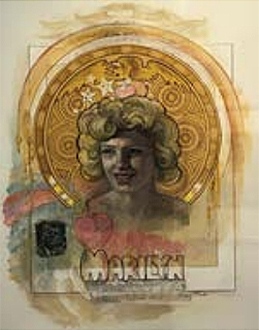 In her 1986 book, Art & Soul: Notes on Creating, the artist Audrey Flack recounts a time when, housebound in East Hampton, she listened to “Candle in the Wind,” Elton John’s elegy to Marilyn Monroe, allowing the muse to infuse the painting of Marilyn she was working on. Now two drawings of Marilyn, still evocative to the artist, as muse and goddess, are a compelling part of a show at M & M Fine Arts in Southampton: “Smiling Marilyn with JFK” and “Marilyn Phantom of Delight” (2014). The Marilyns, exhibited among many other works by Flack, are paired perfectly with art from Springs resident Amy Zerner. Using “goddess” as their theme, the artists occupy adjoining spaces with paintings, drawings, and tapestries that are distinctly feminist, strongly narrative, featuring bold female entities, provocative and beautiful.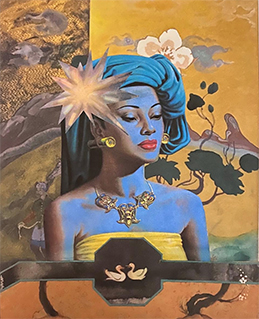
A world class artist, a pioneer in photorealism, a master sculptor, Flack’s expansive career includes a 1974 painting, “Leonardo’s Lady,” currently on view at MoMA. Goddesses are Flack’s metiere, including “Medusa,” depending on how you view the snakes adorning her hair. For me she’s beatific, radiating otherworldliness.
-
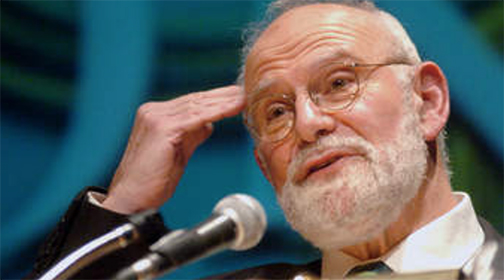
Waxing euphoric, documentarian Ric Burns, exclaimed, “The story in 14,233 lines was an attempt to get to the bottom, to heal the world.” He was not speaking of Doctor Oliver Sacks and his biopic, Oliver Sacks: His Own Life, of the noted neurologist and writer of Awakenings (1972) and The Man Who Mistook his Wife for a Hat (1985), the subject that brought us together on the phone this week, but of a current project on Dante, the Italian Renaissance author of The Divine Comedy: “Now in 2020,” said Burns, “Everything needs healing.”The theme of healing unites these films for Ric, the younger brother of Ken Burns, to whom he apprenticed himself for the mini-series The Civil War and other projects, before striking out on his own. Oliver Sacks: His Own Life was featured in last year’s New York Film Festival—he says of the prestigious festival: “We’re not in Kansas anymore,” but as he’s made the rounds, including the 2019 Hamptons International Film Festival, he’s found, “People really gravitate toward Oliver Sacks.”

