
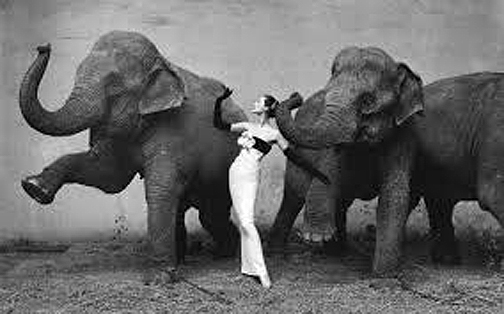
A simple walk through Guild Hall’s exhibition “Avedon’s America” is an encounter with the familiar. Portraits from the world of pop culture: Hendrix, Joplin, Dylan, along with iconic fashion work like Dovima with elephants, evening dress by Dior, Cirque d’Hiver, Paris, August 1955, grace the walls. A favorite portrait of mine is the loving embrace of poets Peter Orlovsky and Allen Ginsberg from 1964, naked and showy, the former with his genitalia limp, just part of the candor from an era when such displays were just not done. So is it merely loving, or up yours to anyone uptight?
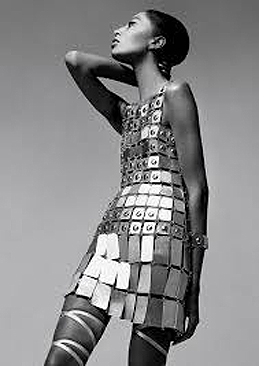 Richard Avedon’s extraordinary career in photography follows an American tradition: Walker Evans, Robert Frank, Diane Arbus were all influences. The Guild Hall exhibition also includes portraits from the Civil Rights Movement, and out west, a theme emerges, an other America. Just as Evans turned his lens on the depression, Frank on the non-conventional in the culturally conformist ‘50’s, and Arbus on her identical twins, Avedon found an outsider America. Some photos evoke an era gone by: Avedon’s portrait of young Bob Dylan, the wall text identifies him merely as “musician,” and Donald Trump as “real estate developer.” His “The Generals of the Daughters of the American Revolution, DAR Convention, Mayflower Hotel, Washington D. C., October 15, 1963” has an austere group of women dressed up in an off moment, grimacing or gazing about. A revealing portrait, rather than a posed one, he levels their stature
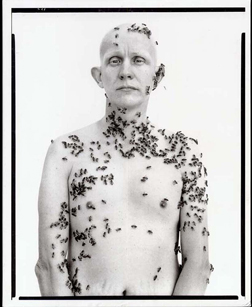 A panel on Avedon moderated by curator Christina Strassfield last week featured New Yorker writer Hilton Als, Executive Director of the Richard Avedon Estate James Martin, and independent scholar Robert M. Rubin who co-wrote the recently published “Avedon’s France: Old World, New Look,” revealed much about the artist and his work: practical points such as “Dick recognized that photography books were more important than exhibitions.” He was obsessed with race, and the tragedy of war. The panel was rich on backstories: for a shot of Sean Marshall, he borrowed a shirt owned by Bob Dylan from a collector, promising not to alter the shirt. They had to cut it, and had a seamstress redo the shirt. For his 1964 book, Nothing Personal, published just after the passage of the Civil Rights Act in 1964, the fiery text, by James Baldwin was acquired in an odd way: Avedon had to lock him in a hotel room.
Graphic Design: Salpeter Ventura


 gossipcentral.com
Leave a comment