
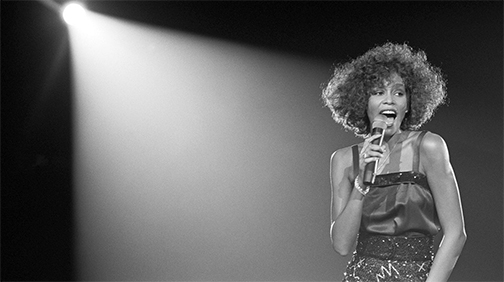
Nick Broomfield will receive the Special Achievement in Documentary Filmmaking Award at this year’s Nantucket Film Festival. The festival will also honor Tom McCarthy with a Screenwriters Tribute Award and David Crane and Jeffrey Klarik for Impact in Television Writing. As a documentarian, Broomfield is known for putting himself in his films. While some of his influences, especially D. A. Pennebaker, prefer a “fly on the wall” omniscience, Broomfield is noted for creating a detective suspense in his storytelling: His latest film Whitney: Can I Be Me, about Whitney Houston, will screen at the festival.
I caught up with Nick Broomfield by phone, prior to Nantucket. He was on his way to Lewes, near Brighton in the UK where his family has a house. It was boiling hot, he said, “but this is one of my favorite parts of the world.”
Would you make a film about Lewes?
It’s too remote. My family owns a watermill on the river that dates back to 786, before the Domesday Book, so there is a lot of history. It’s not as interesting as Whitney Houston.
How did the subject of Whitney: Can I Be Me come to you?
In March of 2015 I was with my friend Charles Finch, hiking in a mountain forest in LA, talking. Charles Finch said, “I am fascinated by Whitney Houston.” As well as we know her story from her music and the news, I didn’t know much about her. I was curious, and grew more and more fascinated by the idea of making a portrait of American culture. 1980 was more racist than now. The filmmaking took 2 years, and in the process I fell in love with her in the editing room. I was amazed at how candid she was when she spoke, and so self-aware. She was perceptive, intelligent, a fun loving person, with great comic timing, and a great laugh.
Her story is particularly sad because she followed a wave of drug deaths. But your film looks at other problems. You suggest for example that Clive Davis’ way of managing her career may have been an issue.
If Clive had a part in her demise, he had no awareness of that. He had a vision for his time, a notion of crossing a black artist over. He created an American princess; it meant taking the gospel and R&B out of the music. Whitney was going to be rejected and booed by her black audience. Bobby Brown came from exactly the same area in New Jersey and she could be herself with him. When she was Nippy from Newark, she was most herself. But she was condemned for that, which led to drugs.
Who were your influences in documentary filmmaking?
D.A. Pennebaker for Don’t Look Back, and Frederick Wiseman’s work is so entertaining. Then Mike Rubbo who made a movie called Waiting for Fidel. He wanted to meet Castro, and ended up making an insightful film about Cuba while waiting, and never met Fidel. And Gay Talese’s essay in Esquire, “Frank Sinatra Had a Cold” was more revealing than if he actually got the interview. He made the portrait more about the milieu.
Are you looking forward to Nantucket, and your special award?
We’ve had an enormous release in England and Australia. But Whitney is about American culture, and I hope the film will have an enthusiastic American response at Nantucket.
Liz Garbus and Rory Kennedy got this award at Nantucket for documentary filmmaking. I’m proud to share a similar kind of award with them. I haven’t been there before and look forward to eating whatever they eat there, to having a Chablis and clams with you.
Graphic Design: Salpeter Ventura


 gossipcentral.com
Leave a comment